
JavaScript中的call(),apply(),bind()的用法
1.call() apply(). bind()都是用来重定义this这个对象的!
如:

obj.myFun.call(db);    // 德玛年龄 99
obj.myFun.apply(db);    // 德玛年龄 99
obj.myFun.bind(db)();   // 德玛年龄 99

bind返回的是一个新的函数,你必须调用它才会被执行
2,对比call,bind,apply 传参情况
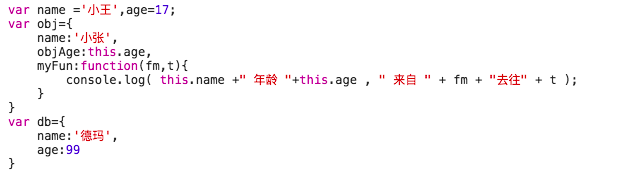
obj.myFun.call(db,'成都','上海');     // 德玛 年龄 99  来自 成都去往上海
obj.myFun.apply(db,['成都','上海']);      // 德玛 年龄 99  来自 成都去往上海
obj.myFun.bind(db,'成都','上海')();       // 德玛 年龄 99  来自 成都去往上海
obj.myFun.bind(db,['成都','上海'])();   // 德玛 年龄 99  来自 成都, 上海去往 undefined
在JavaScript中,存在几种方法能够修改函数的 this 上下文:
-
call():call()方法接收一个参数列表,其中首个参数是函数运行时使用的this值,接下来的参数则是传递给函数的参数。例如:运行上述代码,
myFunction的this将指向obj对象,并打印出{name: 'obj'}, 'arg1', 'arg2'。 -
apply():apply()方法的工作方式与call()相似,区别仅在于apply()接收两个参数,此中第一个是函数执行时的this值,而第二个是一个数组(或类数组对象),其元素将作为参数传递给函数。在这个例子中,
myFunction中的this将再次指向obj,并打印出{name: 'obj'}, 'arg1', 'arg2'。 -
bind():bind()方法创建一个新的函数,在bind()被调用时,这个新函数的this被指定为bind()的第一个参数,而其余参数将作为新函数的参数供调用时使用。在这个示例中,当调用
boundFunction()时,myFunction()中的this指向obj并打印出{name: 'obj'}, 'arg1', 'arg2'。
请注意,这些方法不能修改箭头函数的 this 值,因为箭头函数会捕获它们创建时的 this 值。

 浙公网安备 33010602011771号