
Spring(3)--bean的xml开发
先概括的说bean相关内容,之后讨论具体应用。
有个大概了解即可。
| Property | Explained in… |
|---|---|
| Class | Instantiating Beans |
| Name | Naming Beans |
| Scope | Bean Scopes |
| Constructor arguments | Dependency Injection |
| Properties | Dependency Injection |
| Autowiring mode | Autowiring Collaborators |
| Lazy initialization mode | Lazy-initialized Beans |
| Initialization method | Initialization Callbacks |
| Destruction method | Destruction Callbacks |
bean可以创建很多的类型
这里假设工程结构是
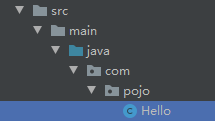
bean的常用关键字
- id
- name
- class
- type
- value
- constructor-arg
- ref
- parent
一、构造器
无参构造
<bean id="exampleBean" class="com.pojo.Hello"></bean>
<bean name="anotherExample" class="com.pojo.Hello"/>
有参构造器
(1)根据下标顺序赋值(会模糊输入数据的类型)
<bean id="exampleBean" class="com.pojo.Hello">
    <constructor-arg index="0" value="7500000"/>
    <constructor-arg index="1" value="42"/>
</bean>
(2)根据类型赋值(多个构造器,若类型一致会有冲突)
<bean id="exampleBean" class="com.pojo.Hello">
    <constructor-arg type="int" value="7500000"/>
    <constructor-arg type="java.lang.String" value="42"/>
</bean>
(3)根据名字赋值
<bean id="exampleBean" class="com.pojo.Hello">
    <constructor-arg name="years" value="2020"/>
    <constructor-arg name="month" value="6"/>
</bean>
二、属性赋值
数值类型:int、short、long
字符串类型:string
布尔类型:boolean
在设置bean属性时,可以使用复合或嵌套属性名,只要路径的所有组件(最后的属性名除外)都不为空
<bean id="exampleBean" class="com.pojo.Hello">
    <property name="accountDao" ref="accountDao"/>
    <property name="itemDao" value="itemDao"/>
    <property name="fred.bob.sammy" value="123" />
</bean>
三、数组
bean | ref | idref | list | set | map | props | value | null
<bean id="moreComplexObject" class="example.ComplexObject">
    <!-- results in a setAdminEmails(java.util.Properties) call -->
    <property name="adminEmails">
        <props>
            <prop key="administrator">administrator@example.org</prop>
            <prop key="support">support@example.org</prop>
            <prop key="development">development@example.org</prop>
        </props>
    </property>
    <!-- results in a setSomeList(java.util.List) call -->
    <property name="someList">
        <list>
            <value>a list element followed by a reference</value>
            <ref bean="myDataSource" />
        </list>
    </property>
    <!-- results in a setSomeMap(java.util.Map) call -->
    <property name="someMap">
        <map>
            <entry key="an entry" value="just some string"/>
            <entry key ="a ref" value-ref="myDataSource"/>
        </map>
    </property>
    <!-- results in a setSomeSet(java.util.Set) call -->
    <property name="someSet">
        <set>
            <value>just some string</value>
            <ref bean="myDataSource" />
        </set>
    </property>
</bean>
四、其他操作
(1)导入其他xml文件
<beans>
    <import resource="services.xml"/>
    <import resource="resources/messageSource.xml"/>
    <import resource="/resources/themeSource.xml"/>

    <bean id="bean1" class="..."/>
    <bean id="bean2" class="..."/>
</beans>
(2)别名
<alias name="已经定义的bean的名字(需要对应)" alias="自定义的别名"/>
<alias name="myApp-dataSource" alias="subsystemB-dataSource"/>
(3)命名空间
3.1 属性property
<bean name="classic" class="com.example.ExampleBean">
    <property name="email" value="someone@somewhere.com"/>
</bean>
等价于
<bean name="p-namespace" class="com.example.ExampleBean"
     p:email="someone@somewhere.com"/>
</beans>
3.2 构造器constructor-arg
<bean id="beanOne" class="x.y.ThingOne">
    <constructor-arg name="thingTwo" ref="beanTwo"/>
    <constructor-arg name="thingThree" ref="beanThree"/>
    <constructor-arg name="email" value="something@somewhere.com"/>
</bean>
等价于
<bean id="beanOne" class="x.y.ThingOne" c:thingTwo-ref="beanTwo"
    c:thingThree-ref="beanThree" c:email="something@somewhere.com"/>
</beans>
(4)depend-on和ref
所有引用最终都是对另一个对象的引用。范围确定和验证取决于是否通过bean或父属性指定另一个对象的ID或名称。
依赖其他bean,功能类似ref。主要用于处理强依赖处理。
如用于数据库驱动程序注册。 依赖属性可以显式地强制初始化一个或多个使用该元素的bean之前的bean
<bean id="beanOne" class="ExampleBean" depends-on="manager"/>
<bean id="manager" class="ManagerBean" />
(5)懒初始化
即用的时候再实例化,比如有些数据随时可变的,可以防止风险
<bean id="beanOne" class="ExampleBean" depends-on="manager"/>
<bean id="manager" class="ManagerBean" />
您还可以使用元素上的default-lazy-init属性来控制容器级别的延迟初始化
<beans default-lazy-init="true">
    <!-- no beans will be pre-instantiated... -->
</beans>
(6)import
导入其他bean,可以用于规范代码模块和分类,有利于管理代码
<beans>
    <import resource="services.xml"/>
    <import resource="resources/messageSource.xml"/>
    <import resource="/resources/themeSource.xml"/>

    <bean id="bean1" class="..."/>
    <bean id="bean2" class="..."/>
</beans>
(7)自动加载
自动装配可以大大减少指定属性或构造函数参数的相关代码。可以避免编写显式连接的操作,转由隐式操作。
在使用基于xml的配置元数据(请参阅依赖项注入)时,可以使用元素的autowire属性为bean定义指定自动加载模式。
<bean id="people" class="com.dao.People" autowire="byName">
    <property name="Dog" value="狗">
</bean>
对应的class文件
package com.pojo;
public class Hello {
    private Cat cat;
    private  Dog dog;

    public Cat getCat() {
        return cat;
    }
    public void setCat(Cat cat) {
        this.cat = cat;
    }
    public Dog getDog() {
        return dog;
    }
    public void setDog(Dog dog) {
        this.dog = dog;
    }
}
| Mode | Explanation |
|---|---|
| no | 无操作 |
| byName | 会在上下文中查找,找到和自己对象setter函数后那么一致的name值,然后赋值 |
| byType | 会在上下文中查找,找到和自己对象setter函数后那么一致的类型,然后赋值 |
| constructor | 根据构造器名字查找 |
五、方法
(1)工厂方法
一个工厂类也可以包含一个或多个工厂方法
5.1 一个工厂类对应一个工厂方法
<bean id="clientService"
    class="examples.ClientService"
    factory-method="createInstance"/>
对应的class文件
public class ClientService {
    private static ClientService clientService = new ClientService();
    private ClientService() {}

    public static ClientService createInstance() {
        return clientService;
    }
}
5.2 一个工厂类对应多个工厂方法
<bean id="serviceLocator" class="examples.DefaultServiceLocator">
    <!-- inject any dependencies required by this locator bean -->
</bean>

<bean id="clientService"
    factory-bean="serviceLocator"
    factory-method="createClientServiceInstance"/>

<bean id="accountService"
    factory-bean="serviceLocator"
    factory-method="createAccountServiceInstance"/>
public class DefaultServiceLocator {

    private static ClientService clientService = new ClientServiceImpl();

    private static AccountService accountService = new AccountServiceImpl();

    public ClientService createClientServiceInstance() {
        return clientService;
    }

    public AccountService createAccountServiceInstance() {
        return accountService;
    }
}
(2)destroy-method
(3)lookup-method
(4)replaced-method
(5)init-method
六、Bean作用域
<bean id="people" class="com.dao.People" scope="singleton">
    <property name="Dog" value="狗">
</bean>
| Scope | Description |
|---|---|
| singleton | |
| prototype | |
| request | |
| session | |
| application | |
| websocket |

 浙公网安备 33010602011771号