
详细介绍:C++ 日志4——多线程异步日志
多线程异步日志系统
3.1 系统的分析:多线程日志的挑战
文档首先清晰地指出了多线程程序对日志库的新需求:
问题所在
线程安全:多个线程并发写日志时,日志消息不能出现交织(一条日志被截断成多段)。
性能瓶颈:
全局锁方案:简单的用一个全局mutex保护IO,所有线程争抢同一把锁,性能堪忧。
每线程单独文件:分析日志时需要在多个文件间跳转,极其不便,且不一定能提速。
业务线程阻塞:如果业务线程直接写磁盘,在磁盘IO慢时会被阻塞。
解决方案:异步日志
文档提出了优雅的解决方案:
用一个工作线程负责收集日志消息,并写入日志文件,其他业务线程只需向这个"日志线程"发送日志消息。
这就是"异步日志"的核心思想:将日志的生成与写入分离到不同的线程中。
前端(生产者和用线程):只负责生成日志消息,放入缓冲区。
后端(消费者或日志线程):负责将缓冲区中的日志写入文件。
这种架构带来了两大好处:
非阻塞:业务线程不会被磁盘IO阻塞。
批处理:减少线程唤醒和系统调用次数。
3.2 系统的设计:双缓冲技术
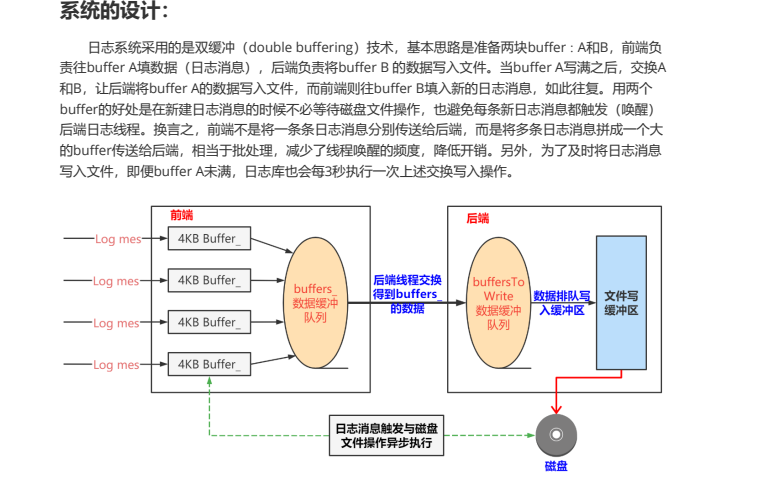
文档采用了双缓冲(double buffering) 技术,这是实现高性能异步日志的关键。
双缓冲的基本思路
text
准备两块buffer:A和B
前端负责往buffer A填数据(日志消息)
后端负责将buffer B的数据写入文件

当buffer A写满之后:
1. 交换A和B(瞬间完成)
2. 后端将buffer A(现在是旧数据)写入文件
3. 前端往buffer B(现在是空buffer)填入新的日志消息
如此往复
双缓冲的优势
减少线程同步:前端在大部分时间操作不同的buffer,减少与后端的竞争。
批处理优化:前端不是一条条传送日志,而是将多条日志拼成大的buffer传送,大幅减少线程唤醒和系统调用次数。
及时性保证:即使buffer未满,也会定期(如3秒)执行交换写入操作,防止日志丢失。
架构示意图
text
前端线程
↓
Log mes→ 4KB Buffer A
Log mes→ 4KB Buffer A
...
↓ (当A满或超时)
交换 A ↔ B
↓
后端线程处理Buffer A(旧数据)
↓
buffersToWrite 数据缓冲队列
↓
文件写缓冲区
↓
磁盘文件
3.3 系统类型的设计
AsyncLogging 类头文件
cpp
namespace tulun {
    class AsyncLogging {
    private:
        AsyncLogging(const AsyncLogging&) = delete;
        AsyncLogging& operator=(const AsyncLogging&) = delete;

        void workthreadfunc();    // 工作线程函数

    private:
        const int flushInterval_;         // 定期刷新间隔(秒)
        std::atomic running_;       // 是否正在运行
        const string basename_;           // 日志文件名
        const size_t rollSize_;           // 回滚大小
        std::unique_ptr ptthread_;  // 后端线程
        std::mutex mutex_;                // 互斥锁
        std::condition_variable cond_;    // 条件变量
        std::string currentBuffer_;       // 当前前端缓冲区
        std::vector buffers_; // 已满缓冲区队列
        tulun::LogFile output_;           // 日志文件对象

    public:
        AsyncLogging(const string& basename, size_t rollSize, int flushInterval = 3);
        ~AsyncLogging();
        void append(const string& info);
        void append(const char* info, int len);
        void start();
        void stop();
        void flush();
    };
}
核心数据成员分析
currentBuffer_:前端线程当前正在写入的缓冲区
类型是
std::string,利用其动态扩容特性
buffers_:存储已写满的缓冲区(等待后端线程处理)
使用
vector<std::string>作为队列
同步机制:
mutex_:保护currentBuffer_和buffers_cond_:通知后端线程有数据需要处理
output_:复用之前实现的
LogFile,负责实际的文件写入和滚动
3.4 系统的实施和测试
常量和构造函数
cpp
static const int BufMaxLen = 4000;     // 单个缓冲区最大长度
static const int BufQueueSize = 16;    // 缓冲区队列初始大小

AsyncLogging::AsyncLogging(const std::string& basename, size_t rollSize, int flushInterval)
    : flushInterval_(flushInterval),
      running_(false),
      rollSize_(rollSize),
      ptthread_(nullptr),
      output_(basename, rollSize, false) {  // LogFile不需要线程安全,由本类保证

    currentBuffer_.reserve(BufMaxLen);      // 预分配内存
    buffers_.reserve(BufQueueSize);         // 预分配vector容量
}设计要点:
BufMaxLen = 4000:略小于4KB,与内存页大小对齐预分配内存避免运行时动态扩容
启动和停止
cpp
void AsyncLogging::start() {
    running_ = true;
    // 创建后端工作线程
    ptthread_.reset(new std::thread(&AsyncLogging::workthreadfunc, this));
}

void AsyncLogging::stop() {
    running_ = false;
    cond_.notify_all();     // 唤醒可能阻塞的线程
    ptthread_->join();      // 等待线程结束
}
前端接口:append方法
这是最关键的生产者代码:
cpp
void AsyncLogging::append(const char* info, int len) {
    std::unique_lock _lock(mutex_);

    // 如果当前缓冲区剩余空间不足
    if (currentBuffer_.size() >= BufMaxLen ||
        (currentBuffer_.capacity() - currentBuffer_.size()) < len) {

        // 将当前缓冲区移到队列中
        buffers_.push_back(std::move(currentBuffer_));

        // 重置当前缓冲区(move后currentBuffer_为空)
        currentBuffer_.reserve(BufMaxLen);

        // 通知后端线程
        cond_.notify_all();
    }

    // 将数据追加到当前缓冲区
    currentBuffer_.append(info, len);
} 关键技术点:
std::move优化:避免不必要的内存拷贝条件判断:只有当缓冲区满或空间不足时才通知后端
锁范围:只在操作共享数据时加锁,时间尽可能短
后端线程:workthreadfunc方法
这是最复杂的消费者逻辑:
cpp
void AsyncLogging::workthreadfunc() {
    std::vector buffersToWrite;  // 本地队列,减少锁持有时间
    buffersToWrite.reserve(BufQueueSize);

    while (running_) {
        {
            std::unique_lock _lock(mutex_);

            // 等待条件触发:超时或缓冲区满
            if (buffers_.empty()) {
                cond_.wait_for(_lock, std::chrono::seconds(flushInterval_));
            }

            // 无论因何醒来,都将currentBuffer_放入队列
            buffers_.push_back(std::move(currentBuffer_));
            currentBuffer_.reserve(BufMaxLen);

            // 交换到本地队列,快速释放锁
            buffersToWrite.swap(buffers_);
            buffers_.reserve(BufQueueSize);  // 保持容量
        }  // 释放锁

        // 处理堆积保护:防止生产速度 > 消费速度
        if (buffersToWrite.size() > 25) {
            char buf[256];
            snprintf(buf, sizeof buf, "Dropped log messages at larger buffers\n");
            fputs(buf, stderr);
            // 丢弃多余日志,只保留2个缓冲区
            buffersToWrite.erase(buffersToWrite.begin() + 2, buffersToWrite.end());
        }

        // 批量写入文件
        for (const auto& buffer : buffersToWrite) {
            output_.append(buffer.c_str(), buffer.size());
        }

        buffersToWrite.clear();
    }

    output_.flush();  // 退出前确保所有数据落盘
} 精妙的设计细节:
双重缓冲队列:
buffers_:全局队列,受mutex保护buffersToWrite:线程本地队列,无锁操作
锁范围优化:
只在交换数据时加锁
文件写入时不持有锁,允许前端继续生产
堆积处理:
当生产速度远超消费速度时,丢弃多余日志
防止内存耗尽导致程序崩溃
唤醒机制:
超时唤醒:保证日志及时性(默认3秒)
数据唤醒:缓冲区满时立即处理
刷新接口
cpp
void AsyncLogging::flush() {
    std::vector buffersToWrite;
    {
        std::unique_lock _lock(mutex_);
        buffers_.push_back(std::move(currentBuffer_));
        buffersToWrite.swap(buffers_);
    }

    for (const auto& buffer : buffersToWrite) {
        output_.append(buffer.c_str(), buffer.size());
    }
    output_.flush();
    buffersToWrite.clear();
}
3.5 倒计时门闩优化
文档还介绍了一个优化:使用CountDownLatch确保工作线程真正启动后再返回。
CountDownLatch 实现
cpp
namespace tulun {
    class CountDownLatch {
    public:
        explicit CountDownLatch(int count);
        void wait();
        void countDown();
        int getCount() const;

    private:
        mutable std::mutex mutex_;
        std::condition_variable condition_;
        int count_;
    };
}

// 实现
CountDownLatch::CountDownLatch(int count) : count_(count) {}

void CountDownLatch::wait() {
    std::unique_lock _lock(mutex_);
    while (count_ > 0) {
        condition_.wait(_lock);
    }
}

void CountDownLatch::countDown() {
    std::unique_lock _lock(mutex_);
    --count_;
    if (count_ == 0) {
        condition_.notify_all();
    }
}
在AsyncLogging中的使用
cpp
class AsyncLogging {
    // 添加成员
    tulun::CountDownLatch latch_;

    // 修改构造函数
    AsyncLogging(...) : ..., latch_(1) {}

    // 修改start方法
    void start() {
        running_ = true;
        ptthread_.reset(new std::thread(&AsyncLogging::workthreadfunc, this));
        latch_.wait();  // 等待工作线程真正启动
    }

    // 修改workthreadfunc
    void workthreadfunc() {
        latch_.countDown();  // 通知主线程已启动
        // ... 原有逻辑
    }
};这个优化的意义:防止在AsyncLogging对象析构时,工作线程还未启动完成。
3.6 测试代码
单线程测试
cpp
tulun::AsyncLogging* asynclog = nullptr;

void asyncWriteFile(const string& info) {
    asynclog->append(info);
}

void asyncFlushFile() {
    asynclog->flush();
}

int main() {
    asynclog = new tulun::AsyncLogging("yhping", 1024 * 10);  // 10KB滚动
    tulun::Logger::setOutput(asyncWriteFile);
    tulun::Logger::setFlush(asyncFlushFile);
    asynclog->start();

    for (int i = 0; i < 1000; ++i) {
        LOG_INFO << "main " << i;
        std::this_thread::sleep_for(std::chrono::milliseconds(200));
    }
    return 0;
}
多线程测试
cpp
void func(char ch) {
    for (int i = 0; i < 1000; ++i) {
        LOG_INFO << "thread " << ch << " count " << i;
        std::this_thread::sleep_for(std::chrono::milliseconds(100));
    }
}

int main() {
    asynclog = new tulun::AsyncLogging("yhping", 1024 * 10);
    tulun::Logger::setOutput(asyncWriteFile);
    tulun::Logger::setFlush(asyncFlushFile);
    asynclog->start();

    // 启动多个线程同时写日志
    std::thread tha(func, 'a');
    std::thread thb(func, 'b');
    std::thread thc(func, 'c');

    tha.join();
    thb.join();
    thc.join();
    return 0;
}
异步日志系统设计总结
性能优势
低延迟:业务线程只操作内存缓冲区,不阻塞在磁盘IO
高吞吐:批量写入减少系统调用次数
线程安全:通过清晰的锁策略保证数据一致性
可靠性保证
防堆积:当生产过快时,丢弃日志保护系统
定期刷新:即使缓冲区未满也定期写入,减少数据丢失风险
优雅退出:停止时确保所有缓冲数据写入磁盘
工程实践价值
这个异步日志设计是工业级日志库的典型实现,被广泛应用于:
高性能服务器程序
交易系统
实时数据处理系统
它展示了如何通过生产者-消费者模式、双缓冲技术、批量处理等经典技术解决实际的并发性能问题。

 浙公网安备 33010602011771号