


(2)线程基础知识
并发相关Java包
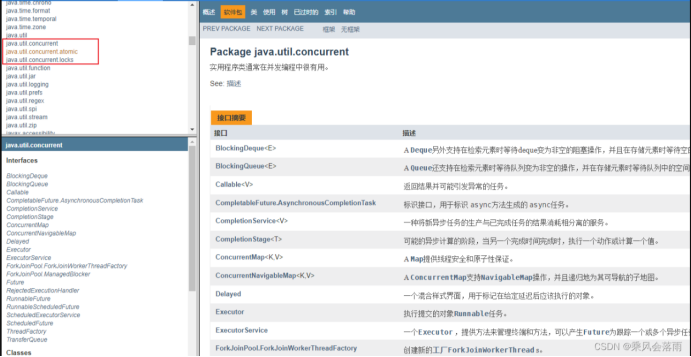
涉及到的包内容
java.util.concurrent
java.util.concurrent.atomic
java.util.concurrent.locks
并发始祖
并发始祖Doug Lea

start线程解读
初始程序
public static void main(String[] args) {
        Thread t1 = new Thread(() ->{
        },"t1");
        t1.start();
 }
//start
    public synchronized void start() {
        /**
         * This method is not invoked for the main method thread or "system"
         * group threads created/set up by the VM. Any new functionality added
         * to this method in the future may have to also be added to the VM.
         *
         * A zero status value corresponds to state "NEW".
         */
        if (threadStatus != 0)
            throw new IllegalThreadStateException();

        /* Notify the group that this thread is about to be started
         * so that it can be added to the group's list of threads
         * and the group's unstarted count can be decremented. */
        group.add(this);

        boolean started = false;
        try {
            start0();
            started = true;
        } finally {
            try {
                if (!started) {
                    group.threadStartFailed(this);
                }
            } catch (Throwable ignore) {
                /* do nothing. If start0 threw a Throwable then
                  it will be passed up the call stack */
            }
        }
    }
private native void start0();//start0是一个native方法
native调用了本地方法,我们可以通过下载官网OpenJDK查看其源码
thread.c
java线程是通过start的方法启动执行的,主要内容在native方法start0中
Openjdk的写JNI一般是一一对应的,Thread.java对应的就是Thread.c
start0其实就是JVM_StartThread。此时查看源代码可以看到在jvm.h中找到了声明,jvm.cpp中有实现。
jvm.cpp
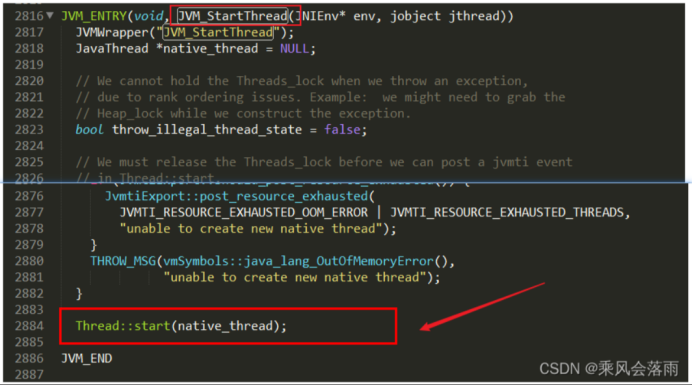
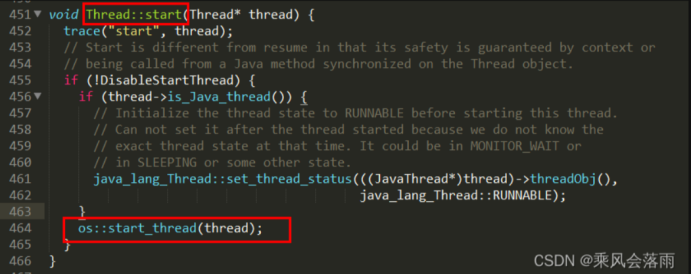
thread.cpp
终于在这里调用了操作系统的线程启动,os::start_thread(thread);
Java多线程相关概念
1把锁
2个并(并发和并行)
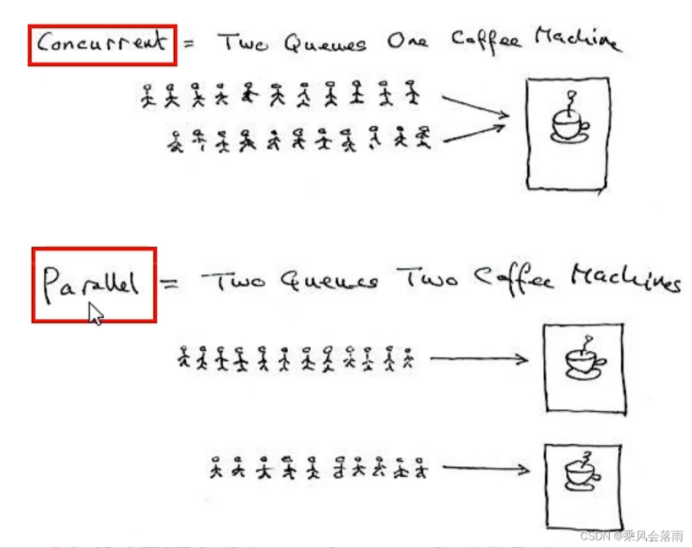
①并发
是在同一实体上的多个事件,是在同一台处理器上“同时”处理多个任务,同一时刻,其实是只有一个事件在发生。
②并行
是在不同实体上的多个事件,是在多台处理器上同时处理多个任务,同一时刻,大家都真的在做事情,你做你的,我做我的
并发VS并行
3个程(进程 线程 管程)
通过上面start线程的案例,其实进程线程都来源于操作系统。
①进程
系统中运行的一个应用程序就是一个进程,每一个进程都有它自己的内存空间和系统资源。
②线程
也被称为轻量级进程,在同一个进程内基本会有1一个或多个线程,是大多数操作系统进行调度的基本单元。
③管程
Monitor(监视器),也就是我们平时说的锁
Monitor其实是一种同步机制,他的义务是保证(同一时间)只有一个线程可以访问被保护的数据和代码。
JVM中同步是基于进入和退出监视器对象(Monitor,管程对象)来实现的,每个对象实例都会有一个Monitor对象,
Monitor对象会和Java对象一同创建并销毁,它底层是由C++语言来实现的。
用户线程和守护线程
Java线程分为用户线程和守护线程
线程的daemon属性为
true表示是守护线程
false表示是用户线程。
用户线程是系统的工作线程,它会完成这个程序需要完成的业务操作
守护线程是一种特殊的线程,为其他线程服务的,在后台默默地完成一些系统性的服务,比如垃圾回收线程。
总结
public class DaemonDemo
{
public static void main(String[] args)
{
    Thread t1 = new Thread(() -> {
        System.out.println(Thread.currentThread().getName()+"\t 开始运行,"+(Thread.currentThread().isDaemon() ? "守护线程":"用户线程"));
        while (true) {

        }
    }, "t1");
    //线程的daemon属性为true表示是守护线程,false表示是用户线程
    //---------------------------------------------
    t1.setDaemon(true);
    //-----------------------------------------------
    t1.start();
    //3秒钟后主线程再运行
    try { TimeUnit.SECONDS.sleep(3); } catch (InterruptedException e) { e.printStackTrace(); }

    System.out.println("----------main线程运行完毕");
}

}
两种情况
未加t1.setDaemon(true);,默认是用户线程,他会继续运行,所以灯亮着
加了t1.setDaemon(true);是守护线程,当用户线程main方法结束后自动退出了
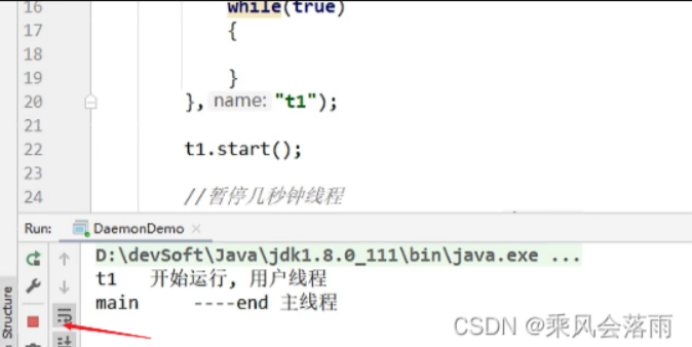
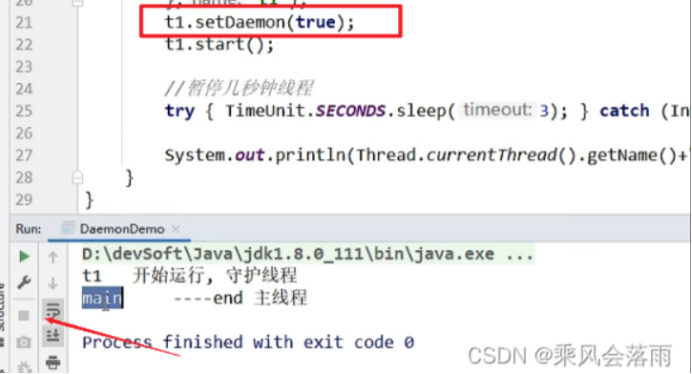
守护线程作为一个服务线程,没有服务对象就没有必要继续运行了,如果用户线程全部结束了,意味着程序需要完成的业务操作已经结束了,系统可退出了。假如当系统只剩下守护线程的时候,java虚拟机会自动退出。
setDaemon(true)方法必须在start()之前设置,否则报IIIegalThreadStateException异常

 浙公网安备 33010602011771号