设计模式之~策略模式
策略模式是属于设计模式中的行为模式中的一种,策略模式主要解决选项过多的问题,避免大量的if else 和 switch下有太多的case。
策略模式的重心不是如何实现算法,而是如何组织、调用这些算法,从而让程序结构更灵活,具有更好的维护性和扩展性。
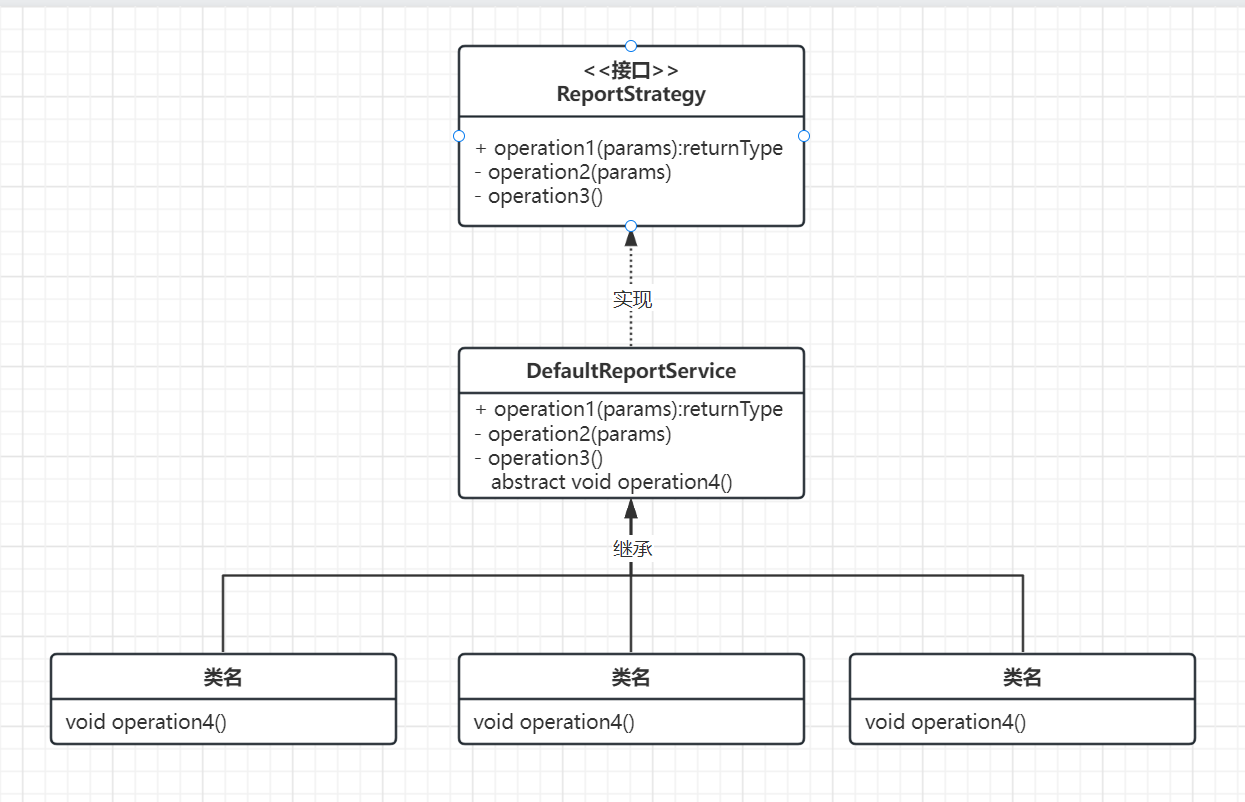
1.创建抽象策略接口
public interface ReportStrategy extends InitializingBean {
    /**
     * 构建上报数据,不同广告商、不同阶段构造的数据是不同的
     * @param clueDetail
     * @return
     */
    <T extends ReportReqBO> T buildReturnData(AdClueDetail clueDetail);

    /**
     * 上报
     * @param data
     * @param <T>
     * @return
     */
    <T extends ReportReqBO> Object report(T data);
}
2.创建策略工厂
@Slf4j
@Getter
public class ReportStrategyFactory {

    /**
     * 上报策略map
     */
    private final Map<String, ReportStrategy> reportStrategyMap = new ConcurrentHashMap<>(16);

    private static final ReportStrategyFactory INSTANCE = new ReportStrategyFactory();

    private ReportStrategyFactory() {
    }

    public static ReportStrategyFactory getInstance() {
        return INSTANCE;
    }

    /**
     * 构建上报策略的key
     * @param reportTarget
     * @param stageType
     * @return
     */
    public String buildReportKey(ReportTargetEnum reportTarget, StageTypeEnum stageType) {
        if (reportTarget == null || stageType == null) {
            log.warn("【策略key不能为空】,reportTarget:{},stageType:{}", reportTarget, stageType);
            return null;
        }
        return reportTarget.getKey().concat(Constants.DELIMITER_DOT).concat(stageType.getKey());
    }
3.创建接口实现类
@Slf4j
public abstract class DefaultReportService implements ReportStrategy {

    @Autowired
    private ReportService reportService;

    @Overridepublic KuaiShouClueBackReqBO buildReturnData(AdClueDetail adClueDetail) {
     assemblyParams(adClueDetail,backReqDTO);
        return kuaiShouClueBackReqBO;
    }

    @Override
    public <T extends ReportReqBO> Object report(T data) {
        return updateResponseDTO;
    }


    /**
     * 组装回传参数 Assembly parameters
     *
     * @param adClueDetail adClueDetail
     * @param backReqDTO   backReqDTO
     * @return key
     */
    public abstract void assemblyParams(AdClueDetail adClueDetail, KuaiShouBackReqDTO backReqDTO);

    /**
     * 获取阶段
     *
     * @return 阶段
     */
    public abstract StageTypeEnum getStage();

}
3.(1)具体策略A
@Slf4j
@Component
public class ClueIntentionStrategy extends DefaultReportService {

    @Override
    public void assemblyParams(AdClueDetail adClueDetail, KuaiShouBackReqDTO backReqDTO) {
        // 做你的业务
    }

    @Override
    public StageTypeEnum getStage() {
        return StageTypeEnum.CLUE_INTENTION;
    }

  /**
    * 把策略放入map
    */
    @Override
    public void afterPropertiesSet() throws Exception {
        ReportStrategyFactory reportStrategyFactory = ReportStrategyFactory.getInstance();
        String key = reportStrategyFactory.buildReportKey(ReportTargetEnum.KUAISHOU, getStage());
        reportStrategyFactory.getReportStrategyMap().put(key, this);
    }
}
3.(2)具体策略B
@Slf4j
@Component
public class ClueValidityStrategy extends DefaultReportService {

    @Override
    public void assemblyParams(AdClueDetail adClueDetail, KuaiShouBackReqDTO backReqDTO) {
        // 做你的业务
    }

    @Override
    public StageTypeEnum getStage() {
        return StageTypeEnum.CLUE_VALIDITY;
    }

    /**
    * 把策略放入map
    */
    @Override
    public void afterPropertiesSet() throws Exception {
        ReportStrategyFactory reportStrategyFactory = ReportStrategyFactory.getInstance();
        String key = reportStrategyFactory.buildReportKey(ReportTargetEnum.KUAISHOU, getStage());
        reportStrategyFactory.getReportStrategyMap().put(key, this);
    }
}
1.优点
- 算法可以自由切换
- 避免使用多重条件判断(如果不用策略模式我们可能会使用多重条件语句,不利于维护)
- 扩展性良好,增加一个策略只需实现接口即可
2.缺点
- 策略类数量会增多,每个策略都是一个类,复用的可能性很小
- 所有的策略类都需要对外暴露

 浙公网安备 33010602011771号