Redis实现分布式锁以及Redis客户端比较
对比
1、redisTemplate是基于某个具体实现的再封装,比如说springBoot1.x时,具体实现是jedis;而到了springBoot2.x时,具体实现变成了lettuce。封装的好处就是隐藏了具体的实现,使调用更简单,但是有人测试过jedis效率要10-30倍的高于redisTemplate的执行效率,所以单从执行效率上来讲,jedis完爆redisTemplate。redisTemplate的好处就是基于springBoot自动装配的原理,使得整合redis时比较简单。
2、jedis作为老牌的redis客户端,采用同步阻塞式IO,采用线程池时是线程安全的。优点是简单、灵活、api全面,缺点是某些redis高级功能需要自己封装。
3、lettuce作为新式的redis客户端,基于netty采用异步非阻塞式IO,是线程安全的,优点是提供了很多redis高级功能,例如集群、哨兵、管道等,缺点是api抽象,学习成本高。lettuce好是好,但是jedis比他生得早。
4、redission作为redis的分布式客户端,同样基于netty采用异步非阻塞式IO,是线程安全的,优点是提供了很多redis的分布式操作和高级功能,缺点是api抽象,学习成本高。
实现分布式锁
原文链接:https://blog.csdn.net/w372426096/article/details/103761286
阅读笔记:
分布式系统多个进程必须以互斥的方式独占共享资源,保证某一方法同一时刻只能被一个线程执行。
在单机环境中,应用是在同一进程下的,只需要保证单进程多线程环境中的线程安全性,通过 JAVA 提供的 volatile、ReentrantLock、synchronized 以及 concurrent 并发包下一些线程安全的类等就可以做到。
多机部署环境中,不同机器不同进程,就需要在多进程下保证线程的安全性了。因此,分布式锁应运而生。
基于zk的,也有基于redis的。实现上逻辑不严谨,线上会爆出几个死锁case
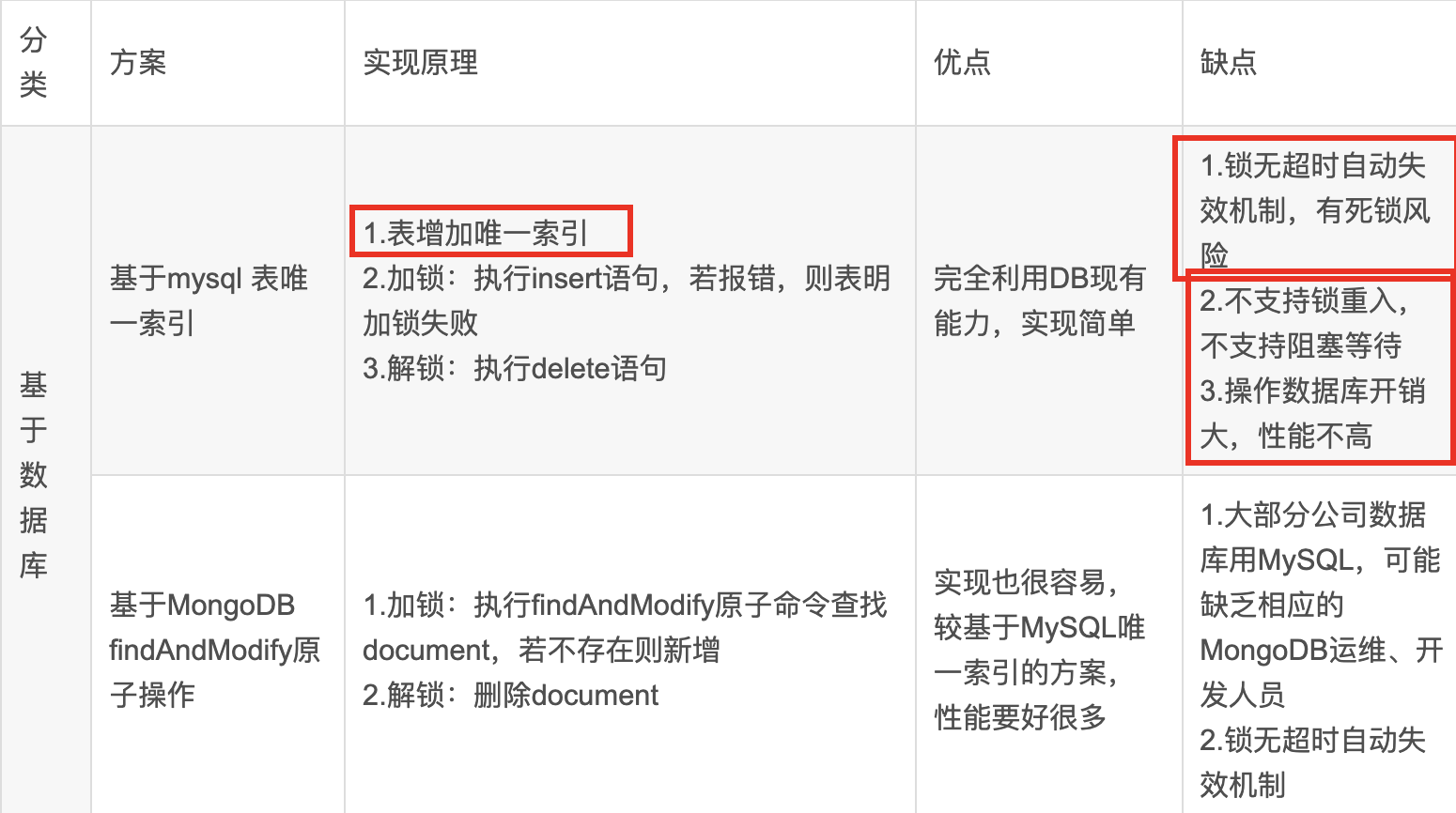
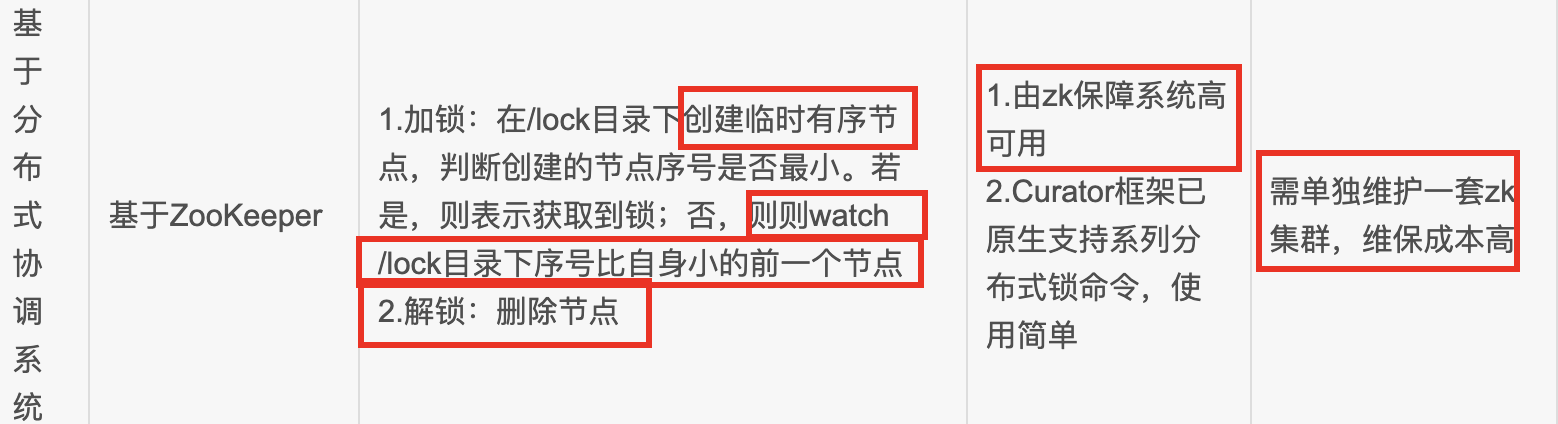
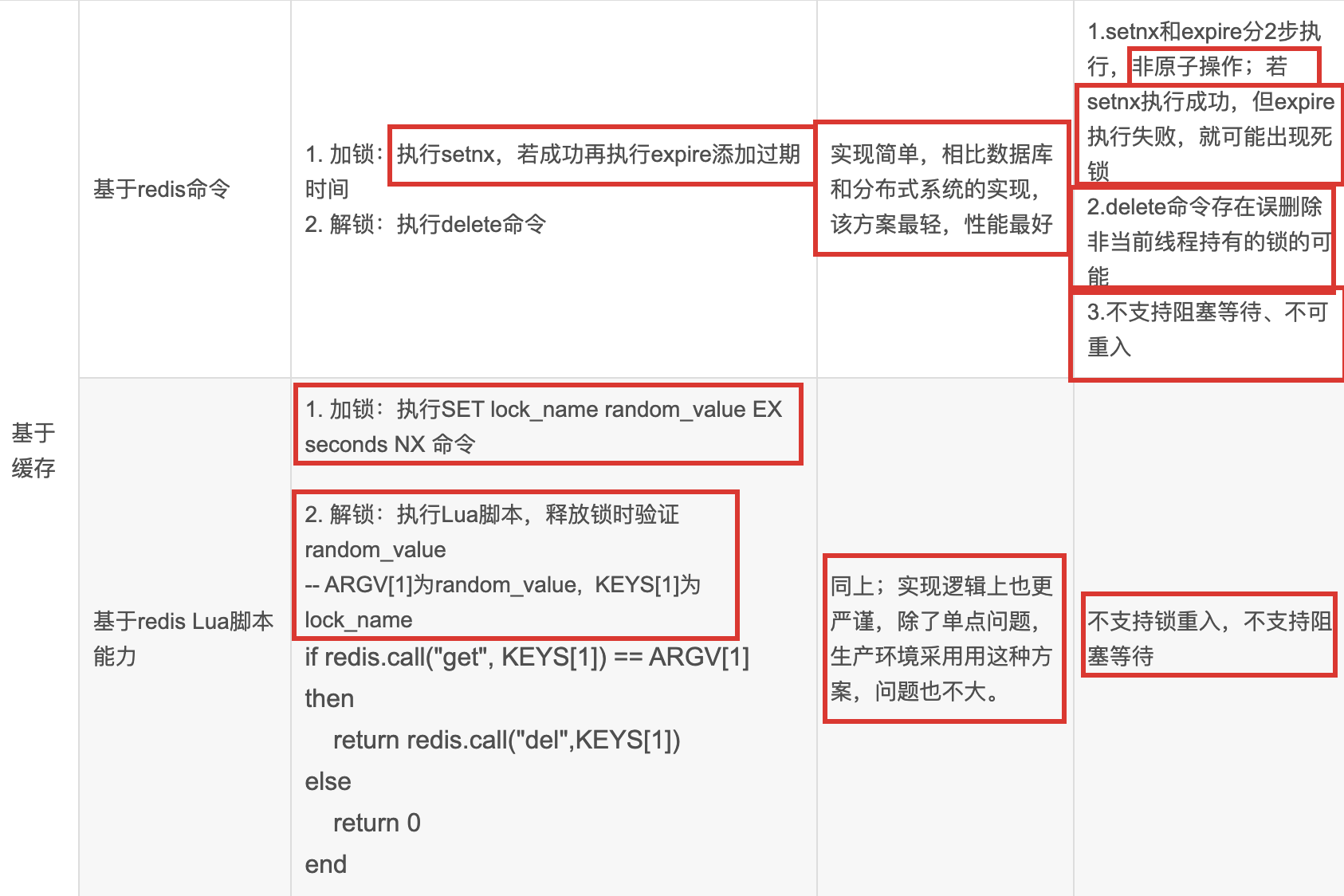
常见分布式锁对比
redis+lua基本可应付工作中分布式锁的需求。然而,redisson分布式锁实现方案(https://github.com/redisson/redisson/wiki/8.-%E5%88%86%E5%B8%83%E5%BC%8F%E9%94%81%E5%92%8C%E5%90%8C%E6%AD%A5%E5%99%A8) , 保持了简单易用、支持锁重入、支持阻塞等待、Lua脚本原子操作
分布式锁的要求
- 互斥:基本要求
- 不会死锁:拿锁的宕机了,被人还是可以加锁的,不会不可用
- 不会解别人的锁:自己解别人的??
- 容错:大多Redis节点正常就可以获取和释放锁
Redission使用(单点模式)
// 1.构造redisson实现分布式锁必要的Config
Config config = new Config();
config.useSingleServer().setAddress("redis://127.0.0.1:6379").setPassword("123456").setDatabase(0);
// 2.构造RedissonClient
RedissonClient redissonClient = Redisson.create(config);
// 3.获取锁对象实例(无法保证是按线程的顺序获取到)
RLock rLock = redissonClient.getLock(lockKey);
try {
    /**
     * 4.尝试获取锁
     * waitTimeout 尝试获取锁的最大等待时间,超过这个值,则认为获取锁失败
     * leaseTime   锁的持有时间,超过这个时间锁会自动失效(值应设置为大于业务处理的时间,确保在锁有效期内业务能处理完)
     */
    boolean res = rLock.tryLock((long)waitTimeout, (long)leaseTime, TimeUnit.SECONDS);
    if (res) {
        //成功获得锁,在这里处理业务
    }
} catch (Exception e) {
    throw new RuntimeException("aquire lock fail");
}finally{
    //无论如何, 最后都要解锁
    rLock.unlock();
}
redisson这个框架重度依赖了Lua脚本和Netty , Future及FutureListener的异步、同步操作转换。
一个分布式锁组件, 加锁、解锁; redisson 在加锁和解锁的执行层面采用Lua脚本 ,有原子性保证啊。 加锁和解锁过程中还巧妙地利用了redis的发布订阅功能
加锁流程源码
获取不到而且没有超时的话就会使用netty订阅锁释放的消息
之后循环获取锁,知道超时退出
org.redisson.RedissonLock#tryLock(long, long, java.util.concurrent.TimeUnit)源码
@Override
public boolean tryLock(long waitTime, long leaseTime, TimeUnit unit) throws InterruptedException {
    // 获取锁能容忍的最大等待时长
    long time = unit.toMillis(waitTime);
    long current = System.currentTimeMillis();
    final long threadId = Thread.currentThread().getId();
    // 【核心点1】尝试获取锁,若返回值为null,则表示已获取到锁
    Long ttl = tryAcquire(leaseTime, unit, threadId);
    // lock acquired
    if (ttl == null) {
        return true;
    }

    // 还可以容忍的等待时长=获取锁能容忍的最大等待时长 - 执行完上述操作流逝的时间
    time -= (System.currentTimeMillis() - current);
    if (time <= 0) {
        acquireFailed(threadId);
        return false;
    }

    current = System.currentTimeMillis();
    // 【核心点2】订阅解锁消息,见org.redisson.pubsub.LockPubSub#onMessage
    /**
     * 4.订阅锁释放事件,并通过await方法阻塞等待锁释放,有效的解决了无效的锁申请浪费资源的问题:
     * 基于信息量,当锁被其它资源占用时,当前线程通过 Redis 的 channel 订阅锁的释放事件,一旦锁释放会发消息通知待等待的线程进行竞争
     * 当 this.await返回false,说明等待时间已经超出获取锁最大等待时间,取消订阅并返回获取锁失败
     * 当 this.await返回true,进入循环尝试获取锁
     */
    final RFuture<RedissonLockEntry> subscribeFuture = subscribe(threadId);
    //await 方法内部是用CountDownLatch来实现阻塞,获取subscribe异步执行的结果(应用了Netty 的 Future)
    if (!await(subscribeFuture, time, TimeUnit.MILLISECONDS)) {
        if (!subscribeFuture.cancel(false)) {
            subscribeFuture.addListener(new FutureListener<RedissonLockEntry>() {
                @Override
                public void operationComplete(Future<RedissonLockEntry> future) throws Exception {
                    if (subscribeFuture.isSuccess()) {
                        unsubscribe(subscribeFuture, threadId);
                    }
                }
            });
        }
        acquireFailed(threadId);
        return false;
    }

    // 订阅成功
    try {
        // 还可以容忍的等待时长=获取锁能容忍的最大等待时长 - 执行完上述操作流逝的时间
        time -= (System.currentTimeMillis() - current);
        if (time <= 0) {
            // 超出可容忍的等待时长,直接返回获取锁失败
            acquireFailed(threadId);
            return false;
        }

        while (true) {
            long currentTime = System.currentTimeMillis();
            // 尝试获取锁;如果锁被其他线程占用,就返回锁剩余过期时间【同上】
            ttl = tryAcquire(leaseTime, unit, threadId);
            // lock acquired
            if (ttl == null) {
                return true;
            }

            time -= (System.currentTimeMillis() - currentTime);
            if (time <= 0) {
                acquireFailed(threadId);
                return false;
            }

            // waiting for message
            currentTime = System.currentTimeMillis();

            // 【核心点3】根据锁TTL,调整阻塞等待时长;
            // 注意:这里实现非常巧妙,1、latch其实是个信号量Semaphore,
            // 调用其tryAcquire方法会让当前线程阻塞一段时间,避免了在while循环中频繁请求获取锁;
            //2、该Semaphore的release方法,会在订阅解锁消息的监听器消息处理方法
            // org.redisson.pubsub.LockPubSub#onMessage调用;当其他线程释放了占用的锁,会广播解锁消息,监听器接收解锁消息,并释放信号量,最终会唤醒阻塞在这里的线程。
            if (ttl >= 0 && ttl < time) {
                getEntry(threadId).getLatch().tryAcquire(ttl, TimeUnit.MILLISECONDS);
            } else {
                getEntry(threadId).getLatch().tryAcquire(time, TimeUnit.MILLISECONDS);
            }

            time -= (System.currentTimeMillis() - currentTime);
            if (time <= 0) {
                acquireFailed(threadId);
                return false;
            }
        }
    } finally {
        // 取消解锁消息的订阅
        unsubscribe(subscribeFuture, threadId);
    }
}
上面的方法是用来处理获取锁以及没有获取到锁的消息订阅以及循环阻塞获取锁。
下面的是被调用用来获取锁的真正逻辑, tryAcquire的实现,真的就是执行Lua脚本!
private Long tryAcquire(long leaseTime, TimeUnit unit, long threadId) {
    // tryAcquireAsync异步执行Lua脚本,get方法同步获取返回结果
    return get(tryAcquireAsync(leaseTime, unit, threadId));
}

//  见org.redisson.RedissonLock#tryAcquireAsync
private  RFuture tryAcquireAsync(long leaseTime, TimeUnit unit, final long threadId) {
    if (leaseTime != -1) {
        // 实质是异步执行加锁Lua脚本
        return tryLockInnerAsync(leaseTime, unit, threadId, RedisCommands.EVAL_LONG);
    }
    RFuture ttlRemainingFuture =
        tryLockInnerAsync(commandExecutor.getConnectionManager().getCfg().getLockWatchdogTimeout(), TimeUnit.MILLISECONDS, threadId, RedisCommands.EVAL_LONG);

    ttlRemainingFuture.addListener(new FutureListener() {
        @Override
        public void operationComplete(Future future) throws Exception {
            //先判断这个异步操作有没有执行成功,如果没有成功,直接返回,如果执行成功了,就会同步获取结果
            if (!future.isSuccess()) {
                return;
            }
            Long ttlRemaining = future.getNow();
            // lock acquired
            //如果ttlRemaining为null,则会执行一个定时调度的方法scheduleExpirationRenewal
            if (ttlRemaining == null) {
                scheduleExpirationRenewal(threadId);
            }
        }
    });

    return ttlRemainingFuture;
}

// 见org.redisson.RedissonLock#tryLockInnerAsync
RFuture tryLockInnerAsync(long leaseTime, TimeUnit unit, long threadId, RedisStrictCommand command) {
    internalLockLeaseTime = unit.toMillis(leaseTime);
    return commandExecutor.evalWriteAsync(getName(), LongCodec.INSTANCE, command,
                                          "if (redis.call('exists', KEYS[1]) == 0) then " +
                                              "redis.call('hset', KEYS[1], ARGV[2], 1); " +
                                              "redis.call('pexpire', KEYS[1], ARGV[1]); " +
                                              "return nil; " +
                                          "end; " +
                                          "if (redis.call('hexists', KEYS[1], ARGV[2]) == 1) then " +
                                              "redis.call('hincrby', KEYS[1], ARGV[2], 1); " +
                                              "redis.call('pexpire', KEYS[1], ARGV[1]); " +
                                              "return nil; " +
                                          "end; " +
                                          "return redis.call('pttl', KEYS[1]);",
                                          Collections.<Object>singletonList(getName()), internalLockLeaseTime, getLockName(threadId));
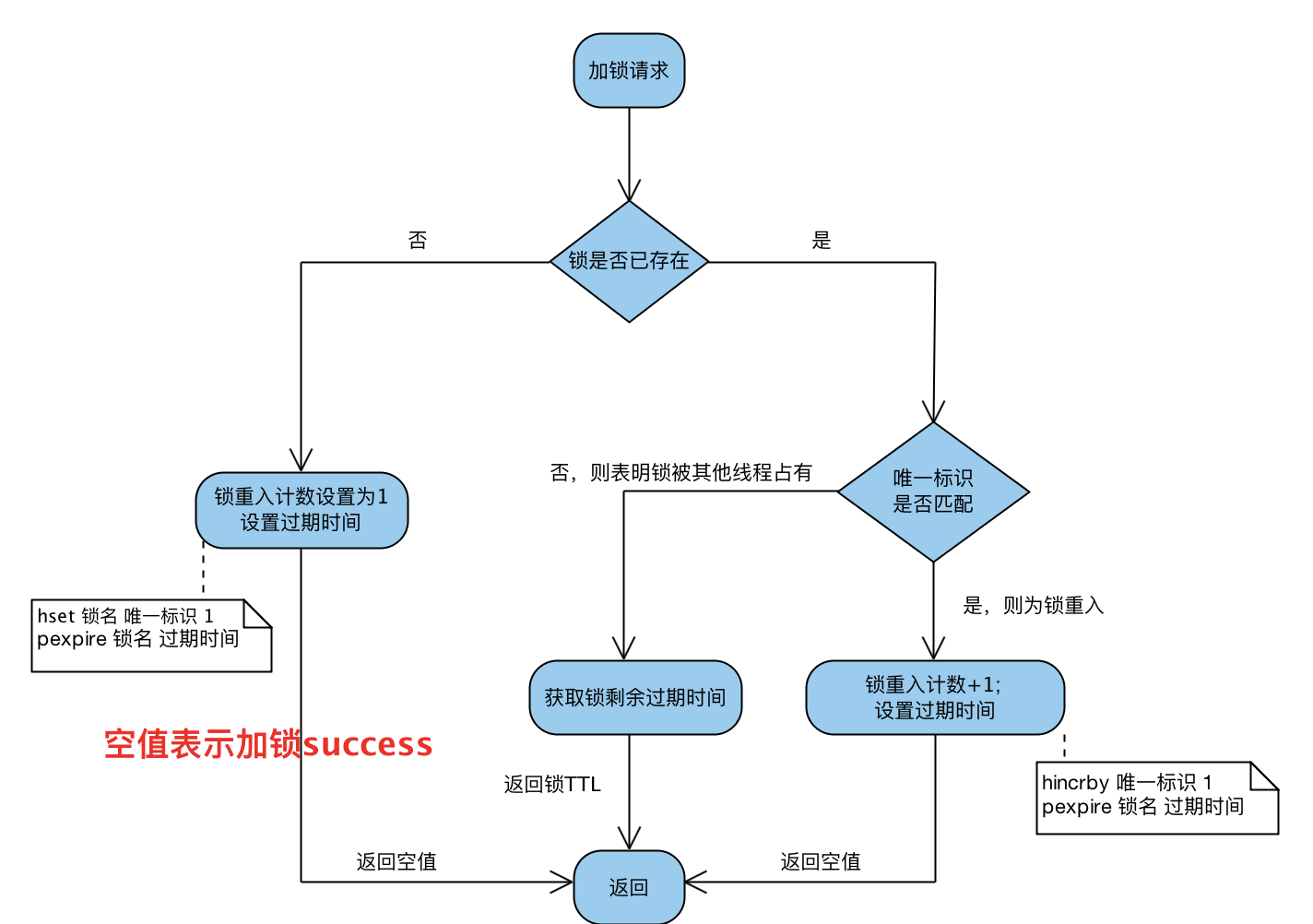
使用lua脚本实现加锁
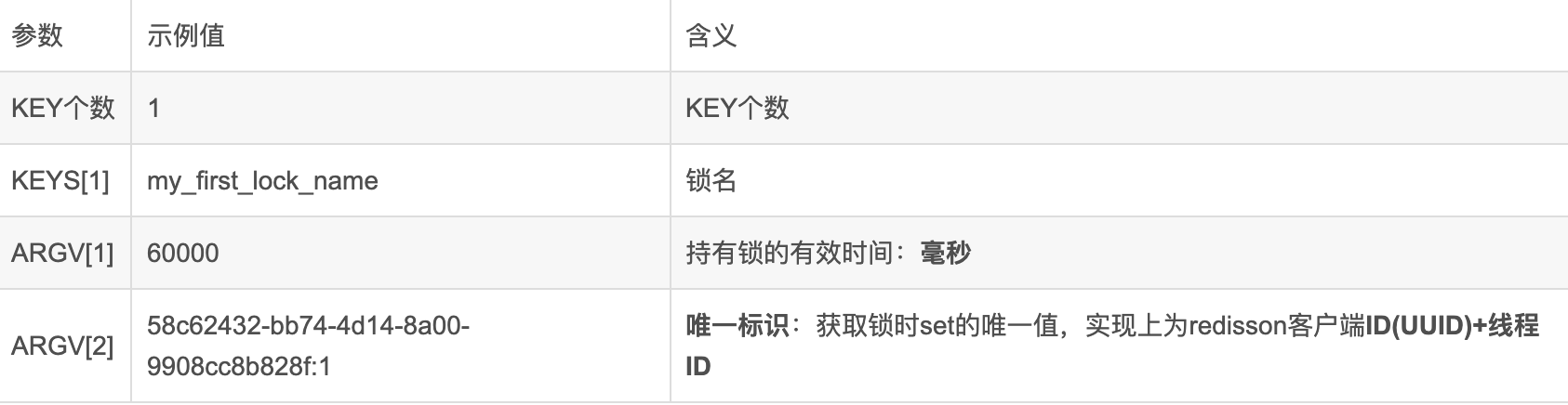
-- 若锁不存在:则新增锁,并设置锁重入计数为1、设置锁过期时间
if (redis.call('exists', KEYS[1]) == 0) then
    redis.call('hset', KEYS[1], ARGV[2], 1);
    redis.call('pexpire', KEYS[1], ARGV[1]);
    return nil;
end;

-- 若锁存在,且唯一标识也匹配:则表明当前加锁请求为锁重入请求,故锁重入计数+1,并再次设置锁过期时间
if (redis.call('hexists', KEYS[1], ARGV[2]) == 1) then
    redis.call('hincrby', KEYS[1], ARGV[2], 1);
    redis.call('pexpire', KEYS[1], ARGV[1]);
    return nil;
end;

-- 若锁存在,但唯一标识不匹配:表明锁是被其他线程占用,当前线程无权解他人的锁,直接返回锁剩余过期时间
return redis.call('pttl', KEYS[1]);
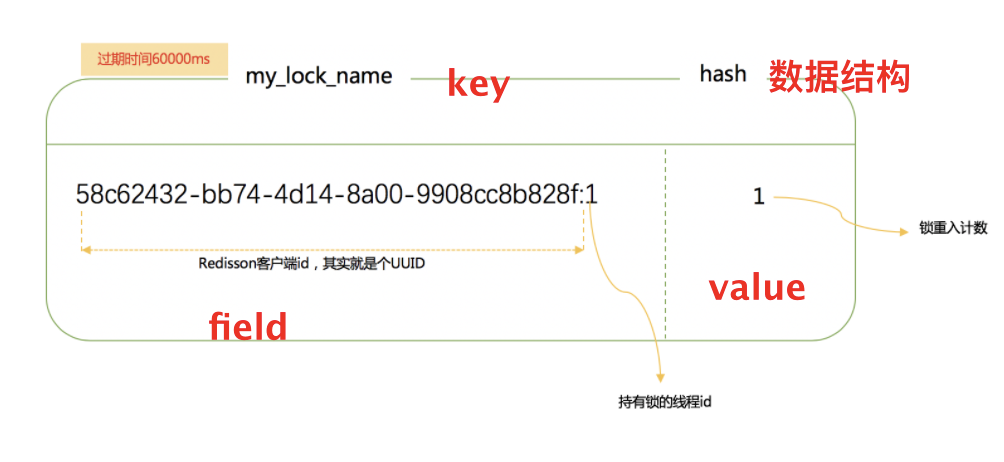
通过lua脚本看锁的数据结构
1、 一把锁--》一个hash结构(仅包含一条键值对)--》键为redisson客户端唯一标识+持有锁线程id,值为锁重入计数--》给hash设置的过期时间就是锁的过期时间。
加锁流程核心就3步
- Step1:尝试获取锁,这一步是通过执行加锁Lua脚本来做;
- Step2:若第一步未获取到锁,则去订阅解锁消息,当获取锁到剩余过期时间后,调用信号量方法阻塞住,直到被唤醒或等待超时
- Step3:一旦持有锁的线程释放了锁,就会广播解锁消息。于是,第二步中的解锁消息的监听器会释放信号量,获取锁被阻塞的那些线程就会被唤醒,并重新尝试获取锁。
比如 RedissonLock中的变量internalLockLeaseTime,默认值是30000毫秒,还有调用tryLockInnerAsync()传入的一个从连接管理器获取的getLockWatchdogTimeout(),他的默认值也是30000毫秒
宕机如何释放锁(设置过期时间)?超时怎么解决(自动延长)?
异步执行完lua脚本执行完成之后,设置了一个监听器,来处理异步执行结束之后的一些工作。上面设置了
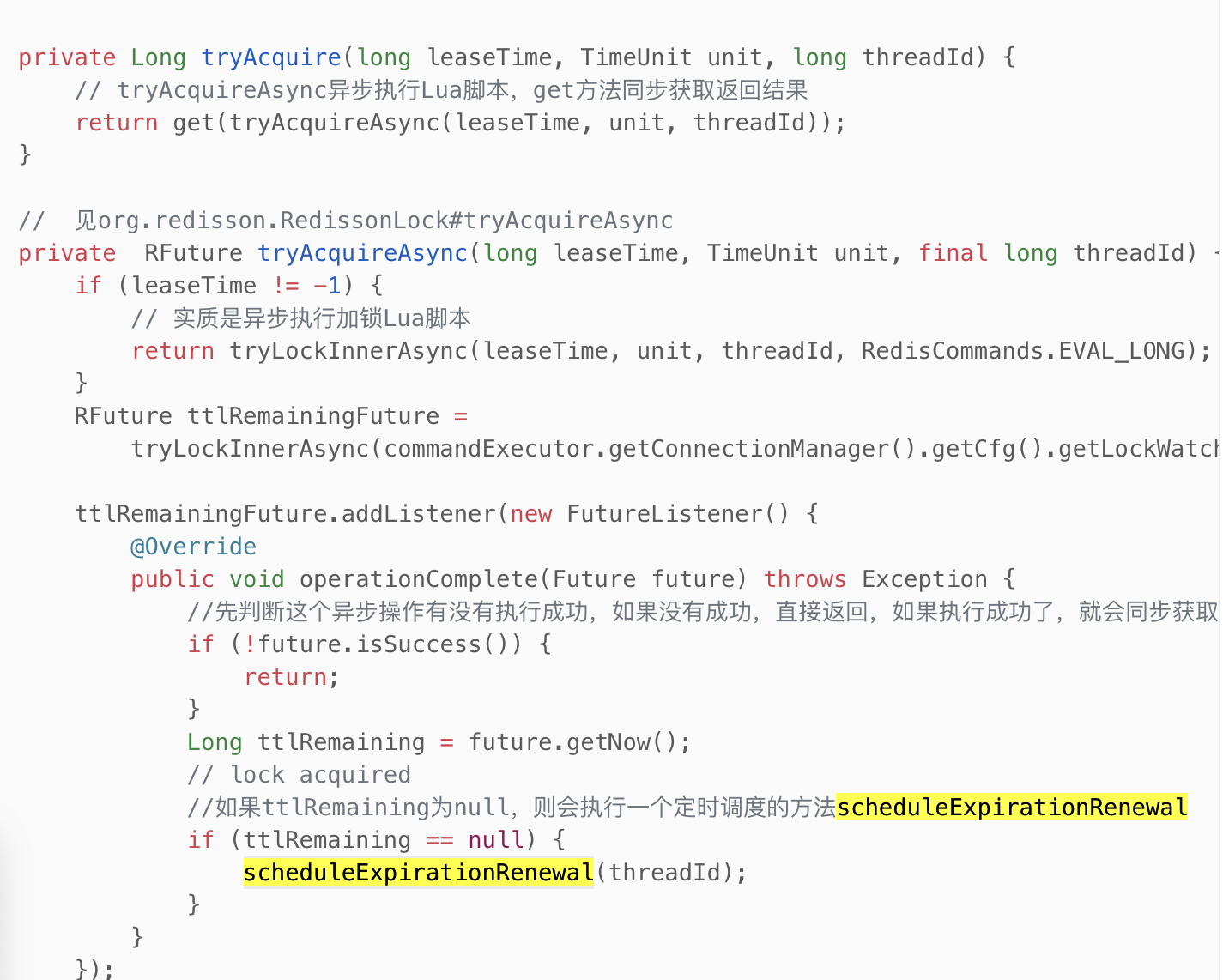
在操作完成之后会去执行operationComplete方法,先判断这个异步操作有没有执行成功,如果没有成功,直接返回,如果执行成功了,就会同步获取结果,如果ttlRemaining为null,则会执行一个定时调度的方法scheduleExpirationRenewal, lua脚本,
上面当加锁逻辑处理结束,返回了一个nil;如此说来 就一定会走定时任务了。来看下定时调度scheduleExpirationRenewal代码
定时延长缓存的过期时间
private void scheduleExpirationRenewal(final long threadId) {
    // 会先判断在expirationRenewalMap中是否存在了entryName,这是个map结构,
    // 主要还是判断在这个服务实例中的加锁客户端的锁key是否存在,如果已经存在了,就直接返回;
    if (expirationRenewalMap.containsKey(getEntryName())) {
        return;
    }
    // 第一次加锁,肯定是不存在的,
    // 搞了一个TimeTask,延迟internalLockLeaseTime/3之后执行,
    // 算下来就是大约10秒钟执行一次,调用了一个异步执行的方法。

    Timeout task = commandExecutor.getConnectionManager().newTimeout(new TimerTask() {
        @Override
        public void run(Timeout timeout) throws Exception {

            // 调用异步执行了一段lua脚本,
            // 首先判断这个锁key的map结构中是否存在对应的key
            // 如果存在,就直接调用pexpire命令设置锁key的过期时间,默认30000毫秒。
            // 延长过期时间
            RFuture<Boolean> future = commandExecutor
                .evalWriteAsync(
                getName(),
                LongCodec.INSTANCE,
                RedisCommands.EVAL_BOOLEAN,
                "if (redis.call('hexists', KEYS[1], ARGV[2]) == 1) then " +
                    "redis.call('pexpire', KEYS[1], ARGV[1]); " +
                    "return 1; " +
                "end; " +
                "return 0;",
                Collections.<Object>singletonList(getName()),
                internalLockLeaseTime, getLockName(threadId)
            );

            // 设置了一个监听器,在操作执行成功之后,会回调这个方法,
            // 如果调用失败会打一个错误日志并返回,更新锁过期时间失败
            future.addListener(new FutureListener<Boolean>() {
                @Override
                public void operationComplete(Future<Boolean> future) throws Exception {
                    expirationRenewalMap.remove(getEntryName());
                    if (!future.isSuccess()) {
                        log.error("Can't update lock " + getName() + " expiration", future.cause());
                        return;
                    }

                    if (future.getNow()) {
                        // reschedule itself
                        // 递归调用
                        scheduleExpirationRenewal(threadId);
                    }
                }
            });
        }
        // 成功获取到锁之后,会每隔十秒钟去执行一次
    }, internalLockLeaseTime / 3, TimeUnit.MILLISECONDS);

    if (expirationRenewalMap.putIfAbsent(getEntryName(), task) != null) {
        task.cancel();
    }
}
在锁key还没有失效的情况下,会把锁的过期时间继续延长到30000毫秒,也就是说只要这台服务实例没有挂掉,并且没有主动释放锁,看门狗都会每隔十秒给你续约一下,保证锁一直在你手中
锁的可重入性
当加锁的锁key存在的时候并且锁key对应的map结构中当前客户端的唯一key也存在时,会去调用hincrby命令,将唯一key的值自增一,并且会pexpire设置key的过期时间为30000毫秒,然后返回nil,可以想象这里也是加锁成功的,也会继续去执行定时调度任务,完成锁key过期时间的续约,这里呢,就实现了锁的可重入性。
那么当以上这种情况也没有发生呢,这里就会直接返回当前锁的剩余有效期,相应的也不会去执行续约逻辑。此时一直返回到上面的方法,如果加锁成功就直接返回;否则就会进入一个死循环,去尝试加锁,并且也会在等待一段时间之后一直循环尝试加锁,阻塞住,知道第一个服务实例释放锁。对于不同的服务实例尝试会获取一把锁,也和上面的逻辑类似,都是这样实现了锁的互斥。
解锁流程源码
紧接着,我们来看看锁释放的逻辑,其实也很简单,调用了lock.unlock()方法,跟着代码走流程发现,也是异步调用了一段lua脚本,lua脚本,应该就比较清晰,也就是通过判断锁key是否存在,如果不存在直接返回;否则就会判断当前客户端对应的唯一key的值是否存在,如果不存在就会返回nil;否则,值自增-1,判断唯一key的值是否大于零,如果大于零,则返回0;否则删除当前锁key,并返回1;返回到上一层方法,也是针对返回值进行了操作,如果返回值是1,则会去取消之前的定时续约任务,如果失败了,则会做一些类似设置状态的操作,这一些和解锁逻辑也没有什么关系,可以不去看他。
解锁流程相对比较简单,完全就是执行解锁Lua脚本,无额外的代码逻辑,直接看org.redisson.RedissonLock#unlock代码
@Override
public void unlock() {
    // 执行解锁Lua脚本,这里传入线程id,是为了保证加锁和解锁是同一个线程,避免误解锁其他线程占有的锁
    Boolean opStatus = get(unlockInnerAsync(Thread.currentThread().getId()));
    if (opStatus == null) {
        throw new IllegalMonitorStateException("attempt to unlock lock, not locked by current thread by node id: "
                                               + id + " thread-id: " + Thread.currentThread().getId());
    }
    if (opStatus) {
        cancelExpirationRenewal();
    }
}

// 见org.redisson.RedissonLock#unlockInnerAsync
protected RFuture unlockInnerAsync(long threadId) {
    return commandExecutor
        .evalWriteAsync(
        getName(),
        LongCodec.INSTANCE,
        RedisCommands.EVAL_BOOLEAN,
        "if (redis.call('exists', KEYS[1]) == 0) then " +
            "redis.call('publish', KEYS[2], ARGV[1]); " +
            "return 1; " +
        "end;" +
        "if (redis.call('hexists', KEYS[1], ARGV[3]) == 0) then " +
            "return nil;" +
        "end; " +
        "local counter = redis.call('hincrby', KEYS[1], ARGV[3], -1); " +
        "if (counter > 0) then " +
            "redis.call('pexpire', KEYS[1], ARGV[2]); " +
            "return 0; " +
        "else " +
            "redis.call('del', KEYS[1]); " +
            "redis.call('publish', KEYS[2], ARGV[1]); " +
            "return 1; "+
        "end; " +
        "return nil;",
        Arrays.<Object>asList(getName(), getChannelName()), LockPubSub.unlockMessage, internalLockLeaseTime, getLockName(threadId));

}
使用lua脚本实现解锁
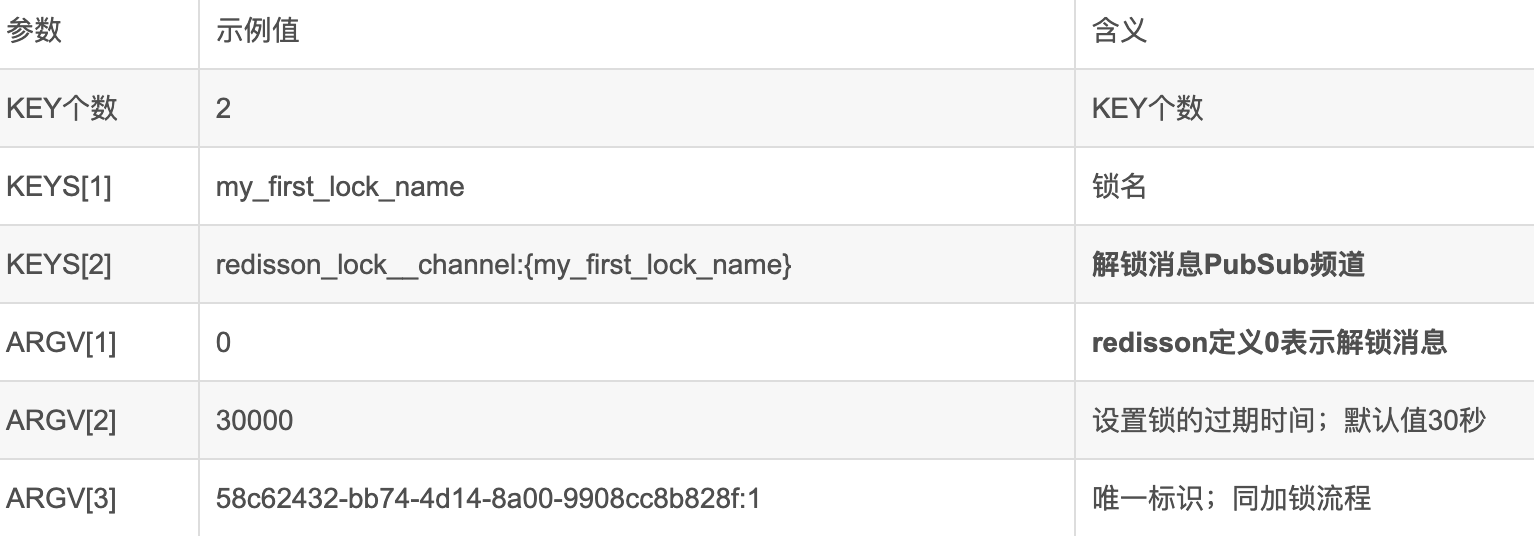
-- 若锁不存在:则直接广播解锁消息,并返回1
if (redis.call('exists', KEYS[1]) == 0) then
    redis.call('publish', KEYS[2], ARGV[1]);
    return 1;
end;

-- 若锁存在,但唯一标识不匹配:则表明锁被其他线程占用,当前线程不允许解锁其他线程持有的锁
if (redis.call('hexists', KEYS[1], ARGV[3]) == 0) then
    return nil;
end;

-- 若锁存在,且唯一标识匹配:则先将锁重入计数减1
local counter = redis.call('hincrby', KEYS[1], ARGV[3], -1);
if (counter > 0) then
    -- 锁重入计数减1后还大于0:表明当前线程持有的锁还有重入,不能进行锁删除操作,但可以友好地帮忙设置下过期时期
    redis.call('pexpire', KEYS[1], ARGV[2]);
    return 0;
else
    -- 锁重入计数已为0:间接表明锁已释放了。直接删除掉锁,并广播解锁消息,去唤醒那些争抢过锁但还处于阻塞中的线程
    redis.call('del', KEYS[1]);
    redis.call('publish', KEYS[2], ARGV[1]);
    return 1;
end;

return nil;
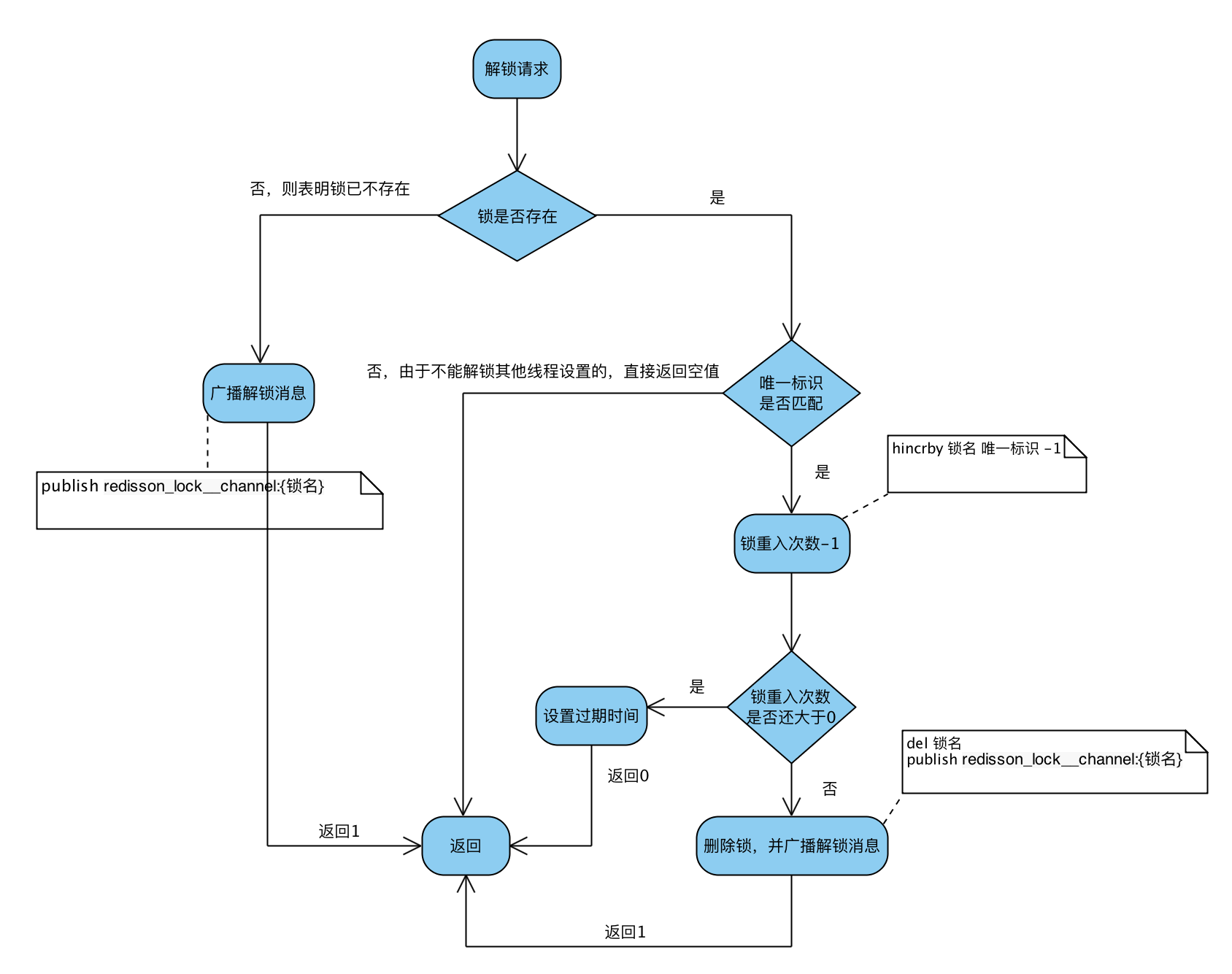
广播解锁消息有什么用? 是为了通知其他争抢锁阻塞住的线程,从阻塞中解除,并再次去争抢锁。
返回值0、1、nil有什么不一样? 当且仅当返回1,才表示当前请求真正触发了解锁Lua脚本
加锁&解锁流程串起来
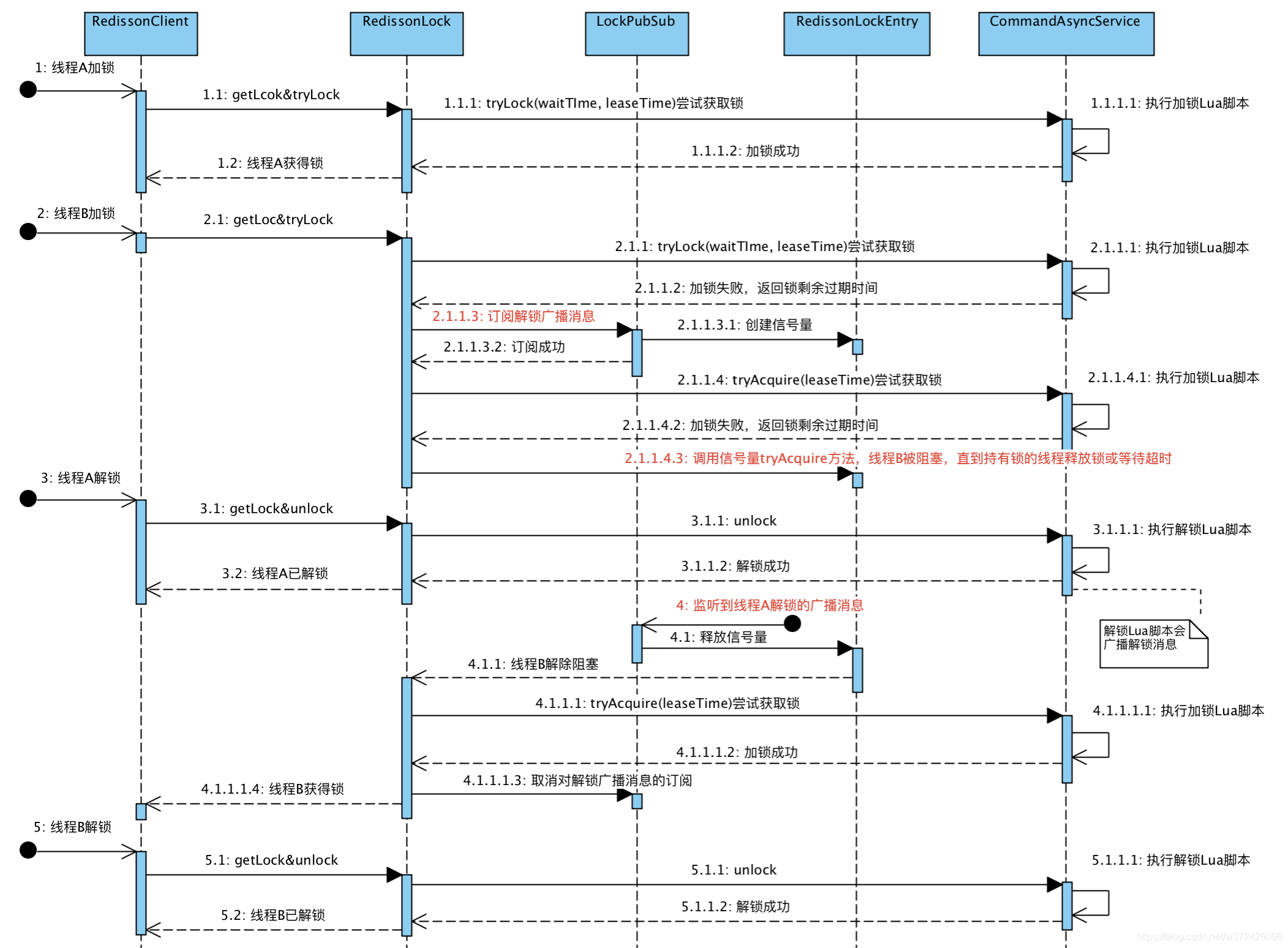
1、线程A和线程B两个线程同时争抢锁。线程A很幸运,最先抢到了锁。线程B在获取锁失败后,并未放弃希望,而是主动订阅了解锁消息,然后再尝试获取锁,顺便看看没有抢到的这把锁还有多久就过期,线程B就按需阻塞等锁释放。
2、线程A拿着锁干完了活,自觉释放了持有的锁,于此同时广播了解锁消息,通知其他抢锁的线程再来枪;
3、解锁消息的监听者LockPubSub收到消息后,释放自己持有的信号量;线程B就瞬间从阻塞中被唤醒了,接着再抢锁,这次终于抢到锁了!后面再按部就班,干完活,解锁
订阅频道名称(如:redisson_lock__channel:{my_first_lock_name})为什么有大括号?
-
在redis集群方案中,如果Lua脚本涉及多个key的操作,则需限制这些key在同一个slot中,才能保障Lua脚本执行的原子性。否则运行会报错Lua script attempted to access a non local key in a cluster node . channel;
-
HashTag是用{}包裹key的一个子串,若设置了HashTag,集群会根据HashTag决定key分配到哪个slot;HashTag不支持嵌套,只有第一个左括号{和第一个右括号}里面的内容才当做HashTag参与slot计算;通常,客户端都会封装这个计算逻辑。
// 见org.redisson.cluster.ClusterConnectionManager#calcSlot
@Override
public int calcSlot(String key) {
    if (key == null) {
        return 0;
    }
    int start = key.indexOf('{');
    if (start != -1) {
        int end = key.indexOf('}');
        key = key.substring(start+1, end);
    }

    int result = CRC16.crc16(key.getBytes()) % MAX_SLOT;
    log.debug("slot {} for {}", result, key);
    return result;
}
- 在解锁Lua脚本中,操作了两个key:一个是锁名my_lock_name,一个是解锁消息发布订阅频道redisson_lock__channel:{my_first_lock_name},按照上面slot计算方式,两个key都会按照内容my_first_lock_name来计算,故能保证落到同一个slot
redisson代码几乎都是以Lua脚本方式与redis服务端交互,如何跟踪这些脚本执行过程?
启动一个redis客户端终端,执行monitor命令以便在终端上实时打印 redis 服务器接收到的命令;然后debug执行redisson加锁/解锁测试用例,即可看到代码运行过程中实际执行了哪些Lua脚本
eg:上面整体流程示意图的测试用例位:
@RunWith(SpringRunner.class)
@SpringBootTest
public class RedissonDistributedLockerTest {
    private static final Logger log = LoggerFactory.getLogger(RedissonDistributedLocker.class);

    @Resource
    private DistributedLocker distributedLocker;

    private static final ExecutorService executorServiceB = Executors.newSingleThreadExecutor();

    private static final ExecutorService executorServiceC = Executors.newSingleThreadExecutor();

    @Test
    public void tryLockUnlockCost() throws Exception {
        StopWatch stopWatch = new StopWatch("加锁解锁耗时统计");
        stopWatch.start();
        for (int i = 0; i < 10000; i++) {
            String key = "mock-key:" + UUID.randomUUID().toString().replace("-", "");
            Optional<LockResource> optLocked = distributedLocker.tryLock(key, 600000, 600000);
            Assert.assertTrue(optLocked.isPresent());
            optLocked.get().unlock();
        }
        stopWatch.stop();
        log.info(stopWatch.prettyPrint());
    }

    @Test
    public void tryLock() throws Exception {
        String key = "mock-key:" + UUID.randomUUID().toString().replace("-", "");
        Optional<LockResource> optLocked = distributedLocker.tryLock(key, 600000, 600000);
        Assert.assertTrue(optLocked.isPresent());

        Optional<LockResource> optLocked2 = distributedLocker.tryLock(key, 600000, 600000);
        Assert.assertTrue(optLocked2.isPresent());

        optLocked.get().unlock();
    }

    /**
    * 模拟2个线程争抢锁:A先获取到锁,A释放锁后,B再获得锁
    */
    @Test
    public void tryLock2() throws Exception {
        String key = "mock-key:" + UUID.randomUUID().toString().replace("-", "");
        CountDownLatch countDownLatch = new CountDownLatch(1);
        Future<Optional<LockResource>> submit = executorServiceB.submit(() -> {
            countDownLatch.await();
            log.info("B尝试获得锁:thread={}", currentThreadId());
            return distributedLocker.tryLock(key, 600000, 600000);
        }
                                                                       );

        log.info("A尝试获得锁:thread={}", currentThreadId());
        Optional<LockResource> optLocked = distributedLocker.tryLock(key, 300000, 600000);
        Assert.assertTrue(optLocked.isPresent());

        log.info("A已获得锁:thread={}", currentThreadId());
        countDownLatch.countDown();

        optLocked.get().unlock();
        log.info("A已释放锁:thread={}", currentThreadId());

        Optional<LockResource> lockResource2 = submit.get();
        Assert.assertTrue(lockResource2.isPresent());

        executorServiceB.submit(() -> {
            log.info("B已获得锁:thread={}", currentThreadId());
            lockResource2.get().unlock();
            log.info("B已释放锁:thread={}", currentThreadId());
        });
    }

    /**
    * 模拟3个线程争抢锁:A先获取到锁,A释放锁后,B和C同时争抢锁
    */
    @Test
    public void tryLock3() throws Exception {
        String key = "mock-key:" + UUID.randomUUID().toString().replace("-", "");

        log.info("A尝试获得锁:thread={}", currentThreadId());
        Optional<LockResource> optLocked = distributedLocker.tryLock(key, 600000, 600000);

        if (optLocked.isPresent()) {
            log.info("A已获得锁:thread={}", currentThreadId());
        }
        Assert.assertTrue(optLocked.isPresent());

        CyclicBarrier cyclicBarrier = new CyclicBarrier(2);
        Future<Optional<LockResource>> submitB = executorServiceB.submit(() -> {
            cyclicBarrier.await();
            log.info("B尝试获得锁:thread={}", currentThreadId());
            return distributedLocker.tryLock(key, 600000, 600000);
        }
                                                                        );

        Future<Optional<LockResource>> submitC = executorServiceC.submit(() -> {
            cyclicBarrier.await();
            log.info("C尝试获得锁:thread={}", currentThreadId());
            return distributedLocker.tryLock(key, 600000, 600000);
        }
                                                                        );

        optLocked.get().unlock();
        log.info("A已释放锁:thread={}", currentThreadId());

        CountDownLatch countDownLatch = new CountDownLatch(2);
        executorServiceB.submit(() -> {
            log.info("B已获得锁:thread={}", currentThreadId());
            try {
                submitB.get().get().unlock();
            } catch (InterruptedException | ExecutionException e) {
                e.printStackTrace();
            }
            log.info("B已释放锁:thread={}", currentThreadId());
            countDownLatch.countDown();
        });

        executorServiceC.submit(() -> {
            log.info("C已获得锁:thread={}", currentThreadId());
            try {
                submitC.get().get().unlock();
            } catch (InterruptedException | ExecutionException e) {
                e.printStackTrace();
            }
            log.info("C已释放锁:thread={}", currentThreadId());
            countDownLatch.countDown();
        });

        countDownLatch.await();
    }

    private static Long currentThreadId() {
        return Thread.currentThread().getId();
    }

    @Test
    public void tryLockWaitTimeout() throws Exception {
        String key = "mock-key:" + UUID.randomUUID().toString();

        Optional<LockResource> optLocked = distributedLocker.tryLock(key, 10, 2000);
        Assert.assertTrue(optLocked.isPresent());

        Optional<LockResource> optLockResource = CompletableFuture.supplyAsync(() -> {
            long now = System.currentTimeMillis();
            Optional<LockResource> optLockedAgain = distributedLocker.tryLock(key, 1000, 10);
            long cost = System.currentTimeMillis() - now;
            log.info("cost={}", cost);
            return optLockedAgain;
        }).exceptionally(th -> {
            log.error("Exception: ", th);
            return Optional.empty();
        }).join();

        Assert.assertTrue(!optLockResource.isPresent());
    }

    @Test
    public void tryLockWithLeaseTime() throws Exception {
        String key = "mock-key-with-leaseTime:" + UUID.randomUUID().toString();
        Optional<LockResource> optLocked = distributedLocker.tryLock(key, 3000, 1000);
        Assert.assertTrue(optLocked.isPresent());

        // 可重入
        Optional<LockResource> optLockedAgain = distributedLocker.tryLock(key, 3000, 1000);
        Assert.assertTrue(optLockedAgain.isPresent());
    }

    /**
    * 模拟1000个并发请求枪一把锁
    */
    @Test
    public void tryLockWithLeaseTimeOnMultiThread() throws Exception {
        int totalThread = 1000;
        String key = "mock-key-with-leaseTime:" + UUID.randomUUID().toString();
        AtomicInteger tryAcquireLockTimes = new AtomicInteger(0);
        AtomicInteger acquiredLockTimes = new AtomicInteger(0);

        ExecutorService executor = Executors.newFixedThreadPool(totalThread);
        for (int i = 0; i < totalThread; i++) {
            executor.submit(new Runnable() {

                @Override
                public void run() {
                    tryAcquireLockTimes.getAndIncrement();
                    Optional<LockResource> optLocked = distributedLocker.tryLock(key, 10, 10000);
                    if (optLocked.isPresent()) {
                        acquiredLockTimes.getAndIncrement();
                    }
                }
            });
        }
        executor.awaitTermination(15, TimeUnit.SECONDS);

        Assert.assertTrue(tryAcquireLockTimes.get() == totalThread);
        Assert.assertTrue(acquiredLockTimes.get() == 1);
    }

    @Test
    public void tryLockWithLeaseTimeOnMultiThread2() throws Exception {
        int totalThread = 100;
        String key = "mock-key-with-leaseTime:" + UUID.randomUUID().toString();
        AtomicInteger tryAcquireLockTimes = new AtomicInteger(0);
        AtomicInteger acquiredLockTimes = new AtomicInteger(0);

        ExecutorService executor = Executors.newFixedThreadPool(totalThread);
        for (int i = 0; i < totalThread; i++) {
            executor.submit(new Runnable() {

                @Override
                public void run() {
                    long now = System.currentTimeMillis();
                    Optional<LockResource> optLocked = distributedLocker.tryLock(key, 10000, 5);
                    long cost = System.currentTimeMillis() - now;
                    log.info("tryAcquireLockTimes={}||wait={}", tryAcquireLockTimes.incrementAndGet(), cost);
                    if (optLocked.isPresent()) {
                        acquiredLockTimes.getAndIncrement();
                        // 主动释放锁
                        optLocked.get().unlock();
                    }
                }
            });
        }
        executor.awaitTermination(20, TimeUnit.SECONDS);

        log.info("tryAcquireLockTimes={}, acquireLockTimes={}", tryAcquireLockTimes.get(), acquiredLockTimes.get());
        Assert.assertTrue(tryAcquireLockTimes.get() == totalThread);
        Assert.assertTrue(acquiredLockTimes.get() == totalThread);
    }
}

public interface DistributedLocker {
    Optional<LockResource> tryLock(String lockKey, int waitTime);

    Optional<LockResource> tryLock(String lockKey, int waitTime, int leaseTime);
    public interface LockResource {
    	void unlock();
    }
}
执行的Lua脚本如下:
加锁:redissonClient.getLock("my_first_lock_name").tryLock(600000, 600000);
解锁:redissonClient.getLock("my_first_lock_name").unlock();
# 线程A
## 1.1.1尝试获取锁 -> 成功
1568357723.205362 [0 127.0.0.1:56419] "EVAL" "if (redis.call('exists', KEYS[1]) == 0) then redis.call('hset', KEYS[1], ARGV[2], 1); redis.call('pexpire', KEYS[1], ARGV[1]); return nil; end; if (redis.call('hexists', KEYS[1], ARGV[2]) == 1) then redis.call('hincrby', KEYS[1], ARGV[2], 1); redis.call('pexpire', KEYS[1], ARGV[1]); return nil; end; return redis.call('pttl', KEYS[1]);" "1" "my_first_lock_name" "600000" "58c62432-bb74-4d14-8a00-9908cc8b828f:1"
1568357723.205452 [0 lua] "exists" "my_first_lock_name"
1568357723.208858 [0 lua] "hset" "my_first_lock_name" "58c62432-bb74-4d14-8a00-9908cc8b828f:1" "1"
1568357723.208874 [0 lua] "pexpire" "my_first_lock_name" "600000"


# 线程B
### 2.1.1尝试获取锁,未获取到,返回锁剩余过期时间
1568357773.338018 [0 127.0.0.1:56417] "EVAL" "if (redis.call('exists', KEYS[1]) == 0) then redis.call('hset', KEYS[1], ARGV[2], 1); redis.call('pexpire', KEYS[1], ARGV[1]); return nil; end; if (redis.call('hexists', KEYS[1], ARGV[2]) == 1) then redis.call('hincrby', KEYS[1], ARGV[2], 1); redis.call('pexpire', KEYS[1], ARGV[1]); return nil; end; return redis.call('pttl', KEYS[1]);" "1" "my_first_lock_name" "600000" "58c62432-bb74-4d14-8a00-9908cc8b828f:26"
1568357773.338161 [0 lua] "exists" "my_first_lock_name"
1568357773.338177 [0 lua] "hexists" "my_first_lock_name" "58c62432-bb74-4d14-8a00-9908cc8b828f:26"
1568357773.338197 [0 lua] "pttl" "my_first_lock_name"


## 2.1.1.3 添加订阅(非Lua脚本) -> 订阅成功
1568357799.403341 [0 127.0.0.1:56421] "SUBSCRIBE" "redisson_lock__channel:{my_first_lock_name}"


## 2.1.1.4 再次尝试获取锁 -> 未获取到,返回锁剩余过期时间
1568357830.683631 [0 127.0.0.1:56418] "EVAL" "if (redis.call('exists', KEYS[1]) == 0) then redis.call('hset', KEYS[1], ARGV[2], 1); redis.call('pexpire', KEYS[1], ARGV[1]); return nil; end; if (redis.call('hexists', KEYS[1], ARGV[2]) == 1) then redis.call('hincrby', KEYS[1], ARGV[2], 1); redis.call('pexpire', KEYS[1], ARGV[1]); return nil; end; return redis.call('pttl', KEYS[1]);" "1" "my_first_lock_name" "600000" "58c62432-bb74-4d14-8a00-9908cc8b828f:26"
1568357830.684371 [0 lua] "exists" "my_first_lock_name"
1568357830.684428 [0 lua] "hexists" "my_first_lock_name" "58c62432-bb74-4d14-8a00-9908cc8b828f:26"
1568357830.684485 [0 lua] "pttl" "my_first_lock_name"


# 线程A
## 3.1.1 释放锁并广播解锁消息,0代表解锁消息
1568357922.122454 [0 127.0.0.1:56420] "EVAL" "if (redis.call('exists', KEYS[1]) == 0) then redis.call('publish', KEYS[2], ARGV[1]); return 1; end;if (redis.call('hexists', KEYS[1], ARGV[3]) == 0) then return nil;end; local counter = redis.call('hincrby', KEYS[1], ARGV[3], -1); if (counter > 0) then redis.call('pexpire', KEYS[1], ARGV[2]); return 0; else redis.call('del', KEYS[1]); redis.call('publish', KEYS[2], ARGV[1]); return 1; end; return nil;" "2" "my_first_lock_name" "redisson_lock__channel:{my_first_lock_name}" "0" "30000" "58c62432-bb74-4d14-8a00-9908cc8b828f:1"
1568357922.123645 [0 lua] "exists" "my_first_lock_name"
1568357922.123701 [0 lua] "hexists" "my_first_lock_name" "58c62432-bb74-4d14-8a00-9908cc8b828f:1"
1568357922.123741 [0 lua] "hincrby" "my_first_lock_name" "58c62432-bb74-4d14-8a00-9908cc8b828f:1" "-1"
1568357922.123775 [0 lua] "del" "my_first_lock_name"
1568357922.123799 [0 lua] "publish" "redisson_lock__channel:{my_first_lock_name}" "0"


# 线程B
## 监听到解锁消息消息 -> 释放信号量,阻塞被解除;4.1.1.1 再次尝试获取锁  -> 获取成功
1568357975.015206 [0 127.0.0.1:56419] "EVAL" "if (redis.call('exists', KEYS[1]) == 0) then redis.call('hset', KEYS[1], ARGV[2], 1); redis.call('pexpire', KEYS[1], ARGV[1]); return nil; end; if (redis.call('hexists', KEYS[1], ARGV[2]) == 1) then redis.call('hincrby', KEYS[1], ARGV[2], 1); redis.call('pexpire', KEYS[1], ARGV[1]); return nil; end; return redis.call('pttl', KEYS[1]);" "1" "my_first_lock_name" "600000" "58c62432-bb74-4d14-8a00-9908cc8b828f:26"
1568357975.015579 [0 lua] "exists" "my_first_lock_name"
1568357975.015633 [0 lua] "hset" "my_first_lock_name" "58c62432-bb74-4d14-8a00-9908cc8b828f:26" "1"
1568357975.015721 [0 lua] "pexpire" "my_first_lock_name" "600000"

## 4.1.1.3 取消订阅(非Lua脚本)
1568358031.185226 [0 127.0.0.1:56421] "UNSUBSCRIBE" "redisson_lock__channel:{my_first_lock_name}"


# 线程B
## 5.1.1 释放锁并广播解锁消息
1568358255.551896 [0 127.0.0.1:56417] "EVAL" "if (redis.call('exists', KEYS[1]) == 0) then redis.call('publish', KEYS[2], ARGV[1]); return 1; end;if (redis.call('hexists', KEYS[1], ARGV[3]) == 0) then return nil;end; local counter = redis.call('hincrby', KEYS[1], ARGV[3], -1); if (counter > 0) then redis.call('pexpire', KEYS[1], ARGV[2]); return 0; else redis.call('del', KEYS[1]); redis.call('publish', KEYS[2], ARGV[1]); return 1; end; return nil;" "2" "my_first_lock_name" "redisson_lock__channel:{my_first_lock_name}" "0" "30000" "58c62432-bb74-4d14-8a00-9908cc8b828f:26"
1568358255.552125 [0 lua] "exists" "my_first_lock_name"
1568358255.552156 [0 lua] "hexists" "my_first_lock_name" "58c62432-bb74-4d14-8a00-9908cc8b828f:26"
1568358255.552200 [0 lua] "hincrby" "my_first_lock_name" "58c62432-bb74-4d14-8a00-9908cc8b828f:26" "-1"
1568358255.552258 [0 lua] "del" "my_first_lock_name"
1568358255.552304 [0 lua] "publish" "redisson_lock__channel:{my_first_lock_name}" "0"
需要特别注意的是,RedissonLock 同样没有解决 节点挂掉的时候,存在丢失锁的风险的问题。而现实情况是有一些场景无法容忍的,所以 Redisson 提供了实现了redlock算法的 RedissonRedLock,RedissonRedLock 真正解决了单点失败的问题,代价是需要额外的为 RedissonRedLock 搭建Redis环境。
所以,如果业务场景可以容忍这种小概率的错误,则推荐使用 RedissonLock, 如果无法容忍,则推荐使用 RedissonRedLock。
redlock算法
在分布式版本的算法里我们假设我们有N个Redis master节点,这些节点都是完全独立的,我们不用任何复制或者其他隐含的分布式协调机制。
把N设成5,这是一个比较合理的设置,所以我们需要在5台机器上面或者5台虚拟机上面运行这些实例,这样保证他们不会同时都宕掉。为了取到锁,客户端应该执行以下操作:
- 获取当前Unix时间,以毫秒为单位。
- 依次尝试从5个实例,使用相同的key和具有唯一性的value(例如UUID)获取锁。当向Redis请求获取锁时,客户端应该设置一个尝试从某个Reids实例获取锁的最大等待时间(超过这个时间,则立马询问下一个实例),这个超时时间应该小于锁的失效时间。例如你的锁自动失效时间为10秒,则超时时间应该在5-50毫秒之间。这样可以避免服务器端Redis已经挂掉的情况下,客户端还在死死地等待响应结果。如果服务器端没有在规定时间内响应,客户端应该尽快尝试去另外一个Redis实例请求获取锁。
- 客户端使用当前时间减去开始获取锁时间(步骤1记录的时间)就得到获取锁消耗的时间。当且仅当从大多数(N/2+1,这里是3个节点)的Redis节点都取到锁,并且使用的总耗时小于锁失效时间时,锁才算获取成功。
- 如果取到了锁,key的真正有效时间 = 有效时间(获取锁时设置的key的自动超时时间) - 获取锁的总耗时(询问各个Redis实例的总耗时之和)(步骤3计算的结果)。
- 如果因为某些原因,最终获取锁失败(即没有在至少 “N/2+1 ”个Redis实例取到锁或者“获取锁的总耗时”超过了“有效时间”),客户端应该在所有的Redis实例上进行解锁(即便某些Redis实例根本就没有加锁成功,这样可以防止某些节点获取到锁但是客户端没有得到响应而导致接下来的一段时间不能被重新获取锁)。
用 Redisson 实现分布式锁(红锁 RedissonRedLock)及源码分析(实现三)
这里以三个单机模式为例,需要特别注意的是他们完全互相独立,不存在主从复制或者其他集群协调机制。
Config config1 = new Config();
config1.useSingleServer().setAddress("redis://172.0.0.1:5378").setPassword("a123456").setDatabase(0);
RedissonClient redissonClient1 = Redisson.create(config1);

Config config2 = new Config();
config2.useSingleServer().setAddress("redis://172.0.0.1:5379").setPassword("a123456").setDatabase(0);
RedissonClient redissonClient2 = Redisson.create(config2);

Config config3 = new Config();
config3.useSingleServer().setAddress("redis://172.0.0.1:5380").setPassword("a123456").setDatabase(0);
RedissonClient redissonClient3 = Redisson.create(config3);

/**
 * 获取多个 RLock 对象
 */
RLock lock1 = redissonClient1.getLock(lockKey);
RLock lock2 = redissonClient2.getLock(lockKey);
RLock lock3 = redissonClient3.getLock(lockKey);

/**
 * 根据多个 RLock 对象构建 RedissonRedLock (最核心的差别就在这里)
 */
RedissonRedLock redLock = new RedissonRedLock(lock1, lock2, lock3);

try {
    /**
     * 4.尝试获取锁
     * waitTimeout 尝试获取锁的最大等待时间,超过这个值,则认为获取锁失败
     * leaseTime   锁的持有时间,超过这个时间锁会自动失效(值应设置为大于业务处理的时间,确保在锁有效期内业务能处理完)
     */
    boolean res = redLock.tryLock((long)waitTimeout, (long)leaseTime, TimeUnit.SECONDS);
    if (res) {
        //成功获得锁,在这里处理业务
    }
} catch (Exception e) {
    throw new RuntimeException("aquire lock fail");
}finally{
    //无论如何, 最后都要解锁
    redLock.unlock();
}
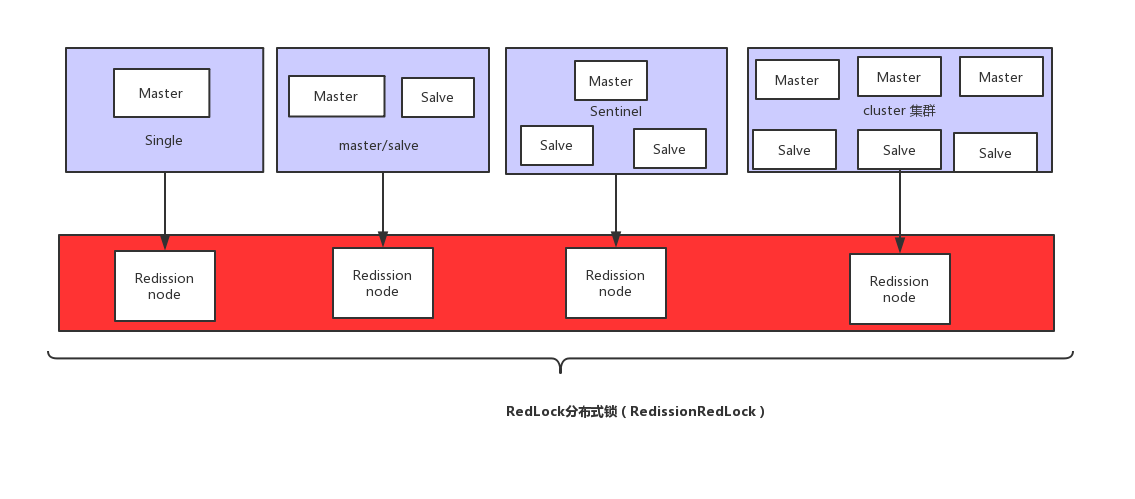
最核心的变化就是需要构建多个 RLock ,然后根据多个 RLock 构建成一个 RedissonRedLock,因为 redLock 算法是建立在多个互相独立的 Redis 环境之上的(为了区分可以叫为 Redission node),Redission node 节点既可以是单机模式(single),也可以是主从模式(master/salve),哨兵模式(sentinal),或者集群模式(cluster)。这就意味着,不能跟以往这样只搭建 1个 cluster、或 1个 sentinel 集群,或是1套主从架构就了事了,需要为 RedissonRedLock 额外搭建多几套独立的 Redission 节点。 比如可以搭建3个 或者5个 Redission节点,具体可看视资源及业务情况而定。
下图是一个利用多个 Redission node 最终 组成 RedLock分布式锁的例子,需要特别注意的是每个 Redission node 是互相独立的,不存在任何复制或者其他隐含的分布式协调机制。
Redisson 实现redlock算法源码分析(RedLock)
加锁核心代码
org.redisson.RedissonMultiLock#tryLock
public boolean tryLock(long waitTime, long leaseTime, TimeUnit unit) throws InterruptedException {
    long newLeaseTime = -1;
    if (leaseTime != -1) {
        newLeaseTime = unit.toMillis(waitTime)*2;
    }

    long time = System.currentTimeMillis();
    long remainTime = -1;
    if (waitTime != -1) {
        remainTime = unit.toMillis(waitTime);
    }
    long lockWaitTime = calcLockWaitTime(remainTime);
    /**
     * 1. 允许加锁失败节点个数限制(N-(N/2+1))
     */
    int failedLocksLimit = failedLocksLimit();
    /**
     * 2. 遍历所有节点通过EVAL命令执行lua加锁
     */
    List<RLock> acquiredLocks = new ArrayList<>(locks.size());
    for (ListIterator<RLock> iterator = locks.listIterator(); iterator.hasNext();) {
        RLock lock = iterator.next();
        boolean lockAcquired;
        /**
         *  3.对节点尝试加锁
         */
        try {
            if (waitTime == -1 && leaseTime == -1) {
                lockAcquired = lock.tryLock();
            } else {
                long awaitTime = Math.min(lockWaitTime, remainTime);
                lockAcquired = lock.tryLock(awaitTime, newLeaseTime, TimeUnit.MILLISECONDS);
            }
        } catch (RedisResponseTimeoutException e) {
            // 如果抛出这类异常,为了防止加锁成功,但是响应失败,需要解锁所有节点
            unlockInner(Arrays.asList(lock));
            lockAcquired = false;
        } catch (Exception e) {
            // 抛出异常表示获取锁失败
            lockAcquired = false;
        }

        if (lockAcquired) {
            /**
             *4. 如果获取到锁则添加到已获取锁集合中
             */
            acquiredLocks.add(lock);
        } else {
            /**
             * 5. 计算已经申请锁失败的节点是否已经到达 允许加锁失败节点个数限制 (N-(N/2+1))
             * 如果已经到达, 就认定最终申请锁失败,则没有必要继续从后面的节点申请了
             * 因为 Redlock 算法要求至少N/2+1 个节点都加锁成功,才算最终的锁申请成功
             */
            if (locks.size() - acquiredLocks.size() == failedLocksLimit()) {
                break;
            }

            if (failedLocksLimit == 0) {
                unlockInner(acquiredLocks);
                if (waitTime == -1 && leaseTime == -1) {
                    return false;
                }
                failedLocksLimit = failedLocksLimit();
                acquiredLocks.clear();
                // reset iterator
                while (iterator.hasPrevious()) {
                    iterator.previous();
                }
            } else {
                failedLocksLimit--;
            }
        }

        /**
         * 6.计算 目前从各个节点获取锁已经消耗的总时间,如果已经等于最大等待时间,则认定最终申请锁失败,返回false
         */
        if (remainTime != -1) {
            remainTime -= System.currentTimeMillis() - time;
            time = System.currentTimeMillis();
            if (remainTime <= 0) {
                unlockInner(acquiredLocks);
                return false;
            }
        }
    }

    if (leaseTime != -1) {
        List<RFuture<Boolean>> futures = new ArrayList<>(acquiredLocks.size());
        for (RLock rLock : acquiredLocks) {
            RFuture<Boolean> future = ((RedissonLock) rLock).expireAsync(unit.toMillis(leaseTime), TimeUnit.MILLISECONDS);
            futures.add(future);
        }

        for (RFuture<Boolean> rFuture : futures) {
            rFuture.syncUninterruptibly();
        }
    }

    /**
     * 7.如果逻辑正常执行完则认为最终申请锁成功,返回true
     */
    return true;
}
[
](https://blog.csdn.net/w372426096/article/details/103761286)
jedis和spring-boot-starter-data-redis(lettuce)的性能测试比较
https://blog.csdn.net/houpeibin2012/article/details/105839651
https://blog.csdn.net/qq_40925189/article/details/109580439
redission文档
https://github.com/redisson/redisson/wiki/%E7%9B%AE%E5%BD%95
分布式锁
https://blog.csdn.net/qq_33363618/article/details/88783766
分布式锁比较


 浙公网安备 33010602011771号