
用python分析川普就职演讲稿
先贴一篇IBM沃森文本分析历届美国总统就职的演讲稿:http://36kr.com/p/5062661.html
2017年1月20日中午,唐纳德-特朗普在首都华盛顿宣誓就职,正式成为美国第45任总统。完成了从房地产老板直接到美国总统的华丽转身!今儿我们就对他的演讲稿进行文本分析,看看能不能翻出啥有意思的点。
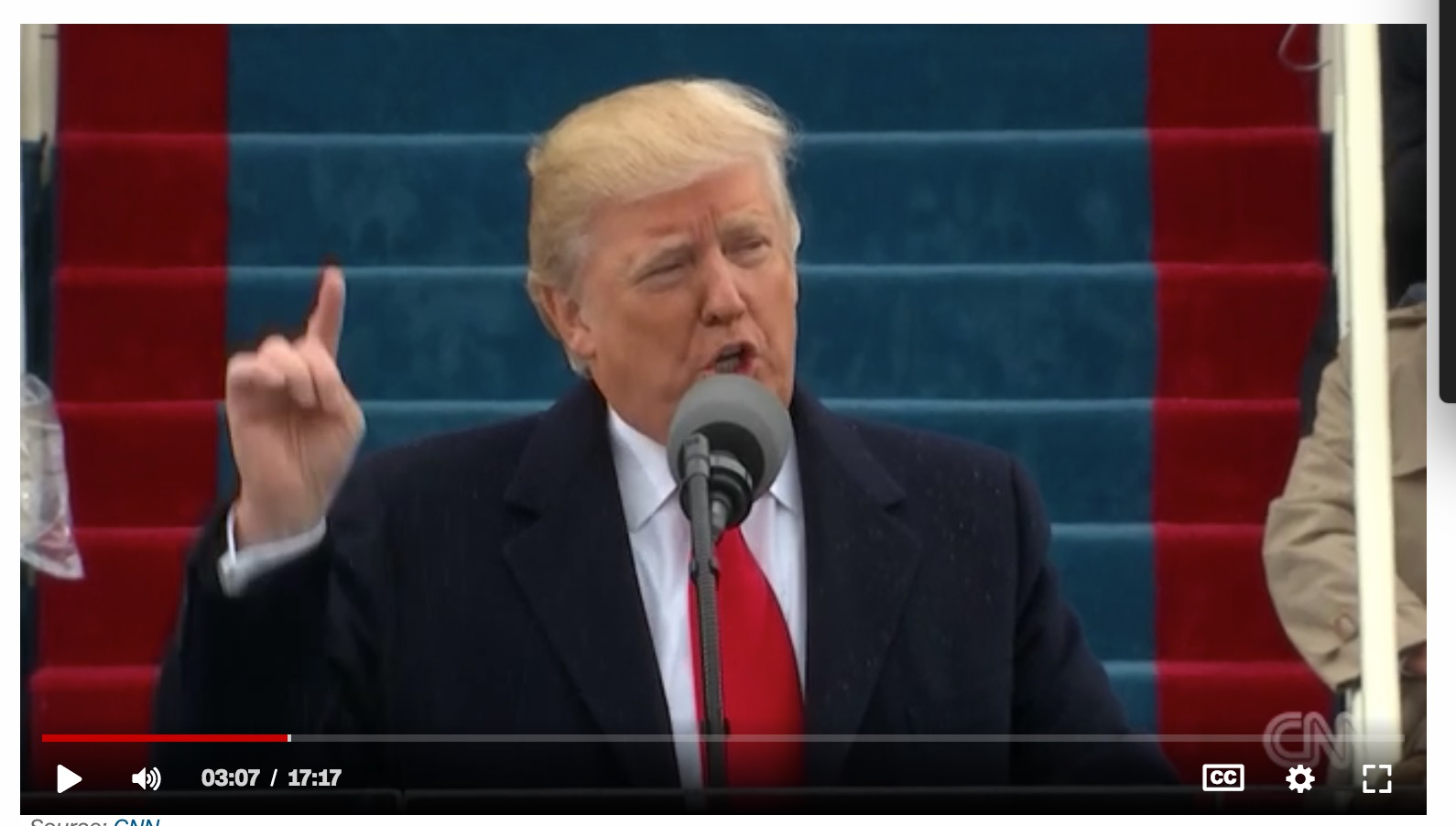
首先,在CNN上面找到了川普就职的演讲稿及演讲视频,具体网址:https://edition.cnn.com/2017/01/20/politics/trump-inaugural-address/index.html
代码如下:
speech_text='''演讲稿内容'''
speech=speech_test.lower().split() #对演讲稿内容进行小写转化,并进行单个词的分割
dic={} #建立空词典,储存演讲稿中的词
for word in speech:
if word in dic:
dic[word]+=1
else:
dic[word]=1
dic#显示词典,接下来就是对词典进行处理,词典长这么个样子(只复制了一部分)
{'"how': 1,
 '--': 4,
 '17:17': 1,
 '2017,': 1,
 '20th': 1,
 'a': 15,
 'about': 2,
 'accept': 1,
 'across': 5,
 'action': 1,
 'action.': 1,
 'address': 1,
 'administration': 1,
 'affairs,': 1,
 'again,': 1}
|
import operator
swd=sorted(dic.items(),key=operator.itemgetter(1),reverse=True) #对词典内容进行value的提取,并且按照value逆序进行排序
swd#显示swd,具体如下,按照数值从大到小进行的排序(限于篇幅,只复制了一部分):
[('and', 73),
 ('the', 71),
 ('of', 48),
 ('our', 48),
 ('we', 45),
 ('will', 40),
 ('to', 37),
 ('is', 21),
 ('a', 15),
 ('for', 15),
 ('are', 14),
 ('in', 14),
 ('but', 13),
 ('all', 12),
 ('from', 12),
 ('be', 12),
 ('their', 11),
 ('american', 11),
 ('your', 11),
 ('not', 10),
 ('america', 9),
 ('this', 9),
 ('it', 9),
 ('that', 8),
 ('again.', 8),
 ('with', 8),
 ('every', 7),
 ('one', 7),
 ('you', 7),
 ('people', 6),
 ('great', 6),
 ('country', 6),
 ('on', 6),
 ('has', 6),
 ('back', 6),
 ('while', 6),
 ('by', 6),
 ('no', 6),
 ('new', 6),
 ('same', 6),
 ('president', 5),
 ('they', 5),
 ('have', 5),
 ('across', 5),
 ('right', 5),
 ('never', 5),
 ('at', 5),
 ('make', 5),
 ('you.', 4),
 ('america,', 4),
 ('world', 4),
 ('been', 4),
 ('today', 4),
 ('or', 4),
 ('--', 4),
 ('everyone', 4),
 ('which', 4),
 ('as', 4),
 ('nation', 4),
 ('other', 4),
 ('bring', 4),
 ('now', 3),
 ('its', 3),
 ('people.', 3),
 ('together,', 3),
 ('these', 3),
 ('too', 3),
 ("nation's", 3),
 ('factories', 3),
 ('protected', 3),
 ('there', 3),
 ('here', 3),
 ('america.', 3),
 ('whether', 3),
 ('millions', 3),
 ('many', 3),
 ('an', 3),
 ('so', 3),
 ('i', 3),
 ("we've", 3),
 ('foreign', 3),
 ('countries', 3),
 ('must', 3),
 ('let', 3),
 ('do', 3),
 ('when', 3),
 ('heart', 3),
 ('entire', 2),
 ('americans,', 2),
 ('thank', 2),
 ('citizens', 2),
 ('national', 2),
 ('face', 2),
 ('get', 2),
 ('done.', 2),
 ('obama', 2),
 ('very', 2),
 ('because', 2),
 ('transferring', 2),
 ('power', 2),
 ('party', 2),
 ('small', 2),
 ('government', 2),
 ('share', 2),
 ('wealth.', 2),
 ('politicians', 2),
 ('jobs', 2),
 ('country.', 2),
 ('capital,', 2),
 ('land.', 2),
 ('moment', 2),
 ('belongs', 2),
 ('united', 2),
 ('states', 2),
 ('day', 2),
 ('forgotten', 2),
 ('men', 2),
 ('women', 2),
 ('now.', 2),
 ('movement', 2),
 ('before.', 2),
 ('safe', 2),
 ('good', 2),
 ('like', 2),
]
|
#可以看得出来,里面有很多没有用处的词语,我们需要进行剔除,所以需要导入停止词。
import nltk
from nltk.corpus import stopwords
stop_words=stopwords.words('English')
stop_words#可以查看导入了哪些停止词,限于篇幅,也只黏贴一部分
['i', 'me', 'my', 'myself', 'we', 'our', 'ours', 'ourselves', 'you', "you're", "you've", "you'll", "you'd", 'your', 'yours', 'yourself', 'yourselves', 'he', 'him', 'his', 'himself', 'she', "she's", 'her', 'hers', 'herself', 'it', "it's", 'its', 'itself', 'they', 'them', 'their'] |
for k,v in swd: #将swd中去除停止词
if k not in stop_words:
print(k,v)
我们可以看到词汇统计结果如下:

 浙公网安备 33010602011771号