
顺序查找
按照基本的顺序排序,简单地从一个项移动到另一个项,直到找到我们正在寻找的项或遍历完整个列表。

def  sequentialSearch(alist,item):
    pos = 0
    found = False


    while pos < len(alist)  and not found:
        if alist[pos] == item:
            found = True
        else:
            pos += 1

    return  found


testlist = [1, 2, 32, 8, 17, 19, 42, 13, 0]
print(sequentialSearch(testlist, 3))
print(sequentialSearch(testlist, 13))
查找性能情况:
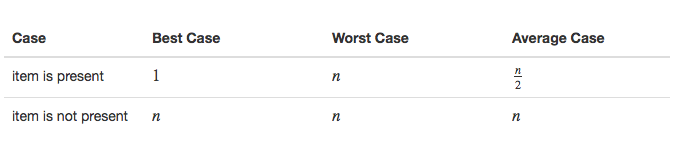
假设项的列表按升序排列。如果我们正在寻找的项存在于列表中,它在 n 个位置中的概率依旧相同。我们仍然会有相同数量的比较来找到该项。然而,如果该项不存在,则有一些优点。

def orderedSequentialSearch(alist,item):
    pos = 0
    found = False
    stop = False

    while pos < len(alist) and not found and not stop:
        if alist[pos] == item:
            found = True
        else:
            if alist[pos] > item:
                stop = True
            else:
                pos += 1

    return  found

testlist = [0, 1, 2, 8, 13, 17, 19, 32, 42,]
print(orderedSequentialSearch(testlist, 3))
print(orderedSequentialSearch(testlist, 13))
查找性能情况:

在最好的情况下,我们通过只查看一项会发现该项不在列表中。 平均来说,我们将只了解 n/2 项就知道。然而,这种复杂度仍然是 O(n)。

 浙公网安备 33010602011771号