

1.


#include "battery.h"
battery::battery(int batterysize0) :batterysize(batterysize0) {
};
int battery::showbattery() {
    return batterysize;
}
#ifndef battery_H
#define battery_H
class battery{
public:
       battery(int batterysize0=70);
       int showbattery();
private:
        int batterysize;
};
#endif
#include"car.h"
#include<string>
#include<iostream>
using namespace std;
Car::Car(string maker0, string model0, int year0, int odometer0) :maker(maker0), model(model0), year(year0), odometer(odometer0) {
};
string Car::showmaker() {
    return maker;
}
string Car::showmodel() {
    return model;
}
int Car::showyear() {
    return year;
}
int Car::showodometer() {
    return odometer;
}
ostream &operator<<(ostream &out, Car &c) {
    out << "maker:" << c.maker << endl << "model:" << c.model << endl << "year:" << c.year << endl << "odometer:" << c.odometer << endl;
    return out;
}
int Car::updateOdometer(int a) {
    if (a < odometer)
        cout << "the new odometer is wrong" << endl;
    else
        odometer = a;
    return odometer;
}
#ifndef CAR_H
#define CAR_H
#include <string>
#include <iostream>
using namespace std;
class Car {
public:
    Car(string maker0, string model0, int year0, int odometer0 = 0);
    friend ostream&operator<<(ostream &out, Car &c);
    int updateOdometer(int a);
    string showmaker();
    string showmodel();
    int showyear();
    int showodometer();
private:
    string maker;
    string model;
    int year;
    int odometer;
};
#endif
#include <iostream>
#include "car.h"
#include "battery.h"
#include "electricCar.h"
using namespace std;
ElectricCar::ElectricCar(string maker0, string model0, int year0, int odometer0) :Car(maker0, model0, year0, odometer0) {
}
std::ostream &operator<<(std::ostream &out, ElectricCar &c) {
    out << "maker:" << c.showmaker() << endl<< "model:" << c.showmodel() << endl<< "year:" << c.showyear() << endl<< "odometer:" << c.showodometer() << endl<< "batterysize:" << c.showbattery() << "-kwh" << endl;
    return out;
}
#ifndef electric_H
#define electric_H
#include"battery.h"
#include"car.h"

class ElectricCar : public Car, public battery {
public:
    ElectricCar(string maker0, string model0, int year0, int odometer0 = 0);
    friend std::ostream & operator<<(std::ostream &out, ElectricCar &c);
private:
    battery battery;
};
#endif
#include <iostream>
using namespace std;
#include "car.h"
#include "electricCar.h"

int main() {
    // 测试Car类
    Car oldcar("Audi", "a4", 2016);
    cout << "--------oldcar's info--------" << endl;
    oldcar.updateOdometer(25000);
    cout << oldcar << endl;

    // 测试ElectricCar类
    ElectricCar newcar("Tesla", "model s", 2016);
    newcar.updateOdometer(2500);
    cout << "\n--------newcar's info--------\n";
    cout << newcar << endl;

    system("pause");

    return 0;
}
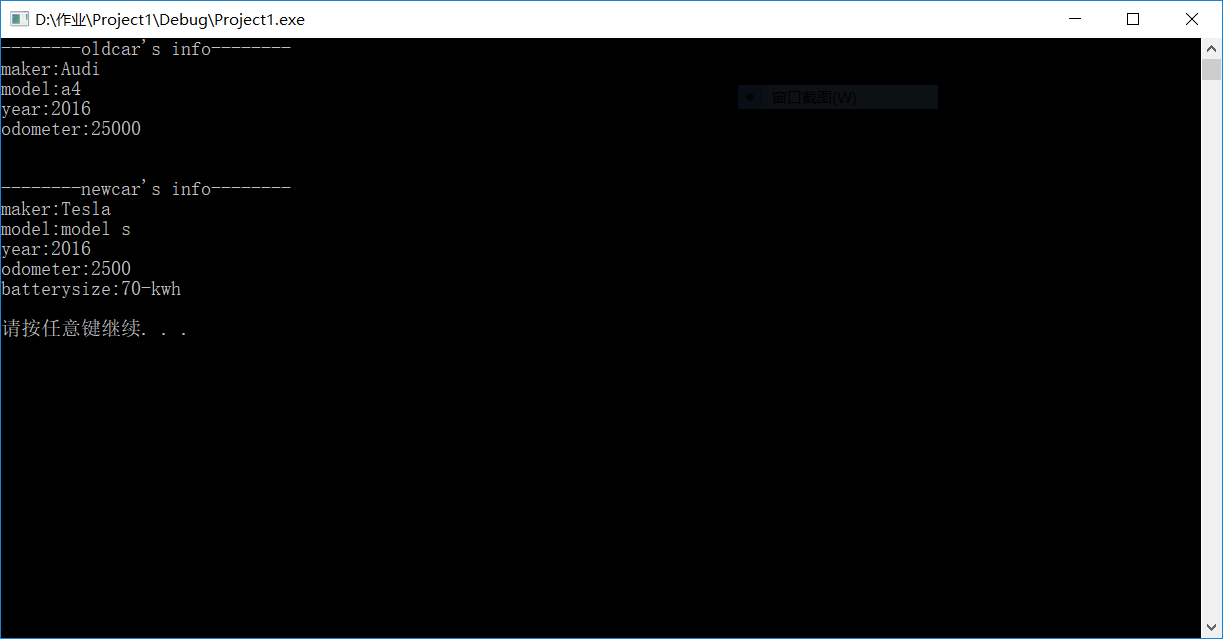
2.
#ifndef ARRAY_INT_H
#define ARRAY_INT_H

class ArrayInt {
public:
    ArrayInt(int n, int value = 0);
    ~ArrayInt();
    int &operator[](int x);// 补足:将运算符[]重载为成员函数的声明
    // ×××
    void print();
private:
    int *p;
    int size;
};
#endif
#include "arrayInt.h"
#include <iostream>
#include <cstdlib>
using std::cout;
using std::endl;

ArrayInt::ArrayInt(int n, int value) : size(n) {
    p = new int[size];

    if (p == nullptr) {
        cout << "fail to mallocate memory" << endl;
        exit(0);
    }

    for (int i = 0; i < size; i++)
        p[i] = value;
}

ArrayInt::~ArrayInt() {
    delete[] p;
}

void ArrayInt::print() {
    for (int i = 0; i < size; i++)
        cout << p[i] << " ";
    cout << endl;
}

int &ArrayInt::operator[](int x) {
    return p[x];
}
#include <iostream>
using namespace std;

#include "arrayInt.h"

int main() {
    // 定义动态整型数组对象a,包含2个元素,初始值为0
    ArrayInt a(2);
    a.print();

    // 定义动态整型数组对象b,包含3个元素,初始值为6
    ArrayInt b(3, 6);
    b.print();

    // 通过对象名和下标方式访问并修改对象元素
    b[0] = 2;
    cout << b[0] << endl;
    b.print();

    system("pause");

    return 0;
}
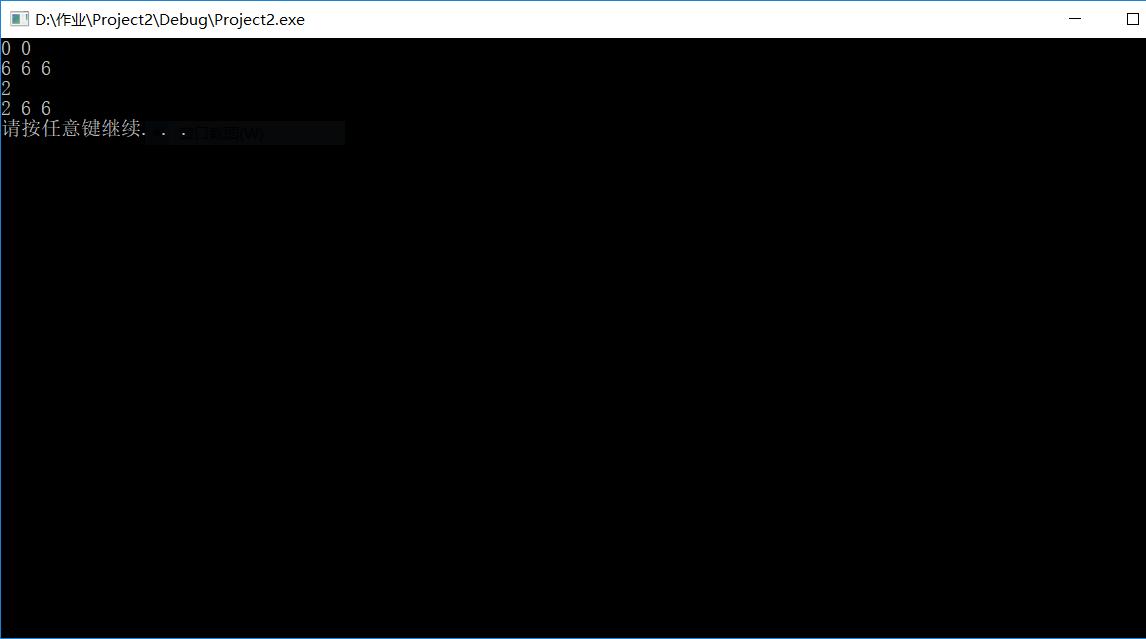
总结:1.通过本次实验,发现自己在第一题综合性问题上做的不是很好,所以前面掌握的都不是很好,遇到报错自己也不能解决需要别人的帮助。2.希望自己能多花点时间去学习自己没有掌握的知识。
https://www.cnblogs.com/Yyaoyyy/p/10887670.html
https://www.cnblogs.com/qsxsc/p/10887283.html
https://www.cnblogs.com/lovecpp/p/10854382.html

 浙公网安备 33010602011771号