# -*- encoding:utf-8 -*-
#引入socket模块
import socket
#创建socket服务
sk= socket.socket()
#绑定IP及端口
sk.bind(('localhost',8000))
#监听
sk.listen()
print("socket 开始运行")

def index(url):
    #读取html文件,并对占位符进行替换
    #with用法:在退出with代码块后自动关闭with打开的文件
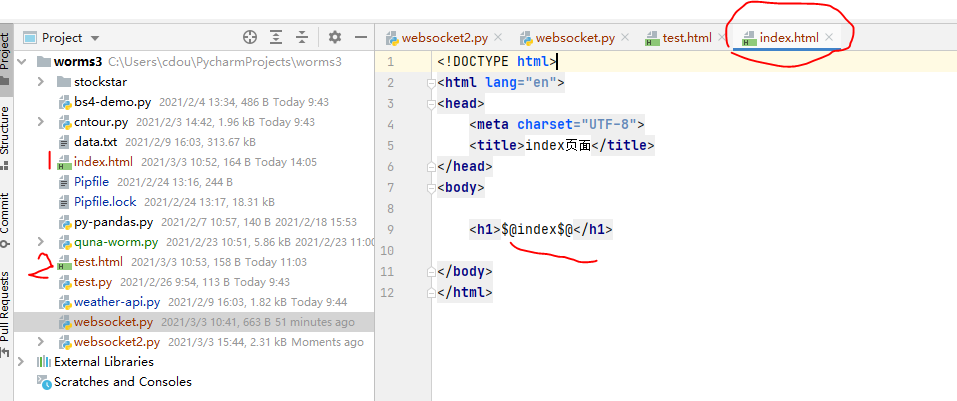
    with open('index.html','r',encoding='utf-8') as f:
        rd=f.read()
        rd = rd.replace('$@index$@','首页')
    return bytes(rd,encoding='utf-8')

def test(url):
    with open('test.html','r',encoding='utf-8') as f:
        rd=f.read()
        rd=rd.replace('$@test$@','测试')

    return bytes(rd,encoding='utf-8')

def nofound404(url):
    ret='<h1>page no found!</h1>'
    return bytes(ret,encoding='utf-8')
# [("/index/",index),("/test/",test)]
url_func={"/index/" : index,"/test/" : test}

while True:
    print('While...')
    #接收socket客户端请求
    conn,addr=sk.accept()
    #data变量接收客户端数据
    data=conn.recv(1024)
    print(data)
    #服务端接收到数据请求后就要做出响应及有request就要response
    #现在response

    # 如果客户端没有发送新的数据,就重新开始,不再向下执行
    # 防止后面的语句对空字符进行操作而抛出异常
    # continue
    # 把接收到的字节形式的数据转换成字符串,一般用到的编码方式:utf-8
    data_str = str(data)
    # 以\r\n分割每一行
    line = data_str.split('\r\n')
    print(line)
    # 取出第一行字符串line[0]后再用split()继续分割
    v1 = line[0].split()
    print('v1-----------------', v1)
    url = v1[1]
    print('url',url)
    # 响应客户端的请求,字符串前加b表示以字节形式传递
    conn.send(b"HTTP/1.1 200 OK\r\n\r\n")
    func = None #存取函数名用
    print(type(func))
    # 用for循环取出url_func中的每一项,它是由url和函数名组成的元组向客户端发消息
    for k,v in url_func.items():
        print('---k---',k,url)
        if k == url:
            func = v
            print(type(func))
            break
        else:
            func = nofound404

    rep = func(url)#字典的v的值就是函数名
    print(rep)
    conn.send(rep)
![]()


 浙公网安备 33010602011771号