
实验7:基于REST API的SDN北向应用实践
实验7:基于REST API的SDN北向应用实践
一、实验目的
- 能够编写程序调用OpenDaylight REST API实现特定网络功能;
- 能够编写程序调用Ryu REST API实现特定网络功能。
二、实验环境 - 下载虚拟机软件Oracle VisualBox或VMware;
- 在虚拟机中安装Ubuntu 20.04 Desktop amd64,并完整安装Mininet、OpenDaylight(Carbon版本)、Postman和Ryu;
三、实验要求
(一)基本要求
编写Python程序,调用OpenDaylight的北向接口实现以下功能
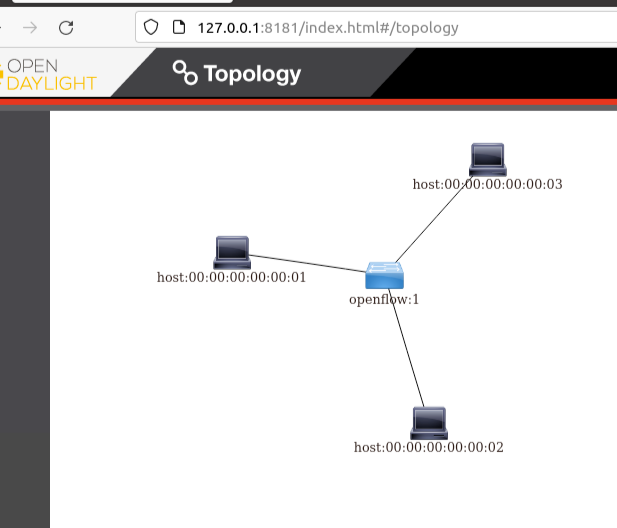
(1) 利用Mininet平台搭建下图所示网络拓扑,并连接OpenDaylight;
(2) 下发指令删除s1上的流表数据。
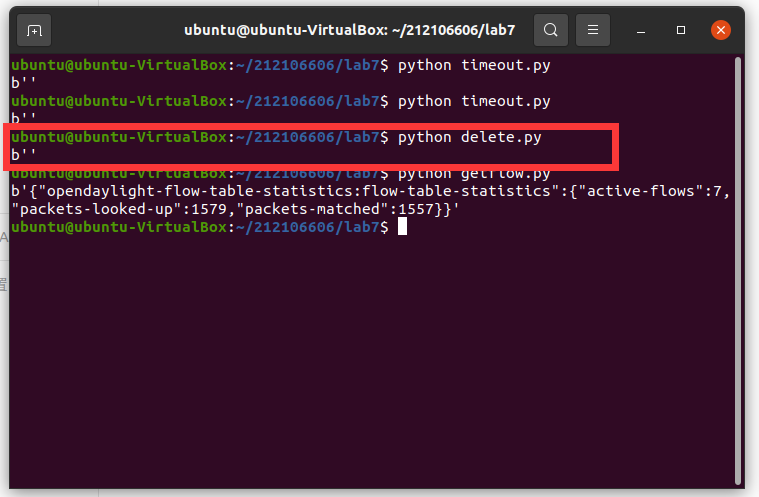
delete.py
# delete.py
import requests
from requests.auth import HTTPBasicAuth
if __name__ == "__main__":
    url = 'http://127.0.0.1:8181/restconf/config/opendaylight-inventory:nodes/node/openflow:1/'
    headers = {'Content-Type': 'application/json'}
    res = requests.delete(url, headers=headers, auth=HTTPBasicAuth('admin', 'admin'))
    print (res.content)
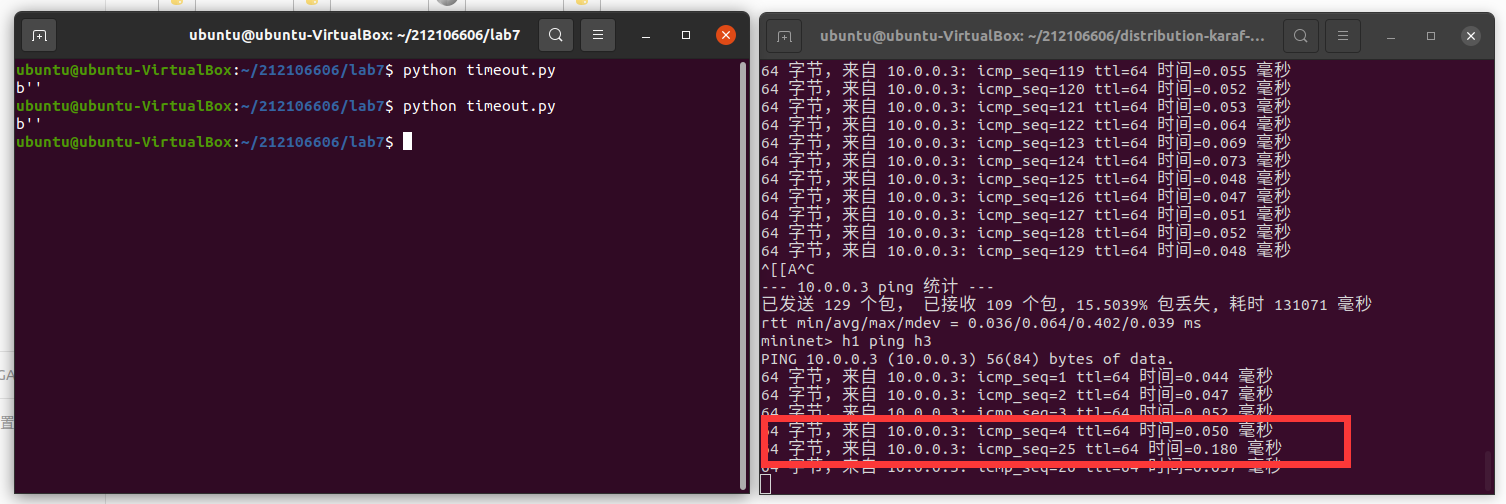
timeout.py
# timeout.py
import requests
from requests.auth import HTTPBasicAuth
if __name__ == "__main__":
    url = 'http://127.0.0.1:8181/restconf/config/opendaylight-inventory:nodes/node/openflow:1/flow-node-inventory:table/0/flow/1'
    with open("./timeout.json") as file:
        str = file.read()
    headers = {'Content-Type': 'application/json'}
    res = requests.put(url, str, headers=headers, auth=HTTPBasicAuth('admin', 'admin'))
    print (res.content)
timeout.json
# timeout.json
{
    "flow": [
      {
        "id": "1",
        "match": {
          "in-port": "1",
          "ethernet-match": {
            "ethernet-type": {
              "type": "0x0800"
            }
          },
          "ipv4-destination": "10.0.0.3/32"
        },
        "instructions": {
          "instruction": [
            {
              "order": "0",
              "apply-actions": {
                "action": [
                  {
                    "order": "0",
                    "drop-action": {}
                  }
                ]
              }
            }
          ]
        },
        "flow-name": "flow",
        "priority": "65535",
        "hard-timeout": "20",
        "cookie": "2",
        "table_id": "0"
      }
    ]
  }
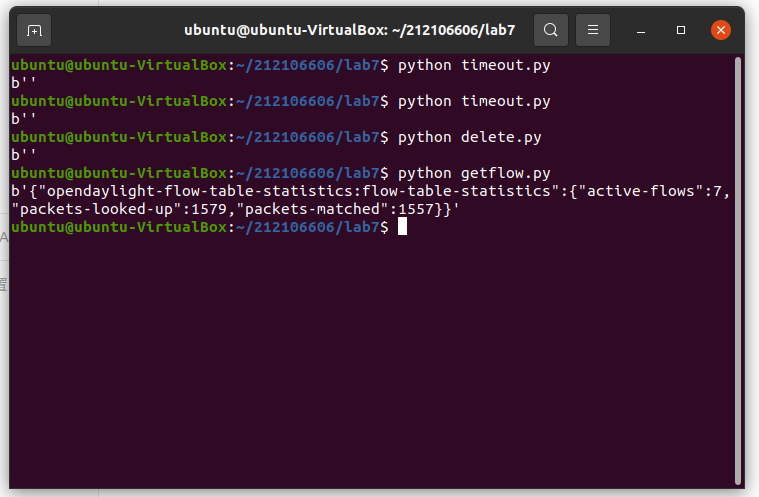
getflow.py
#####getfolw.py
#!/usr/bin/python
import requests
from requests.auth import HTTPBasicAuth
if __name__ == "__main__":
    url = 'http://127.0.0.1:8181/restconf/operational/opendaylight-inventory:nodes/node/openflow:1/flow-node-inventory:table/0/opendaylight-flow-table-statistics:flow-table-statistics'
    headers = {'Content-Type': 'application/json'}
    res = requests.get(url,headers=headers, auth=HTTPBasicAuth('admin', 'admin'))
    print (res.content)
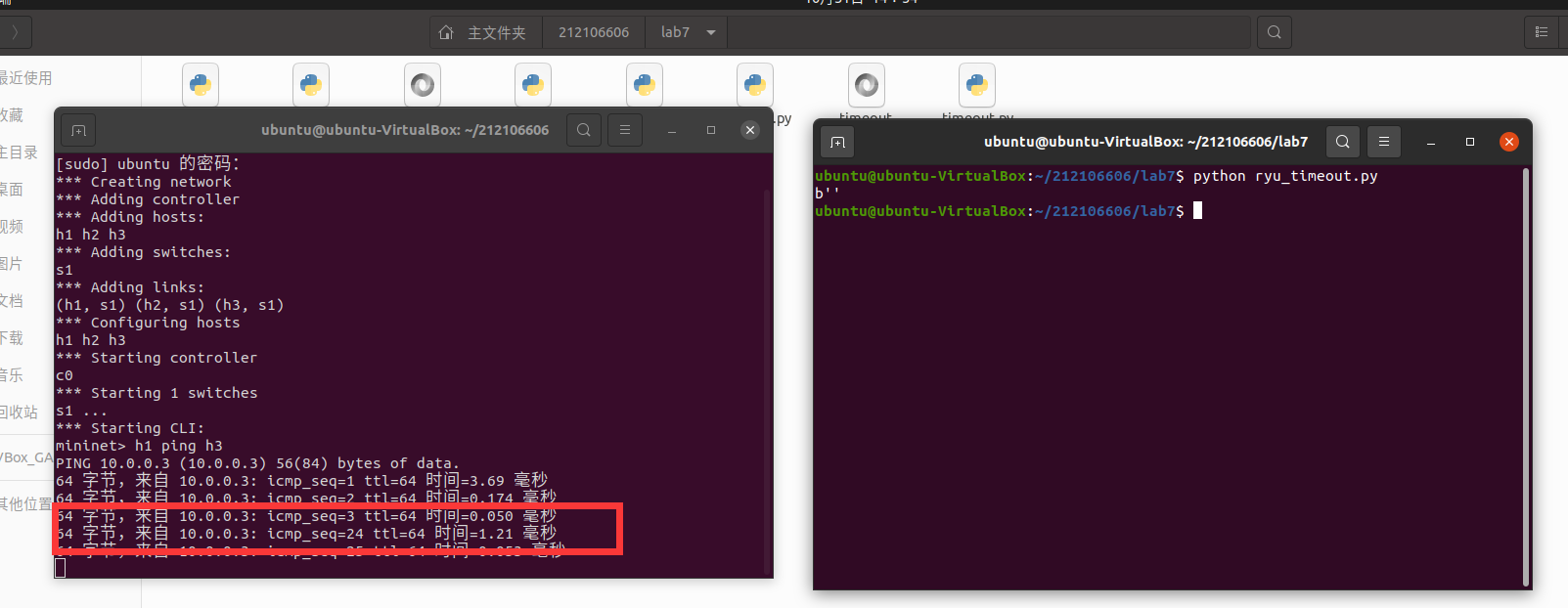
ryu_timeout.py
#!/usr/bin/python
import requests
if __name__ == "__main__":
    url = 'http://127.0.0.1:8080/stats/flowentry/add'
    with open("./hardtimeout.json") as file:
        str = file.read()
    headers = {'Content-Type': 'application/json'}
    res = requests.post(url, str, headers=headers)
    print (res.content)
ryu_timeout.json
{
    "dpid": 1,
    "cookie": 1,
    "cookie_mask": 1,
    "table_id": 0,
    "hard_timeout": 20,
    "priority": 65535,
    "flags": 1,
    "match":{
        "in_port":1
    },
    "actions":[

    ]
 }
生成拓扑
#topo.py
from mininet.topo import Topo

class MyTopo(Topo):
    def __init__(self):
        # initilaize topology
        Topo.__init__(self)

        self.addSwitch("s1")
        self.addSwitch("s2")

        self.addHost("h1")
        self.addHost("h2")
        self.addHost("h3")
        self.addHost("h4")

        self.addLink("s1", "h1")
        self.addLink("s1", "h2")
        self.addLink("s2", "h3")
        self.addLink("s2", "h4")
        self.addLink("s1", "s2")

topos = {'mytopo': (lambda: MyTopo())}
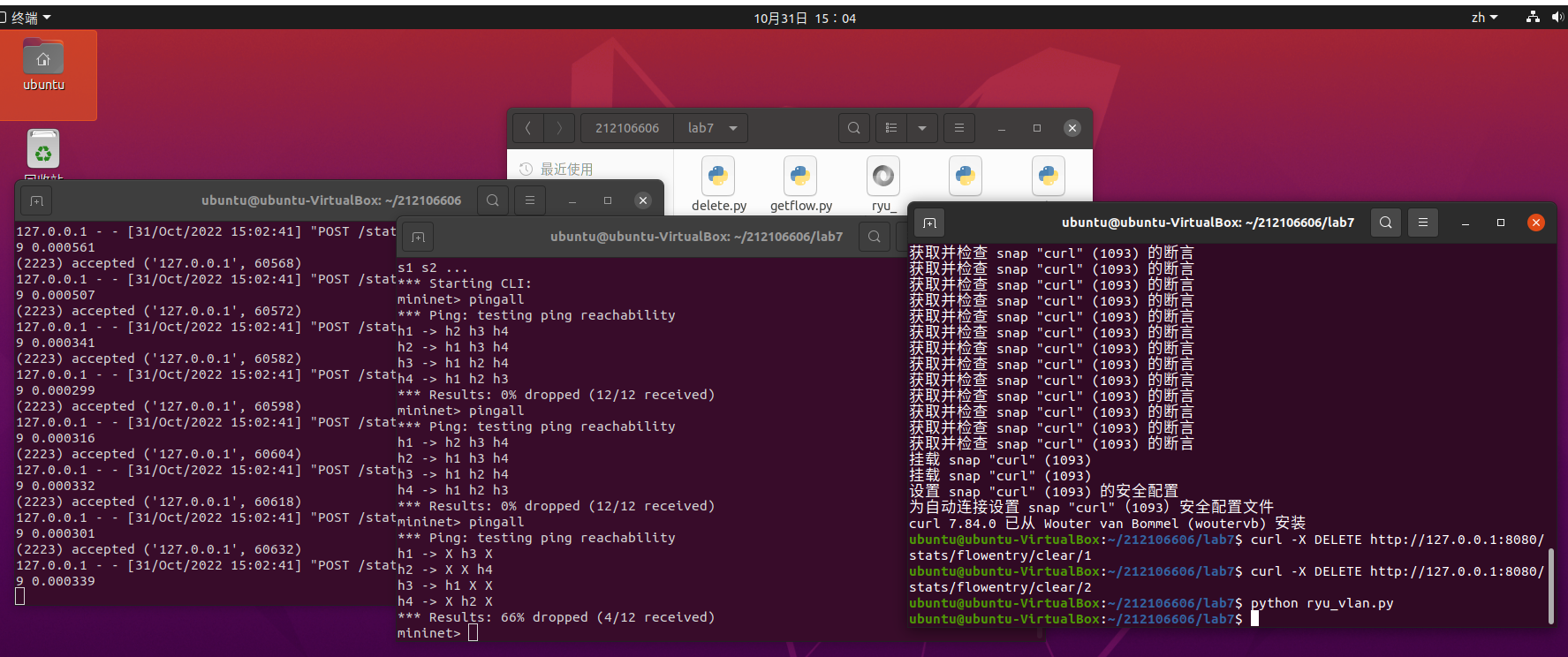
三、实验总结
本次实验内容主要是考察代码编写能力,通过代码来实现网络硬超时功能,在网上查阅了资料过后完成了实验。

 浙公网安备 33010602011771号