kotlin: 匿名函数/lambda表达式做参数的常用形式
一,代码
定义的函数:
fun getIsL(char:Char): Boolean {
    if ( char == 'l')  {
        return true
    } else {
        return false
    }
}
调用:
        //处理按钮点击事件
        binding.button1.setOnClickListener {
            //count函数的参数 类型为:  predicate: (Char) -> Boolean
            // 统计字符串中 l 字符长度
            //直接调用lambda表达式的三种形式:
            //使用定义的变量
            val toalLCount = "Hello".count({ letter->
                letter == 'l'
            })
            println("toalLCount = $toalLCount")

            //只有一个参数时可以使用it
            val toalLCount2 = "Hello".count({ it == 'l'
            })
            println("toalLCount2 = $toalLCount2")

            //最后一个参数是函数时可以放到()外部
            val toalLCount3 = "Hello".count { it == 'l' }
            println("toalLCount3 = $toalLCount3")

            //定义一个lambda表达式
            val isL1 = {char:Char->
                char == 'l'
            }
            //lambda表达式做参数
            val toalLCount4 = "Hello".count(isL1)
            println("toalLCount4 = $toalLCount4")

            //函数的引用做参数
            val toalLCount5 = "Hello".count(::getIsL)
            println("toalLCount5 = $toalLCount5")

            //定义一个匿名函数
            val isL = fun(char:Char): Boolean {
               if ( char == 'l')  {
                  return true
               } else {
                  return false
               }
            }
            //匿名函数做参数
            val toalLCount6 = "Hello".count(isL)
            println("toalLCount6 = $toalLCount6")

            //匿名函数直接做参数
            val toalLCount7 = "Hello".count(fun(char:Char): Boolean {
                if ( char == 'l')  {
                    return true
                } else {
                    return false
                }
            })
            println("toalLCount7 = $toalLCount7")
        }
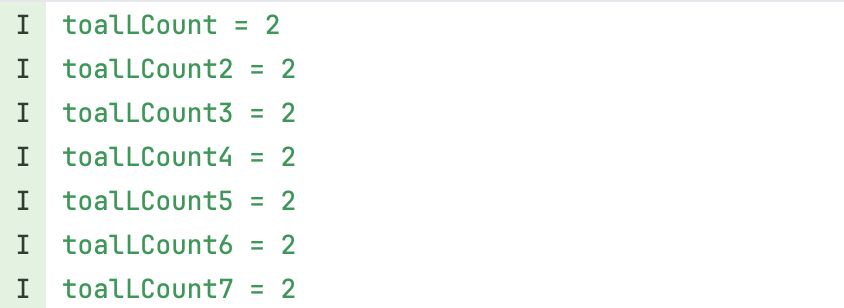
二,运行结果:

 浙公网安备 33010602011771号