
面向对象
1. 类的定义
经典类
class 类名
新式类
class 类名(父类名)
定义一个类:
class teacher(object):
pass #保障代码结构完整,用来占位 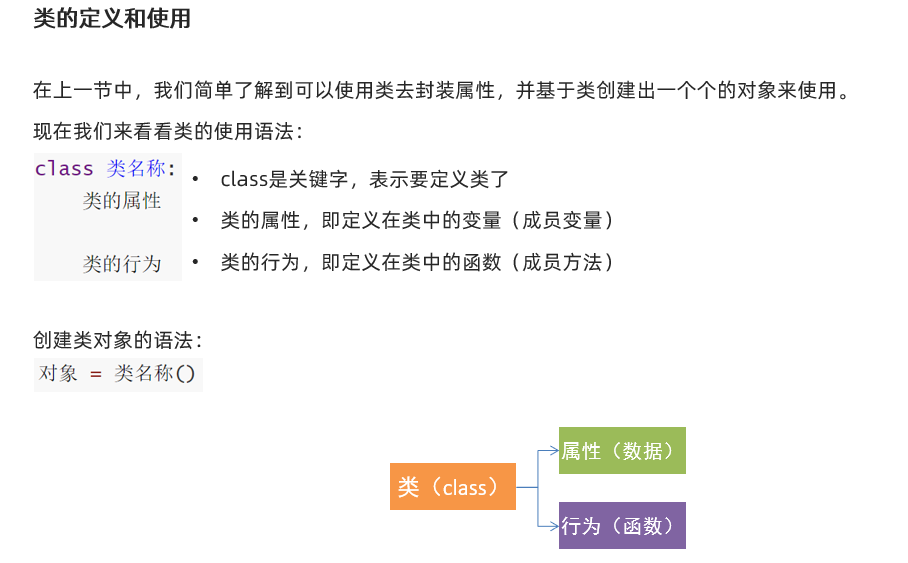
2. 类的实例化
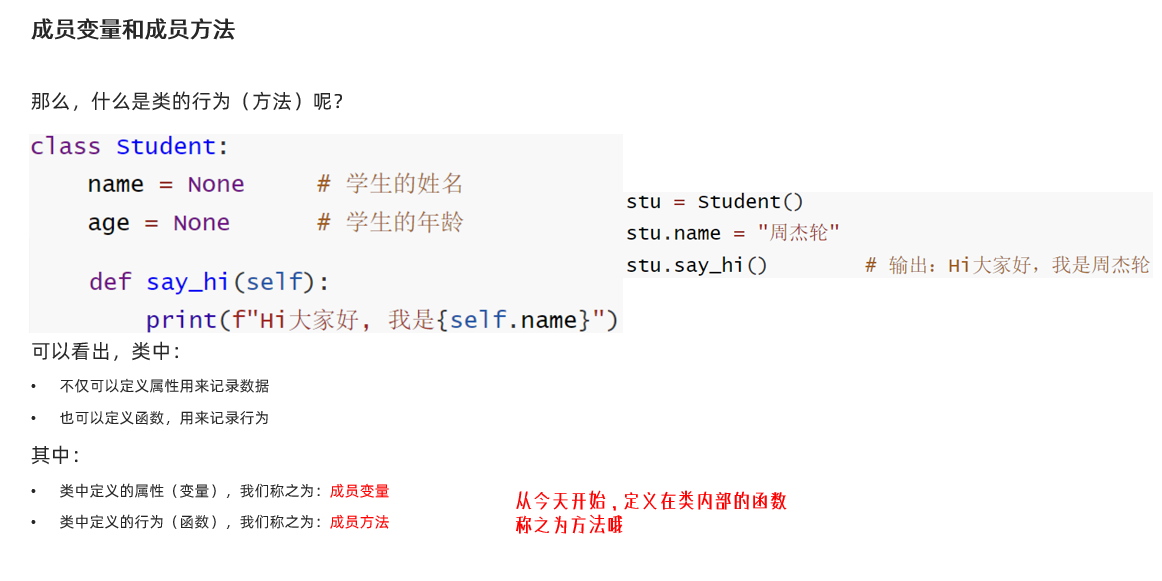
● 创建一个类
class Student(object):
    # 定义方法
    def study(self):
        print('我在学习')

    def eat(self):
        print('我在吃饭')
● 类的实例化(创建对象)
对象名 = 类名()
s1 = Student()获取对象对应的类和所在的内存地址
print(s1) # <__main__.Student object at 0x7f9be20848e0>获取对象的类型—创建对象所使用的类
print(type(s1)) # <class '__main__.Student'>调用方法
s1.study() # 我在学习
s1.eat()   # 我在吃饭
3.self的作用
class Student(object):
    def study(self):
        # s1和self — 指向同一块内存空间,为同一个对象
        # 也就是说在对象调用方法时会将对象本身传入方法内部进行使用
        print(self)
        print('我要学习')

    def eat(self):
        # self 有什么作用呢?
        # 可以在方法内部调用实例所拥有的属性或者方法
        print('我要吃饭')
        self.study()
案例:
s1和self — 指向同一块内存空间,为同一个对象
s1 = Student()
print(s1)
s1.study()
s1.eat()
输出:
<__main__.Student object at 0x00000277FE31D370>
<__main__.Student object at 0x00000277FE31D370>
我要学习
我要吃饭
<__main__.Student object at 0x00000277FE31D370>
我要学习
s2调用study()方法,和s1两个对象所指向不同的内存空间。
s2 = Student()       # <__main__.Student object at 0x00000277FE30FDF0>
s2.study()           # 我要学习

 浙公网安备 33010602011771号