
08-pandas 深入理解 Series/DataFrame
import numpy as np
import pandas as pd
from pandas import Series, DataFrame
data = {
"Country": ['India','England', 'Franch'],
"Captial": ['Mengmai', 'London', 'Bolin'],
"Population": ["1500", '20', '25']
}
Series
根据数据创建 Series
s1 = np.Series(data['Country'])
0      India
1    England
2     Franch
dtype: object
s1.values
array(['India', 'England', 'Franch'], dtype=object)s1.index
RangeIndex(start=0, stop=3, step=1)指定index的值
s2 = np.Series(data['Country'], index= ['a', 'b', 'c'])
a      India
b    England
c     Franch
dtype: object
s2.values
array(['India', 'England', 'Franch'], dtype=object)s2.index
Index(['a', 'b', 'c'], dtype='object')
DataFrame
1. 创建 DataFrame
df1 = pd.DataFrame(data)
country = df1['Country']
typeof(country)
pandas.core.series.Series
df1.iterrows()
<generator object DataFrame.iterrows at 0x00000187A814B048>
df1.iterrows
<bound method DataFrame.iterrows of    Country  Captial Population
0    India  Mengmai       1500
1  England   London         20
2   Franch    Bolin         25>

2. df1.iterrows() 生成器 , 可以进行 for..in.. 循环, 每一行产生一个 tuple
for item in df1.iterrows():
print(item)
(0, Country         India
Captial       Mengmai
Population       1500
Name: 0, dtype: object)
(1, Country       England
Captial        London
Population         20
Name: 1, dtype: object)
(2, Country       Franch
Captial        Bolin
Population        25
Name: 2, dtype: object)
3. 剖析 DataFrame 的组成
for item in df1.iterrows():
print(item)
print("____________________________")
print(len(item))
print("____________________________")
print(item[0]," \n- - - - - - -\n ",item[1])
print("____________________________")
print(type(item),type(item[0]), type(item[1]))
print("\n\n\n\n")
(0, Country         India
Captial       Mengmai
Population       1500
Name: 0, dtype: object)
____________________________
2
____________________________
0
- - - - - - -
  Country         India
Captial       Mengmai
Population       1500
Name: 0, dtype: object
____________________________
<class 'tuple'> <class 'int'> <class 'pandas.core.series.Series'>


(1, Country       England
Captial        London
Population         20
Name: 1, dtype: object)
____________________________
2
____________________________
1
- - - - - - -
  Country       England
Captial        London
Population         20
Name: 1, dtype: object
____________________________
<class 'tuple'> <class 'int'> <class 'pandas.core.series.Series'>


(2, Country       Franch
Captial        Bolin
Population        25
Name: 2, dtype: object)
____________________________
2
____________________________
2
- - - - - - -
  Country       Franch
Captial        Bolin
Population        25
Name: 2, dtype: object
____________________________
<class 'tuple'> <class 'int'> <class 'pandas.core.series.Series'>
4. 构建 DataFrame 逆转
s_1 = pd.Series( data["Capital"])s_2 = pd.Series( data["Country"])
s_3 = pd.Series( data["Population"])
df_new = pd.DataFrame([s_1, s_2, s_3])
df_new
df1
df_new.T
df_new.T,使用大 T 进行逆转


5. 使用 索引进行构建有表头的 DataFrame
df_new2 = pd.DataFrame([s_1, s_2, s_3], index = ['Capital', 'Country', 'Population']).T

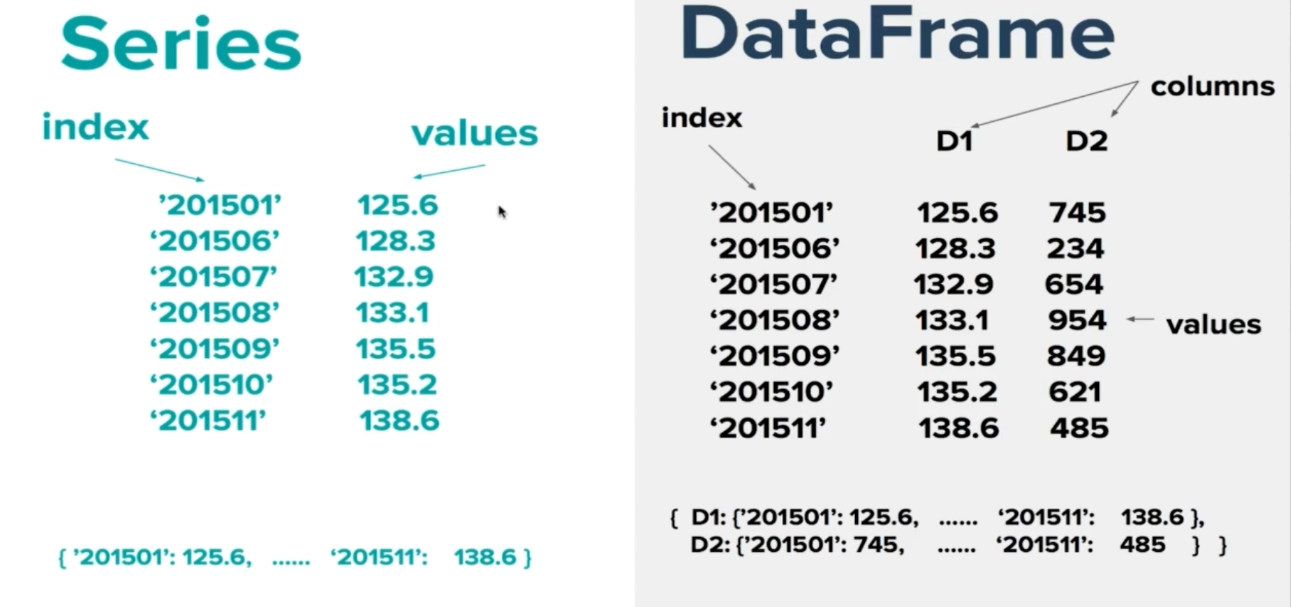
6. Series 和 DataFrame

 浙公网安备 33010602011771号