

transformer-3
1. Self Attention
-
先计算权重:
![image]()
-
再计算加权和
![image]()


假设某个句子拆分词,每个词对应(k,q,v),那就是该词和剩余词的attention_score加权v, attention_score就是当前词k和其他词的v计算的标量。
2. Scaled-dot-product

\[Attention(K,Q,V) = softmax(\frac{QK^T}{\sqrt{d_k}})V
\]
主要解释一下为何要scaled:
\[\alpha_{i,j} = S(\alpha_{i,j}^*) = \frac{\alpha_{i,j}^*}{\sum_j^{d_k}\alpha_{i,j}^*}
\]
softmax求导:
\[\frac{\partial(\frac{z_i}{\sum_c^{C}z_c})}{z_j} = \begin{cases} p_i(1-p_j), &i=j\\ -p_jp_i, &i\neq j \end{cases} \\ \; \\ p_i = \frac{z_i}{\sum_c^{C}z_c} \]从上面性质可以知道,softmax一般和交叉熵损失函数搭配
softmax函数引入指数,会拉大差距;某个值比较大,越接近1
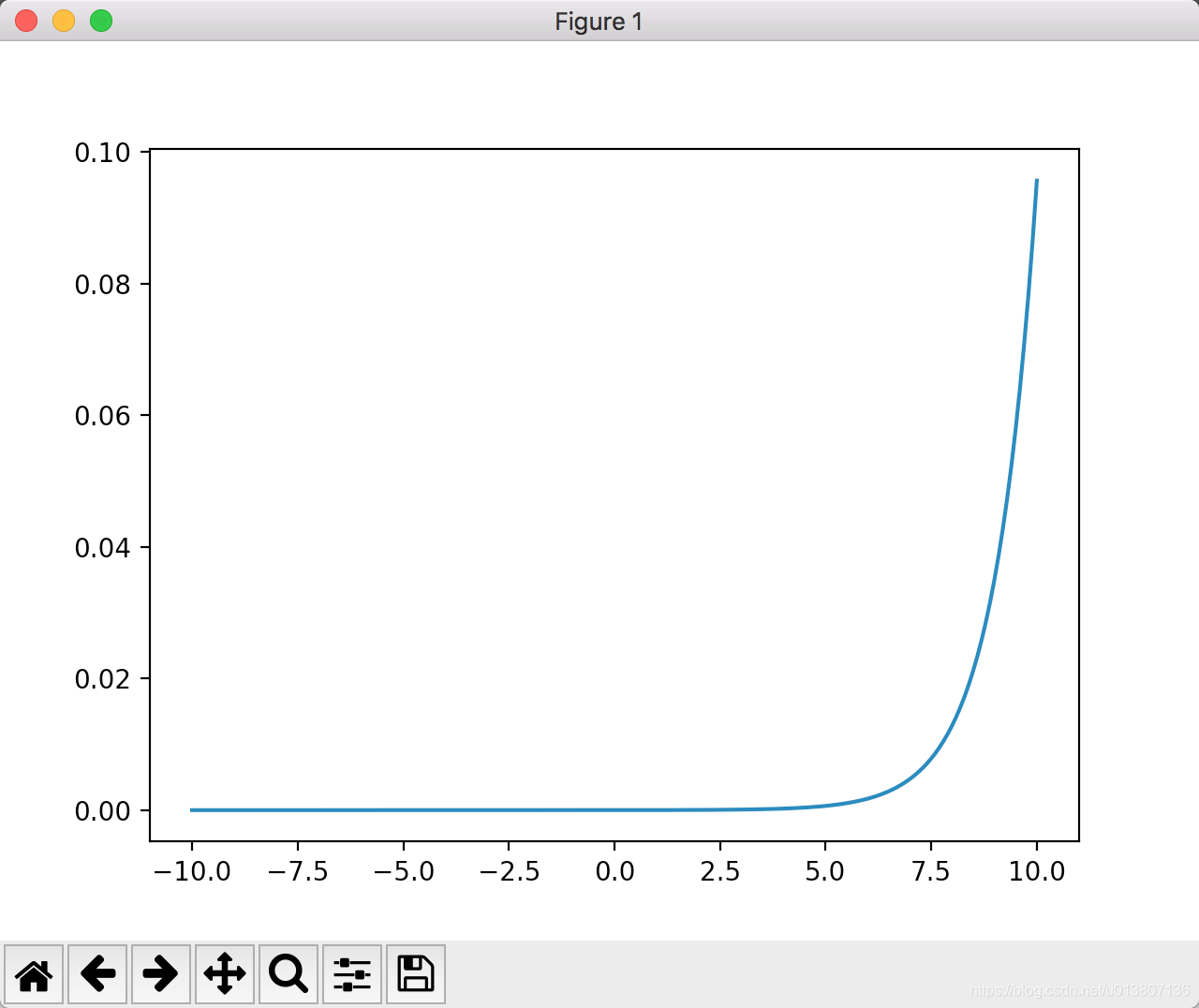
所以对\(S(\alpha_{i,j}^*)\)求导也类似,取第i行
\[\frac{\partial S(\alpha_{i,k}^*)}{\alpha_{i,j}^*} = \begin{cases}
S(\alpha_{i,k}^*)(1-S(\alpha_{i,k}^*)), & k=j \\
-S(\alpha_{i,k}^*)S(\alpha_{i,j}^*), &k\neq j
\end{cases}
\]
仅以第i行进行讨论, 当\(\alpha_{i,k}^*\)较大或者较小的时候,当前维度\(j\)的导数非常小,其他维度\(k(k\neq j)\)则会比较大。
\(\alpha_{i,k}^* = QK^T=\sum_m^{d_k} q_{i,m}k_{m,k}\) 假设Q,K每中每个向量N(0,1),则\(\alpha_{i,k}^* - N(0,d_k)\) 显然\(d_k\)会增大方差,可能会出现较大的取值,这样会影响求导,所以需要scaled.
3. Multihead Attention
多头注意力机制,多头类似图像中的多个channel,对应不同的功能。有点类似于多个专家头一样,聚焦于不同的核心。
4. 代码部分
import numpy as np
import torch
from torch import Tensor
from typing import Optional, Any, Union, Callable
import torch.nn as nn
import torch.nn.functional as F
import math, copy, time


class MultiHeadedAttention(nn.Module):
    def __init__(self,
                num_heads: int,
                d_model: int,
                dropout: float=0.1):
        super(MultiHeadedAttention, self).__init__()
        assert d_model % num_heads == 0, "d_model must be divisible by num_heads"
        # Assume v_dim always equals k_dim
        self.k_dim = d_model // num_heads
        self.num_heads = num_heads
        self.proj_weights = clones(nn.Linear(d_model, d_model), 4) # W^Q, W^K, W^V, W^O
        self.attention_score = None
        self.dropout = nn.Dropout(p=dropout)

    def forward(self,
                query:Tensor,
                key: Tensor,
                value: Tensor,
                mask:Optional[Tensor]=None):
        """
        Args:
            query: shape (batch_size, seq_len, d_model)
            key: shape (batch_size, seq_len, d_model)
            value: shape (batch_size, seq_len, d_model)
            mask: shape (batch_size, seq_len, seq_len). Since we assume all data use a same mask, so
                  here the shape also equals to (1, seq_len, seq_len)

        Return:
            out: shape (batch_size, seq_len, d_model). The output of a multihead attention layer
        """
        if mask is not None:
            mask = mask.unsqueeze(1)
        batch_size = query.size(0)

        # 1) Apply W^Q, W^K, W^V to generate new query, key, value
        query, key, value \
            = [proj_weight(x).view(batch_size, -1, self.num_heads, self.k_dim).transpose(1, 2)
                for proj_weight, x in zip(self.proj_weights, [query, key, value])] # -1 equals to seq_len

        # 2) Calculate attention score and the out
        out, self.attention_score = attention(query, key, value, mask=mask,
                                 dropout=self.dropout)

        # 3) "Concat" output
        out = out.transpose(1, 2).contiguous() \
             .view(batch_size, -1, self.num_heads * self.k_dim)

        # 4) Apply W^O to get the final output
        out = self.proj_weights[-1](out)

        return out


def clones(module, N):
        "Produce N identical layers."
        return nn.ModuleList([copy.deepcopy(module) for _ in range(N)])


def attention(query: Tensor,
              key: Tensor,
              value: Tensor,
              mask: Optional[Tensor] = None,
              dropout: float = 0.1):
    """
    Define how to calculate attention score
    Args:
        query: shape (batch_size, num_heads, seq_len, k_dim)
        key: shape(batch_size, num_heads, seq_len, k_dim)
        value: shape(batch_size, num_heads, seq_len, v_dim)
        mask: shape (batch_size, num_heads, seq_len, seq_len). Since our assumption, here the shape is
              (1, 1, seq_len, seq_len)
    Return:
        out: shape (batch_size, v_dim). Output of an attention head.
        attention_score: shape (seq_len, seq_len).

    """
    k_dim = query.size(-1)

    # shape (seq_len ,seq_len),row: token,col: that token's attention score
    scores = torch.matmul(query, key.transpose(-2, -1)) / math.sqrt(k_dim)

    if mask is not None:
        scores = scores.masked_fill(mask == 0, -1e10)

    attention_score = F.softmax(scores, dim = -1)

    if dropout is not None:
        attention_score = dropout(attention_score)

    out = torch.matmul(attention_score, value)

    return out, attention_score # shape: (seq_len, v_dim), (seq_len, seq_lem)


if __name__ == '__main__':
    d_model = 8
    seq_len = 3
    batch_size = 6
    num_heads = 2
    # mask = None
    mask = torch.tril(torch.ones((seq_len, seq_len)), diagonal = 0).unsqueeze(0)

    input = torch.rand(batch_size, seq_len, d_model)
    multi_attn = MultiHeadedAttention(num_heads = num_heads, d_model = d_model, dropout = 0.1)
    out = multi_attn(query = input, key = input, value = input, mask = mask)
    print(out.shape)

 浙公网安备 33010602011771号