
python之路_面向对象命名空间及组合
一、面向对象命名空间
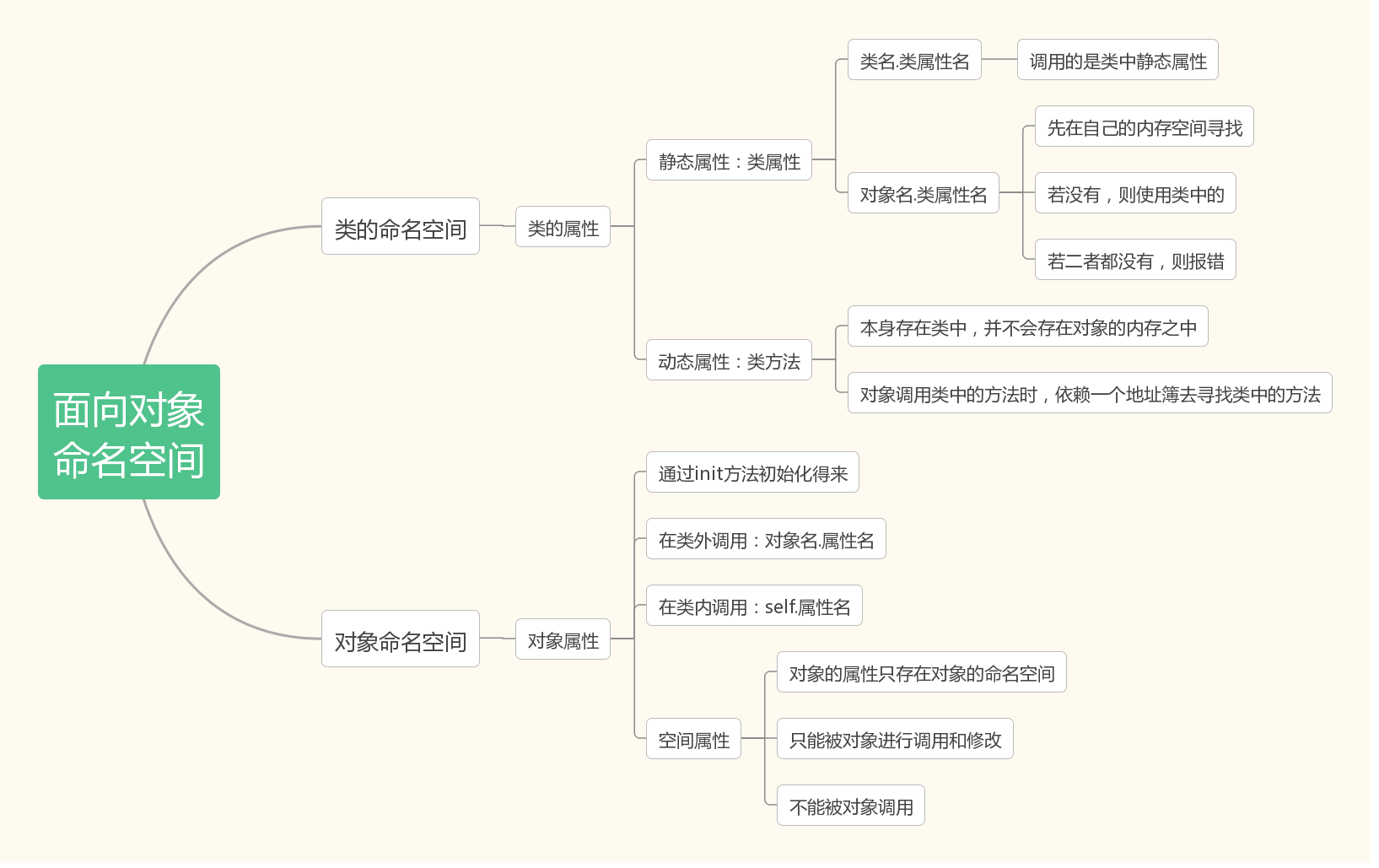
例1:对象对对象属性的创建
class A:
    country = '印度'
    def show_name(self):
        print(self.name)

a = A()                                        #实例化对象
a.name = 'alex'                                #给对象创建一个name属性
a.show_name()                                  #调用了showname方法,输出结果为:alex
class A:
    country = '印度'
    def show_name(self):
        print(self.name)

a = A()
a.name = 'alex'
a.show_name()                                  #输出结果:alex
a.show_name = 'egon'                           #相当于创建了一个show_name属性
a.show_name()                                  #报错:TypeError: 'str' object is not callable
例2:类的静态属性的调用
class A:
    country = '印度'
    def show_name(self):
        print(self.name)

a = A()                                       #a对象
b = A()                                       #b对象
print(A.country)                              #输出结果为:印度
print(a.country)                              #先找a对象的内存 再找A的内存,结果为:印度
print(b.country)                              #结果为:印度
a.country = '中国'                             #给a对象创建了一个属性
print(A.country)                               #印度
print(a.country)                               #中国
print(b.country)                               #印度
二、面向对象组合
在一个类中以另一个类的对象做为数据属性,称为类的组合
例1:计算圆环的面积和周长
from math import pi
class Circle:
    def __init__(self,r):
        self.r=r
    def area(self):
        return pi*self.r**2
    def round(self):
        return 2*pi*self.r
class Ring:
    def __init__(self,R,r):
        self.c_out=Circle(R)
        self.c_in=Circle(r)
    def area(self):
        return self.c_out.area()-self.c_in.area()
    def round(self):
        return self.c_out.round()+self.c_in.round()
ring=Ring(10,5)
print(ring.area())
print(ring.round())
例2:人具有生日、课程属性
class Birthday:
    def __init__(self,year,month,day):
        self.year=year
        self.month=month
        self.day=day
class Course:
    def __init__(self,name,price,teacher):
        self.name=name
        self.price=price
        self.teacher=teacher
class Person:
    def __init__(self,name,birth,course):
        self.name=name
        self.birth=birth
        self.course=course
B=Birthday(1999,12,24)
C=Course('python',20000,'jing')
haijiao=Person('haijiao',B,C)
print(haijiao.name)                                  #haijiao
print(haijiao.birth.year)                            #1999
print(haijiao.birth.month)                           #12
print(haijiao.birth.day)                             #24
print(haijiao.course.name)                           #python
print(haijiao.course.price)                          #20000
print(haijiao.course.teacher)                        #jing
例3:人狗大战续
class Person:
    def __init__(self,name,sex,aggr,blood):
        self.name = name
        self.sex = sex
        self.aggr = aggr
        self.blood = blood
        self.money = 0

    def attack(self,dog):
        dog.blood -= self.aggr

    def equip(self,weapon):
        self.money -= weapon.price
        self.weapon = weapon

    def use_weapon(self,dog):
        self.weapon.hurt(dog)
        self.blood += self.weapon.back_blood

class Dog:
    def __init__(self,name,kind,aggr,blood):
        self.name = name
        self.kind = kind
        self.aggr = aggr
        self.blood = blood

    def bite(self,person):
        person.blood -= self.aggr

class Weapon:
    def __init__(self,name,attack,price,back_blood):
        self.name = name
        self.attack = attack
        self.price = price
        self.back_blood = back_blood

    def hurt(self,dog):
        dog.blood -= self.attack

egon = Person('egon','不详',250,380)
alex = Person('alex','不详',20,40000)
dog = Dog('egg','藏獒',500,20000)
毒包子 = Weapon('毒包子',10000,200,300)
egon.money = 200
if egon.money >= 毒包子.price:
    egon.equip(毒包子)
egon.use_weapon(dog)
print(egon.blood)
print(dog.blood)

 浙公网安备 33010602011771号