
shiro-认证配置
shiro--认证:
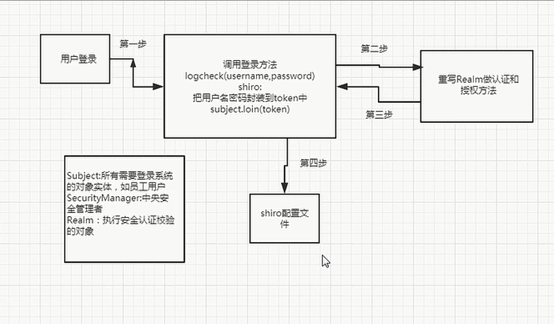
Jar包 shiro-all
在web.xml加shiro过滤器
<!--springweb过滤器代理对象,代理shiro对象-->

<filter>

    <filter-name>shiroFilter</filter-name>

    <filter-class>org.springframework.web.filter.DelegatingFilterProxy</filter-class>

    <init-param>

        <param-name>targetFilterLifecycle</param-name>

        <param-value>true</param-value>

    </init-param>

</filter>

<filter-mapping>

    <filter-name>shiroFilter</filter-name>

    <url-pattern>/*</url-pattern>

</filter-mapping>
配置spring_shiro.xml
<?xml version="1.0" encoding="UTF-8"?>
<beans xmlns="http://www.springframework.org/schema/beans"
       xmlns:xsi="http://www.w3.org/2001/XMLSchema-instance"
       xsi:schemaLocation="http://www.springframework.org/schema/beans
        http://www.springframework.org/schema/beans/spring-beans.xsd">
    <!--配置realm实例-->
    <bean id="employeeRealm" class="com.ujiuye.realm.EmployeeRealm"></bean>
    <!--配置shiro安全管理对象-->
    <bean id="securityManager" class="org.apache.shiro.web.mgt.DefaultWebSecurityManager">
        <property name="realm" ref="employeeRealm"/>
    </bean>
    <!--代理类-->
    <!--id取值要和web.xml中的filter-name一样,因为委派模式就是通过这个名字来关联委派给谁-->
    <bean id="shiroFilter" class="org.apache.shiro.spring.web.ShiroFilterFactoryBean">
        <property name="securityManager" ref="securityManager"/>
        <property name="loginUrl" value="/login.html"/>
        <property name="filterChainDefinitions">
            <!--anon表示不拦截,authc表示拦截,roles要授权的角色-->
            <value>
                /login.html=anon
                /js/**=anon
                /img/**=anon
                /employee/loginCheck=anon
                /**=authc
            </value>
        </property>
    </bean>
<!--管理过滤器生命周期-->
<bean id="lifecycleBeanPostProcessor" class="org.apache.shiro.spring.LifecycleBeanPostProcessor"> </bean>
</beans>
shiro认证登录
/**
 * @param jobnumber shiro登录
 * @param password
 * @return
 */
@Override
public EmployeeResult shiroLogin(String jobnumber, String password) {
    //获取登录对象
    EmployeeResult employeeResult = new EmployeeResult();
    Subject subject = SecurityUtils.getSubject();
    //用户密码存在token中
    UsernamePasswordToken token=new UsernamePasswordToken(jobnumber,password);
    try {
        subject.login(token);
        Employee principal = (Employee) subject.getPrincipal();
        //这是subject.session
        Session session = subject.getSession();
        session.setAttribute("principal",principal);
        employeeResult.setSuccess(true);
        employeeResult.setLoginSuccess(true);
        employeeResult.setMessage("登录成功");
    } catch (AuthenticationException e) {
        employeeResult.setSuccess(false);
        employeeResult.setLoginSuccess(false);
        employeeResult.setMessage("登录失败");
    }

    return employeeResult;
}
Realm配置
package com.ujiuye.realm;

import com.ujiuye.bean.Employee;
import com.ujiuye.bean.EmployeeExample;
import com.ujiuye.dao.EmployeeMapper;
import org.apache.shiro.authc.*;
import org.apache.shiro.authz.AuthorizationInfo;
import org.apache.shiro.realm.AuthorizingRealm;
import org.apache.shiro.subject.PrincipalCollection;
import org.springframework.beans.factory.annotation.Autowired;

import java.util.List;

public class EmployeeRealm extends AuthorizingRealm {
    @Autowired
    private EmployeeMapper employeeMapper;
    /**
     * @param principalCollection 授权
     * @return
     */
    @Override
    protected AuthorizationInfo doGetAuthorizationInfo(PrincipalCollection principalCollection) {
        return null;
    }

    /**
     * @param authenticationToken 认证
     * @return
     */
    @Override
    protected AuthenticationInfo doGetAuthenticationInfo(AuthenticationToken authenticationToken) throws AuthenticationException {
            //获取用户
        UsernamePasswordToken token=(UsernamePasswordToken) authenticationToken;
            //保存数据库用户
        EmployeeExample employeeExample = new EmployeeExample();
        EmployeeExample.Criteria criteria = employeeExample.createCriteria();
        criteria.andJobnumberEqualTo(token.getUsername());
        List<Employee> employees = employeeMapper.selectByExample(employeeExample);
        if (employees!=null&&employees.size()>0){
            Employee employee=employees.get(0);
            //对比simpleAuthenticationInfo,数据库用户,数据库密码,登录用户
            SimpleAuthenticationInfo simpleAuthenticationInfo = new SimpleAuthenticationInfo(employee,employee.getPassword(),token.getUsername());
            return simpleAuthenticationInfo;
        }else {
            return null;
        }
    }
}

 浙公网安备 33010602011771号