java学习-day5
多线程学习
一、线程状态 五大状态
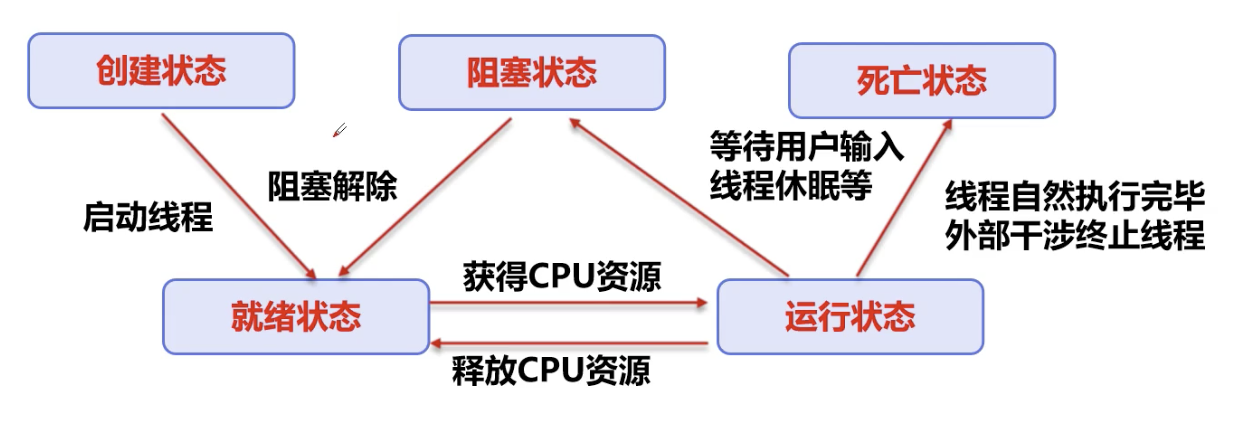
停止线程:推荐使用标识位进行终止package com.Threadpublic class TestStop implements Runnable private boolean flag = true;
    @Override
    public void run() {
        int i = 0;
        while(flag){
            System.out.println();
        }
    }
    public void stop(){
        this.flag = false;
    }

    public static void main(String[] args) {
        TestStop testStop = new TestStop();
        new Thread(testStop).start();
        for (int i = 0; i < 1000; i++) {
            System.out.println("main"+i);
            if(i == 900){
                testStop.stop();
                System.out.println("线程停止");
            }
        }
    }
}


线程休眠

sleep制定当前线程阻塞的毫秒数;
sleep存在异常InterruptedException;
sleep时间达到后线程进入就绪状态;
sleep可以模拟网络延时,倒计时等;
每一个对象都有一个锁,sleep不会释放锁。

线程礼让

礼让:让当前正在执行的线程暂停,但不阻塞;
礼让不一定成功;
从执行状态转换为就绪状态;
package com.Thread;

public class Testyeild {
    public static void main(String[] args) {
        MyYeild myYeild = new MyYeild();
        new Thread(myYeild,"a").start();
        new Thread(myYeild,"b").start();
    }
}

class MyYeild implements Runnable{
    @Override
    public void run(){
        System.out.println(Thread.currentThread().getName()+"线程开始");
        Thread.yield();
        System.out.println(Thread.currentThread().getName()+"线程结束");
    }

        }
Join合并线程,强制执行package com.Thread;
public class TestJoin implements Runnable {
    @Override
    public void run() {
        for (int i = 0; i < 100; i++) {
            System.out.println("线程vip");
        }
    }

    public static void main(String[] args) throws InterruptedException {
        TestJoin testJoin = new TestJoin();
        Thread thread = new Thread(testJoin);


        for (int i = 0; i < 1000; i++) {
            if (i == 200){
                thread.start();
                thread.join();
            }
            System.out.println("main"+i);
        }
    }
}
二、线程观测
package com.Thread;

public class TestState {
    public static void main(String[] args) throws InterruptedException {
        Thread thread = new Thread(()->{
            for (int i = 0; i < 5; i++) {
                try {
                    Thread.sleep(1000);
                } catch (InterruptedException e) {
                    e.printStackTrace();
                }

            }
            System.out.println("/////");
        });
        Thread.State state = thread.getState();
        System.out.println(state);//new

        thread.start();
        state = thread.getState();
        System.out.println(state);//runnable

        while (state != Thread.State.TERMINATED){
            Thread.sleep(100);
            state = thread.getState();
            System.out.println(state);
        }
    }
}
三、线程优先级 线程调度器按照优先级决定应该调度哪个线程来执行。 PRIORITY 从1-10;、
getPriority().setPriority(int  ***);

四、守护线程  线程分为用户线程和守护线程
虚拟机必须确保用户线程执行完毕;
虚拟机不用等待守护线程执行完毕;

五、线程同步  多个线程操作同一个资源; 其实是一种等待机制  队列和锁 synchronized

同步方法:public synchronized void method(int args){}
同步块:synchronized(obj):锁的对象就是变化的量

六、死锁  某一个同步块同时拥有“两个以上对象的锁”时,就可能会发生死锁的问题;
四个必要条件:互斥,一个资源每次只能被一个进程使用;
请求与保持条件:一个进程因请求资源而阻塞时,对已获得的资源保持不放;
不剥夺资源:进程已获得的资源,在未使用完之前,不能强行剥夺;
循环等待条件,若干进程之间形成一种头尾衔接的循环等待资源关系;

解决:破坏上述四个条件之一就可以避免死锁发生;

七、Lock锁  通过显示定义同步锁;同步锁使用LOCK对象充当;  ReentranLock类实现了Lock
优点:JVM花费较少的时间来调度线程,性能更好,并且具有更好的扩展性;
package com.Thread;

import java.util.concurrent.locks.ReentrantLock;

public class TestLock {
    public static void main(String[] args) {
        TestLock2 testLock2 = new TestLock2();

        new Thread(testLock2).start();
        new Thread(testLock2).start();
        new Thread(testLock2).start();
    }

}
class TestLock2 implements Runnable{
    int ticketNum = 10;
    private final ReentrantLock lock = new ReentrantLock();
    @Override
    public void run() {
        while (true) {

            try {
                lock.lock();
                if (ticketNum > 0) {
                    try {
                        Thread.sleep(1000);
                    } catch (InterruptedException e) {
                        e.printStackTrace();
                    }
                    System.out.println(ticketNum--);
                } else {
                    break;
                }

            } finally {
                lock.unlock();
            }
        }

    }
}
八、线程池
好处:  提高响应速度   降低资源消耗   便于线程管理
corePoolSize:核心池大小
maximumPoolSize:最大线程数
keepAliveTime:线程没有任务时最多保持多久时间后会终止;

exEcutorService 接口

 浙公网安备 33010602011771号