
5. Java JUC源码分析系列笔记-volatile
目录
1. 是什么
Java 的轻量级锁,主要保证了有序性、可见性和一定的原子性
- 轻量级
相比于 synchronized,volatile 不会引起上下文切换(不会造成线程阻塞) - 原子性
对任意单个 volatile 变量的读/写具有原子性,但类似于 volatile++这种复合操作不具有原子性 - 可见性
volatile 写会把数据同时写入主内存,并让其他线程对这个数据的工作内存失效,这样其他线程读的时候就需要去主内存中读取 - 有序性
对一个 volatile 变量的读,总是能看到(任意线程)对这个 volatile 变量最后的写入。
2. 什么情况 volatile 比 synchronized 更合适
2.1. 例子
如下程序。thread1 并不会停止
public class VolatileTest
{
    private static boolean isRunning = true;

    public static void main(String[] args) throws InterruptedException
    {
        Thread thread1 = new Thread(()->{
            System.out.println("thread1 is running");
            while (isRunning)
            {

            }
            System.out.println("thread1 will be stopped");
        });
        thread1.start();

        Thread.sleep(1000);

        Thread thread2 = new Thread(()->{
            System.out.println("thread2 is running");

            isRunning = false;

            System.out.println("thread2 change isRunning flag");
        });
        thread2.start();

        thread1.join();
        thread2.join();
    }
}
2.2. 无法停止的原因分析
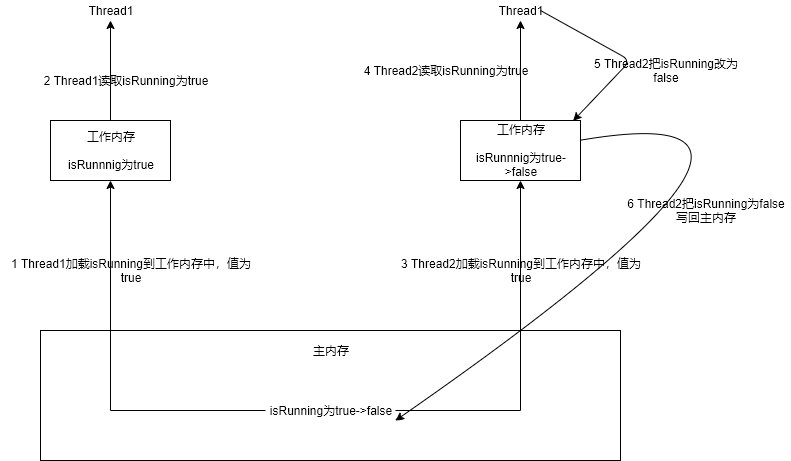
- Thread1 从主内存把 isRunning 这个变量加载到工作内存中,值为 true 所以一直运行
- Thread2 从主内存把 isRunning 这个变量加载到工作内存中,值为 true 改为 false,写回工作内存,再写回主内存
- Thread1 一直从工作内存中读取这个变量,一直为 true,所以还是无法停止运行
2.3. 解决方法
将 isRunning 使用 volatile 修饰
public class VolatileTest
{
    private static volatile boolean isRunning = true;

    public static void main(String[] args) throws InterruptedException
    {
        Thread thread1 = new Thread(()->{
            System.out.println("thread1 is running");
            while (isRunning)
            {

            }
            System.out.println("thread1 will be stopped");
        });
        thread1.start();

        Thread.sleep(1000);

        Thread thread2 = new Thread(()->{
            System.out.println("thread2 is running");

            isRunning = false;

            System.out.println("thread2 change isRunning flag");
        });
        thread2.start();

        thread1.join();
        thread2.join();
    }
}
2.4. volatile vs synchronized
| volatile | synchronized | |
|---|---|---|
| 内存模型三性 | 可见性、有序性 | 可见性、有序性、原子性 |
| 是否造成线程阻塞【重量级别】 | 不会 | 会 |
| 应用范围 | 变量级别 | 变量、方法、类级别 |
3. 汇编源码实验
3.1. 下载编译 hsdis-amd64.dll
参考How to build hsdis-amd64.dll and hsdis-i386.dll on Windows或者hsdis-amd64.7z
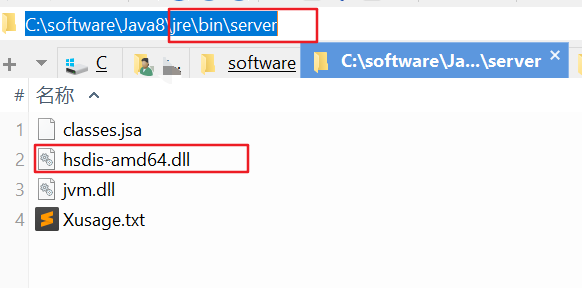
3.2. 放入 JRE bin 目录下
3.3. 对比实验
- 有 volatile
public class TestVolatile
{
    private static volatile int i = 0;
    public static void main(String[] args)
    {
        test();
    }

    private static void test()
    {
        i++;
    }
}
- 没有 volatile
public class TestVolatile
{
    private static int i = 0;
    public static void main(String[] args)
    {
        test();
    }

    private static void test()
    {
        i++;
    }
}
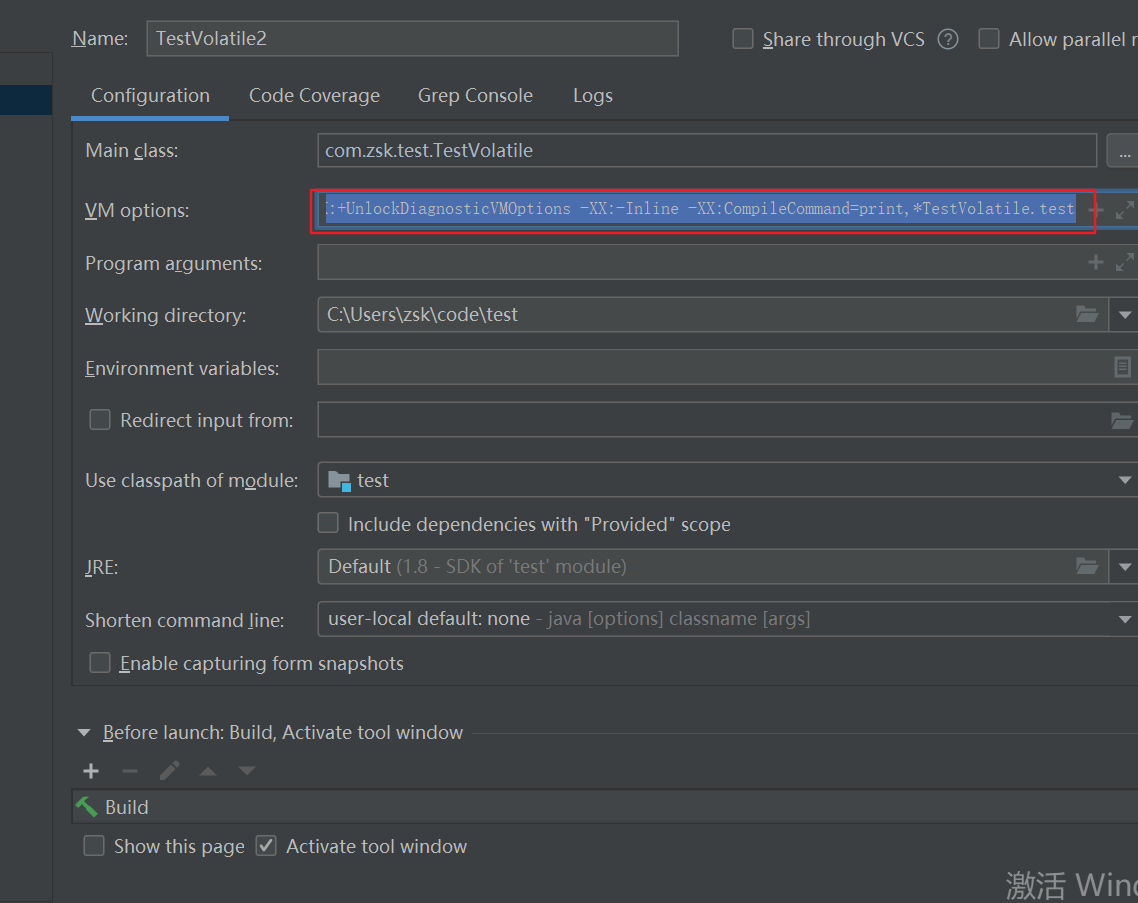
3.4. 加上 jvm 参数运行
-server -Xcomp -XX:+UnlockDiagnosticVMOptions -XX:-Inline -XX:CompileCommand=print,*TestVolatile.test
使用 IDEA 的话如下图:
3.5. 输出结果对比
结果如附件:
- volatile.txt
- 普通.txt
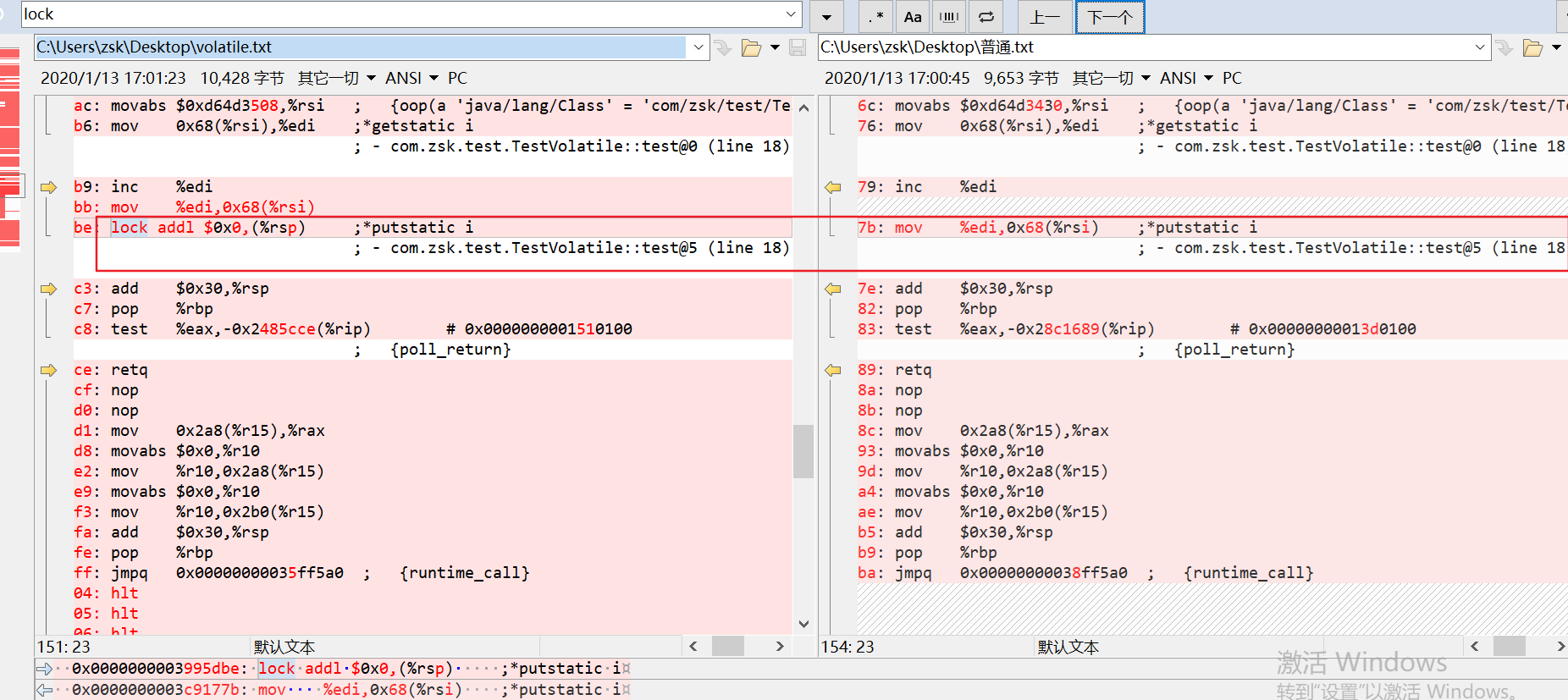
使用 BeyondCompare 对比图如下:
![]()
4. 根据实验结果分析原理
从汇编语言层面看,有 volatile 的结果比没有 volatile 的多了一个指令:lock addl $0x0,(%rsp) ,这条指令起到内存屏障的作用
-
禁止屏障两边的指令重排序
-
强制把写缓冲区/高速缓存中的脏数据等写回主内存,让缓存中相应的数据失效
4.1. 可见性
根据内存屏障的作用 2 可以实现可见性,表现如下
- volatile 写会把数据同时写入主内存,并让其他线程对这个数据的工作内存失效
- 其他线程 volatile 读的时候就需要去主内存中读取
4.2. 有序性
根据内存屏障的作用 1 可以实现有序性,表现如下
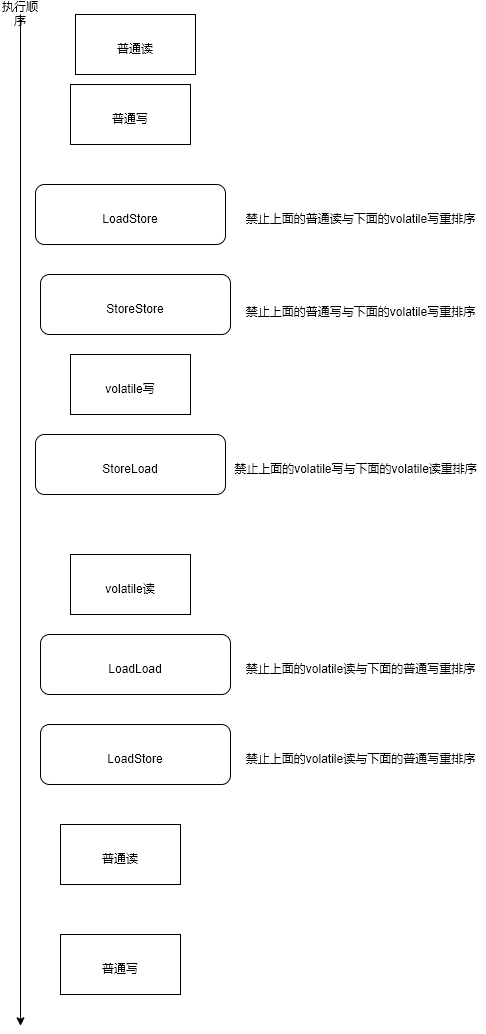
在 volatile 写之前插入释放屏障【LoadStore+StoreStore】使得该屏障之前的任何读写操作都先于这个 volatile 写被提交;
在 volatile 读之后插入获取屏障【LoadLoad+LoadStore】使得这个 volatile 读操作先于该屏障之后的任何读写操作被提交。

 浙公网安备 33010602011771号