
C++ | 数组逆序 | 问题总结
-
源代码
#include<iostream> #include<fstream> using namespace std; typedef int ElemType; const int n = 10; void MyExchange(ElemType *a, ElemType *b){ ElemType temp; temp = *a; *a = *b; *b = temp; } void InverseArry(ElemType arry[n], int n){ ElemType *p = & arry[0]; ElemType *q = & arry[ n - 1]; while (p < q)//指针不相遇 { MyExchange(p, q); p++; q--; } } void PrintArrya(ElemType arry[n], int n) { fstream f1; f1.open("t1.txt", ios::in | ios::app); cout << "逆序操作前:" << endl; for (int i = 0; i < n; i++) { f1 >> arry[i]; cout << arry[i] << endl; } } void PrintArryb(ElemType arry[n], int n){ cout << "逆序操作后:" << endl; for (int i = 0; i < n; ++i) { cout << arry[i] << endl; } cout << endl; } int main() { ElemType arry[n] ; PrintArrya(arry, n); InverseArry(arry, n); PrintArryb(arry, n); system("pause"); return 0; } -
typedef
用途:为数据类型名 取个别名.这样就能批量声明变量
用法:
typedef char* PCHAR;
PCHAR pa, pb;
为什么要用 typedef 关键字:
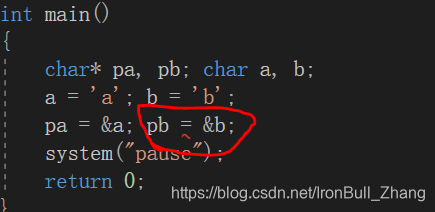
在上图中,char*类型名只声明了pa,未声明pb,pb指向字符型变量b时失败;
 像这样重复定义又太繁琐.
使用typedef后:
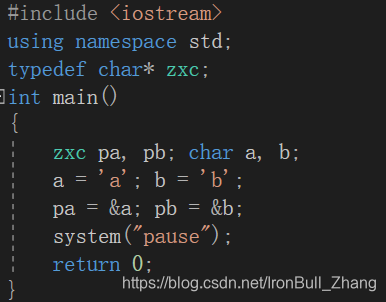
这是目前用得到的,还有其他用途,详见此处:http://www.cnblogs.com/csyisong/archive/2009/01/09/1372363.html

 浙公网安备 33010602011771号