【第九周】单链有序线性表+后羿采集器
  1 .h
  2 // 单链有序线性表基本操作介面
  3 typedef int ElemType; // 定义线性表元素类型为整数 int.
  4
  5 typedef struct node { // 定义链结表节点
  6   ElemType elem; // 节点数据,整数
  7   struct node* next; // 节点的链,递归定义。
  8 } Node; // 节点型态
  9
 10 typedef Node* Link; // 节点的链,是节点的指针。
 11
 12 typedef Link List; // 有序线性表是一个节点指针,指向链结表的头节点 (head node)。
 13
 14 // 初始化线性表,将 size 设为 0。
 15 void initial(List *);
 16
 17 // 线性表的大小。
 18 int getSize(List);
 19
 20 // 取出线性表的第 i 个元素, 返回该元素的值;
 21 // 若 i 大于线性表的元素个数,返回 -1。
 22 ElemType getElem(List, int);
 23 // 搜寻线性表的元素,返回该元素的位置。若成功,返回该元素的位置;
 24 // 否则,返回 -1。
 25 int search(List, ElemType);
 26
 27 //  将一个元素插入到线性表适当的位置。若成功,返回该元素的位置;
 28 // 否则,返回 -1。
 29 int insert(List *, ElemType);
 30
 31 // 从线性表删除一个元素。若成功,返回该元素原来的位置;否则,返回 -1。
 32 int delete(List *, ElemType);
 33
 34 // 将线性表清空。
 35 void clear(List *);
 36
 37 // 檢查线性表是否為空表。若是空,返回 1;否则,返回 0。
 38 int is_empty(List);
 39
 40 // 打印线性表元素。
 41 // 我们增加这个函数,因为它的必要性。
 42 void printlst(List);
 43
 44
 45 .c
 46 // 单链有序线性表基本操作介面
 47 #include <stdio.h>
 48 #include <stdlib.h>
 49 #include "sorted_list_single_list.h"
 50
 51 // 初始化线性表 L。
 52 void initial(List *L) {
 53   *L = NULL; // 将线性表的指针设为空值。
 54 }
 55
 56 // 取得线性表 L 的大小,返回元素个数。
 57 int getSize(List L) {
 58   Link link = L; // 节点指针。
 59   int size = 0; // 线性表个数初始值设为 0.
 60
 61   while (link!=NULL) {
 62     link = link->next; // 下一个节点。
 63     size++;
 64   }
 65   return size; // 线性表 L 的大小。
 66 }
 67 // 取出线性表的第 i 个元素, 返回该元素的值;
 68 // 若 i 大于线性表的元素个数,返回 -1。
 69 ElemType getElem(List L, int inx) {
 70   Link current = L; // 节点指针。
 71   int i; // 循环变量。
 72
 73   for (i=0; i<inx; i++)
 74     if (current==NULL) return -1; // 第 i 个元素不存在。
 75     else current = current->next; // 移到下一个元素。
 76   return current->elem; // 返回节点的元素值。
 77 }
 78
 79 // 搜寻元素 e 在 L 中的位置。若成功,返回 e 的索引;否则,返回 -1。
 80 int search(List L, ElemType e) {
 81   Link link = L; // 节点指针。
 82   int position=0; // 元素位置,设定初始值为 0。
 83
 84   while (link!=NULL) {
 85     if (link->elem==e) return position; // 搜寻成功,返回元素 e 的位置。
 86     else if (link->elem<e) { // 还有其它节点,继续搜寻。
 87       link = link->next; // 移到下一个节点。
 88       position++; // 位置加 1。
 89     }
 90     else return -1; // 节点的值已超过,搜寻失败。
 91   }
 92   return -1; // 已经超过线性表的最后一个节点,搜寻失败。
 93 }
 94
 95 // 将元素 e 插入到 L 适当的位置。插入完成时,返回 e 的位置。
 96 int insert(List *L, ElemType e) {
 97   Link current = *L; // 指向目前的节点。
 98   Link previous = NULL; // 指向前一个节点,开始时为空。
 99   Link newNode; // 新节点的指针。
100   int position = 0; // 目前节点位置。
101
102   if (*L==NULL) { // Case 1:线性表是空的。
103     newNode = (Link) malloc(sizeof(Node)); // 要求一个新节点的内存。
104     newNode->elem = e; // 设定头节点的数据。
105     newNode->next = NULL; // 设定头节点的链。
106     *L = newNode; // 线性表指向第一个节点。
107     return 0; // 返回头节点位置。
108   }
109
110   do { // 检查目前的节点。  if (current->elem>=e) { // Cases 2 & 3: 找到插入位置,插在这个节点之前。
111     newNode = (Link) malloc(sizeof(Node)); // 要求一个新节点的内存。
112     newNode->elem = e; // 设定新节点的数据。
113     newNode->next = current; // 设定新节点的链。
114     if (previous==NULL) *L = newNode; // Case 2: 插入线性表的头节点。
115     else previous->next = newNode; // Case3:修改前一节点的链。
116     return position; // 返回位置。
117     }
118     else {
119       previous =  current; // 将目前的节点设为前一个节点。
120       current = current->next; // 将下一个节点设为下一步骤的目前节点。
121       position++; // 位置加 1。
122     }
123   } while (current!=NULL); // 若线性表还有节点,继续。
124
125   // Case 4:while 循环结束,没有执行返回,移到链结表的最后节点。
126   newNode = (Link) malloc(sizeof(Node)); // 要求一个新节点的内存。
127   newNode->elem = e; // 设定新节点的数据。
128   newNode->next = NULL; // 最后的节点,将其下一个节点设为空值。
129   previous->next = newNode; // 将新增节点放在线性表的最后。
130   return position; // 返回位置。
131 }
132
133 // 从 L 删除元素 e。若成功,返回 e 原来的位置;否则,返回 -1。
134 int delete(List *L, ElemType e) {
135   Link current = *L; // 指向目前的节点。
136   Link previous; // 指向前一个节点。
137   int position = 0; // 目前节点位置。
138
139   while (current!=NULL) { // 当线性表还有节点。
140     if (current->elem==e) { // 找到要删除的节点。
141       if (position==0) { // 删除的节点是头节点。
142         *L = current->next; // 设定下一个节点为头节点。
143         free(current); // 释放删除的节点。
144         return position; // 返回删除节点的原来位置。
145       }
146       else {
147         previous->next = current->next; // 将前一个节点的链指向目前的下一个节点。
148         free(current); // 释放删除的节点。
149         return position; // 返回删除节点的原来位置。
150       }
151     }
152     else if (current->elem<e) {
153       previous = current; // 将目前的节点设为前一个节点。
154       current = current->next; // 将下一个节点设为下一步骤的目前节点。
155       position++; // 位置加 1。
156     }
157     else return -1; // 目前节点数据已超过删除的值;删除失败。
158   }
159   return -1; // 已经没有节点,删除失败。
160 }
161
162 // 将线性表 L 清空。
163 void clear(List *L) {
164   Link current; // 指向目前的节点。
165
166   while (*L!=NULL) { // 还有节点要清除。
167     current = *L; // 目前的节点。
168     *L = current->next; // 剩余的链结表。
169     free(current); // 释放目前的节点。
170   }
171 }
172
173 // 檢查线性表 L 是否為空表。若是空,返回 1;否则,返回 0。
174 int is_empty(List L) {
175   return L==NULL; // 若 L 为空值,返回 1,否则,返回 0。 }
176
177 // 打印线性表元素。
178 // 我们增加这个函数,因为它的必要性。
179 void printlst(List L) {
180   List current = L; // 指向目前的节点。
181   int position = 0; // 目前节点的位置。
182
183   printf("线性表元素个数:%3d 元素\n", getSize(L));
184
185   while (current!=NULL) { // 还有节点要打印。
186     printf("%3d ", current->elem); // 打印节点数据。
187     if ((position+1)%20==0) printf("\n"); // 满 20 个元素,打印换行。
188     current = current->next; // 移到下一个节点。
189     position++; // 下一个位置。
190   }
191   if ((position%20)!=0) printf("\n"); // 若不足 20 个元素,打印一个换行。
192   printf("\n"); // 打印一个换行。
193 }
194
195
196 main.c
197 #include <stdio.h>
198 #include <stdlib.h>
199 #include <time.h>
200 #include "sorted_list_single_list.h"
201
202 // 合并 (merge) 两个线性表 L1 和 L2。
203 // 返回合并后的线性表。
204 List merge_list(List L1, List L2) {
205   List L; // 合并的线性表。
206   int size1=getSize(L1), size2=getSize(L2); // 线性表 L1,和 L2 的大小。
207   ElemType e1, e2; // 线性表 L1 和 L2 的元素。
208   int i1=0, i2=0; // 线性表 L1 和 L2 的索引。
209
210   initial(&L); // 初始化 L。
211
212   // i1<L1.size: l1 还有元素待合并。
213   // i2<L2.size: l2 还有元素待合并。
214   while (i1<size1 && i2<size2) {
215     e1 = getElem(L1, i1); // 取得 L1 的元素。
216     e2 = getElem(L2, i2); // 取得 L2 的元素。
217     // 将 L1 和 L2 较小的元素放到 L 中,并移到下一个元素的位置。
218     if (e1<=e2) {insert(&L, e1); i1++;}
219     else {insert(&L, e2); i2++;}
220   }
221
222   // L1 还有元素,继续复制 L1 的元素。
223   while (i1<size1) insert(&L, getElem(L1, i1++));
224
225   // L2 还有元素,继续复制 L2 的元素。
226   while (i2<size2) insert(&L, getElem(L2, i2++));
227
228   return L; // 返回合并后的线性表。
229 }
230
231 // 合自 L1 中移除 (remove) 所有 L2 的元素。
232 // 返回移除后的线性表。
233 List remove_list(List L1, List L2) {
234   List L; // 移除的线性表。
235   int size1=getSize(L1), size2=getSize(L2); // 线性表 L1,和 L2 的大小。
236   ElemType e1, e2; // 线性表 L1 和 L2 的元素。
237   int i1=0, i2=0; // 线性表 L1 和 L2 的索引。
238
239   initial(&L); // 初始化 L。
240       // i1<size1: l1 还有元素待移除。
241   // i2<size2: l2 还有元素待移除。
242   while (i1<size1 && i2<size2) {
243     e1 = getElem(L1, i1); // 取得 L1 的元素。
244     e2 = getElem(L2, i2); // 取得 L2 的元素。
245     // 若 L1 和 L2 的元素相同,移除 L1 的元素,不储存。
246     if (e1==e2) i1++;
247     // 若 L1 的元素小于 L2 的元素,将 L1 的元素放到 L 中。
248     else if (e1<e2) {insert(&L, e1); i1++;}
249     // 若 L1 的元素大于 L2 的元素,检查下一个 L2 的元素。
250     else i2++;
251   }
252
253   // L2 已经没有元素;但是,L1 还有元素,继续将 L1 的元素放到 L 中。
254   while (i1<size1) insert(&L, getElem(L1, i1++));
255
256   return L; // 返回移除后的线性表。
257 }
258
259 int main(void) {
260   List L, L1, L2; // 声明线性表。
261   int leng1, leng2; // 两个线性表的长度。 int i; // 循环变量。
262
263   initial(&L1); // 初始化 L1。
264   initial(&L2); // 初始化 L2。
265
266   srand(time(NULL)); // 随机数生成器的种子。
267
268   // 输入线性表 L1 的元素个数。
269   do {
270     printf("输入线性表 L1 的元素个数 (1 与 100 (含)之间):");
271     scanf("%d", &leng1);
272   } while (leng1<0 || leng1>100);
273
274   // 输入线性表 L2 的元素个数。
275   do {
276     printf("输入线性表 L2 的元素个数 (1 与 100 (含)之间):");
277     scanf("%d", &leng2);
278   } while (leng2<0 || leng2>100);
279   printf("-------------------------------------------\n");
280
281   // 随机产生 L1 的元素。
282   for (i=0; i<leng1; i++) insert(&L1, rand() % 100); // 插入 L1 的元素。
283   printf("线性表 L1:\n");
284   printlst(L1); // 打印线性表 L1。
285
286   // 随机产生 L2 的元素。
287   for (i=0; i<leng2; i++) insert(&L2, rand() % 100); // 插入 L2 的元素。
288   printf("线性表 L2:\n");
289   printlst(L2); // 打印线性表 L2。
290
291   L = merge_list(L1, L2); // 合并 L1 和 L2。
292   printf("合并 L1 和 L2 的线性表:\n");
293   printlst(L); // 打印合并的线性表。
294
295   L = remove_list(L1, L2); // 从 L1 移除 L2。
296   printf("从 L1 移除 L2 的线性表:\n");
297   printlst(L); // 打印移除的线性表。
298
299   return 0;
300 }
学习思考以上老师代码
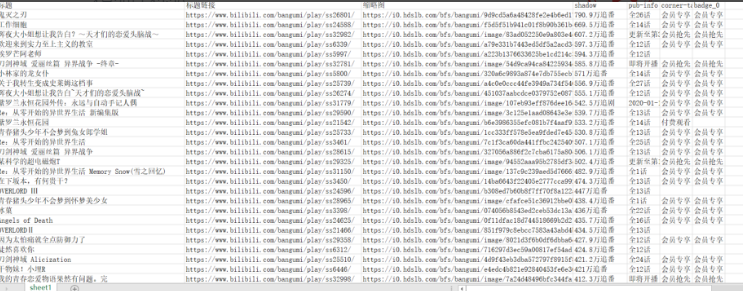
自主学习后羿采集器的用法提取数据


 浙公网安备 33010602011771号