
双端栈
关于双端栈
为了节省数组空间并增加栈的个数,可以使用双端栈。
双端栈的基本操作都和栈没太大区别,因此不再赘述。
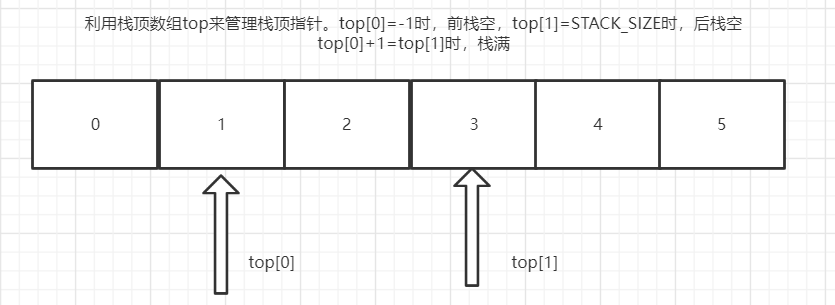
此外,如果真的需要管理多个栈,使用数组+链栈是一个不错的选择
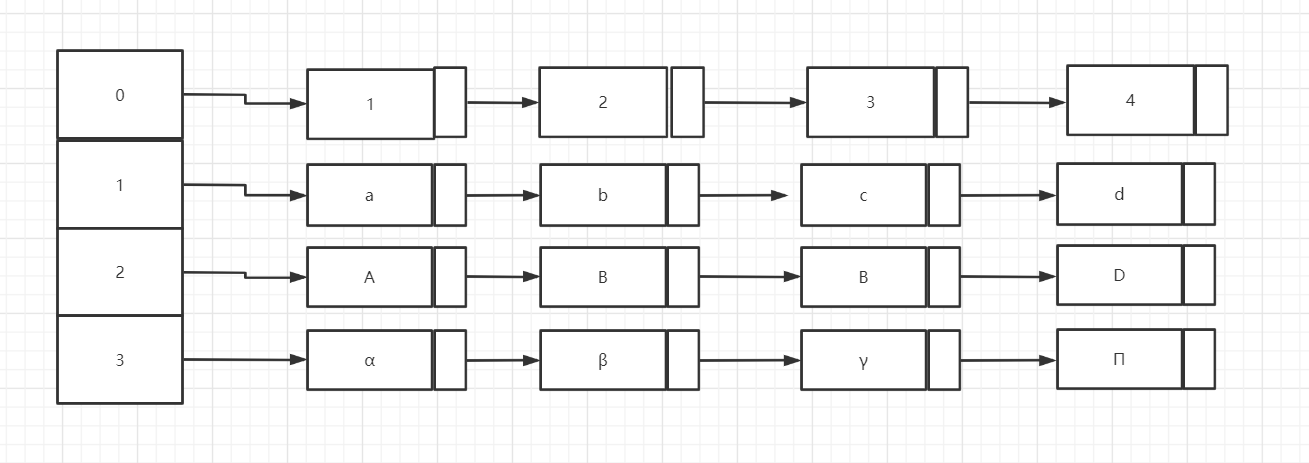
这种多栈形式仅仅是用数组管理链栈而已,不再赘述
实现
仅实现双端栈的插入删除初始化操作。
#include <iostream>
#include <iostream>
#define STACK_SIZE 100
template <typename ElementType>
struct DoubleSideStack
{
    int top[2];
    ElementType Stack[STACK_SIZE];

    DoubleSideStack();  //初始化(构造函数)
    bool push(ElementType x, int i);    //压栈
    bool pop(ElementType *x, int i);    //出栈
};

template <typename ElementType>
DoubleSideStack<ElementType>::DoubleSideStack()
{//初始化
    top[0] = -1;
    top[1] = STACK_SIZE;
}

template <typename ElementType>
bool DoubleSideStack<ElementType>::push(ElementType x, int i)
{//压栈
    if (this->top[0] + 1 == this->top[1])
    { //判断栈满与否
        std::cout << "栈满";
        return false;
    }

    switch (i)
    {
    case 0:
    {
        this->top[0]++;
        this->Stack[this->top[0]] = x;
        return true;
        break;
    }
    case 1:
    {
        this->top[1]--;
        this->Stack[this->top[1]] = x;
        return true;
        break;
    }
    default:
    {
        std::cout << "out of range" << std::endl;
        return false;
        break;
    }
    }
}

template <typename ElementType>
bool DoubleSideStack<ElementType>::pop(ElementType *x, int i)
{//出栈
    switch (i)
    {
    case 0:
    {
        if (this->top[0] == -1)
        {//判断栈空与否
            std::cout << "out of range" << std::endl;
            return false;
        }
        *x = this->Stack[this->top[0]];
        this->top[0]--;
        return true;
        break;
    }
    case 1:
    {
        if (this->top[1] == STACK_SIZE)
        {//判断栈空与否
            std::cout << "out of range" << std::endl;
            return false;
        }
        *x = this->Stack[this->top[1]];
        this->top[1]++;
        return true;
        break;
    }
    default:
    {
        return false;
        break;
    }
    }
}

int main()
{
    DoubleSideStack<std::string> testStack;
    testStack.push("this is a test", 0);
    testStack.push("this is a end test", 1);
    std::string newString;
    testStack.pop(&newString, 1);
    testStack.pop(&newString, 1);
    std::cout << newString;
}
使用数组管理多栈仅仅是加一个数组而已,其余与链栈别无二致。

 浙公网安备 33010602011771号