#ifndef __Complex_HPP__
#define __Complex_HPP__
#include<iostream>
#include<cmath>
using namespace std;
class Complex
{
public:
    Complex();
    Complex(double a);
    Complex(double a, double b);
    Complex(const Complex& c);
    ~Complex() = default;
    double get_real()const;
    double get_imag()const;
    void show()const;
    void add(const Complex& c);
    friend Complex add(const Complex& c1, const Complex& c2);
    friend bool is_equal(const Complex& c1, const Complex& c2);
    friend double abs(const Complex& c);
private:
    double real, imag;
};
Complex::Complex() :real(0.0), imag(0.0) {}
Complex::Complex(double a)
{
    real = a;
    imag = 0.0;
}
Complex::Complex(double a, double b)
{
    real = a;
    imag = b;
}
Complex::Complex(const Complex& c)
{
    real = c.get_real();
    imag = c.get_imag();
}
double Complex::get_real()const
{
    return(real);
}
double Complex::get_imag()const
{
    return (imag);
}
void Complex::show()const
{
    double c, d;
    c = get_real();
    d = get_imag();
    if (d > 0)
    {
        cout << c << " + " << d << "i" << endl;
    }
    else if (d == 0)
        cout << c << endl;
    else
        cout << c << d << "i" << endl;
}
void Complex::add(const Complex& c)
{
    real = real + c.get_real();
    imag = imag + c.get_imag();
}
Complex add(const Complex& c1, const Complex& c2)
{
    Complex c3;
    c3.real = c1.real + c2.real;
    c3.imag = c1.imag + c2.imag;
    return c3;
}
bool is_equal(const Complex& c1, const Complex& c2)
{
    if (c1.real == c2.real && c1.imag == c2.imag)
        return true;
    else
        return false;
}
double abs(const Complex& c)
{
    double x, y;
    x = c.real;
    y = c.imag;
    return(sqrt(x * x + y * y));
}
#endif // !__Complex_HPP__
#include "complex1.hpp"
#include <iostream>

int main()
{
    using namespace std;

    Complex c1(12, -4);
    const Complex c2(6.5);
    Complex c3(c1);

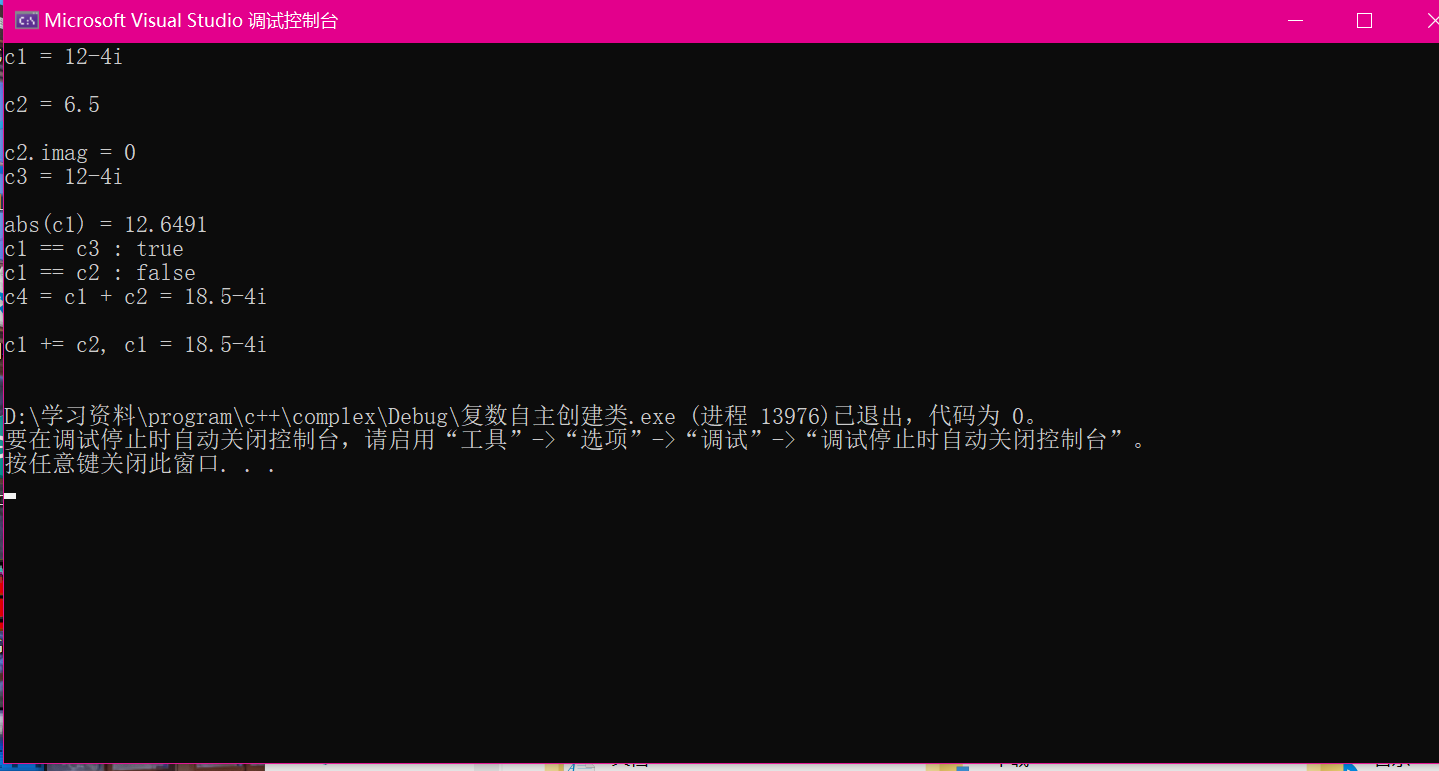
    cout << "c1 = ";
    c1.show();
    cout << endl;

    cout << "c2 = ";
    c2.show();
    cout << endl;
    cout << "c2.imag = " << c2.get_imag() << endl;

    cout << "c3 = ";
    c3.show();
    cout << endl;

    cout << "abs(c1) = ";
    cout << abs(c1) << endl;

    cout << boolalpha;
    cout << "c1 == c3 : " << is_equal(c1, c3) << endl;
    cout << "c1 == c2 : " << is_equal(c1, c2) << endl;

    Complex c4;
    c4 = add(c1, c2);
    cout << "c4 = c1 + c2 = ";
    c4.show();
    cout << endl;

    c1.add(c2);
    cout << "c1 += c2, " << "c1 = ";
    c1.show();
    cout << endl;
}
![]()
#ifndef __User_HPP__

#define __User_HPP__

#include<iostream>
#include<iomanip>
#include<string>
using namespace std;
class User
{
public:
    User(string a, string b = "111111", string c = "") :name{ a }, password{ b }, email{ c }
    {
        n++;
    }
    ~User() = default;
    void set_email();
    void change_passwd();
    void print_info();
    int get_n();
    static void print_n()
    {
        cout << "there are " << n << "users" << endl;
    }
private:
    string name;
    string password;
    string email;
    static int n;
};
int User::n = 0;
void User::set_email()
{

    cout << "please enter email:";
    cin >> email;
    cout << "the email address is set sucessfully.";
}
void User::change_passwd()
{
    string text;
    int i=1;
    cout << "enter the old password:";
    cin >> text;
    for(i;i<=2;i++)
    {
        if (text != password)
        {
            cout << "Password input error.Please renter it again:";
            cin >> text;
        }
        else
        {
            cout << "enter the new password:";
            cin >> text;
            cout << endl;
            cout << "new password is set sucessfully"<<endl;
            password = text;
            break;
        }
        if (i == 2)
        {
            cout << "Password input error.Please try after a while."<<endl;
        }
    }

}
void User::print_info()
{
    cout << "name: " << name << endl;
    cout << "email: " << email << endl;
    cout << "password: ******"  << endl;
}
int User::get_n()
{
    return n;
}

#endif // !__User_HPP__
#include "User.hpp"
#include <iostream>
int main()
{
    using namespace std;
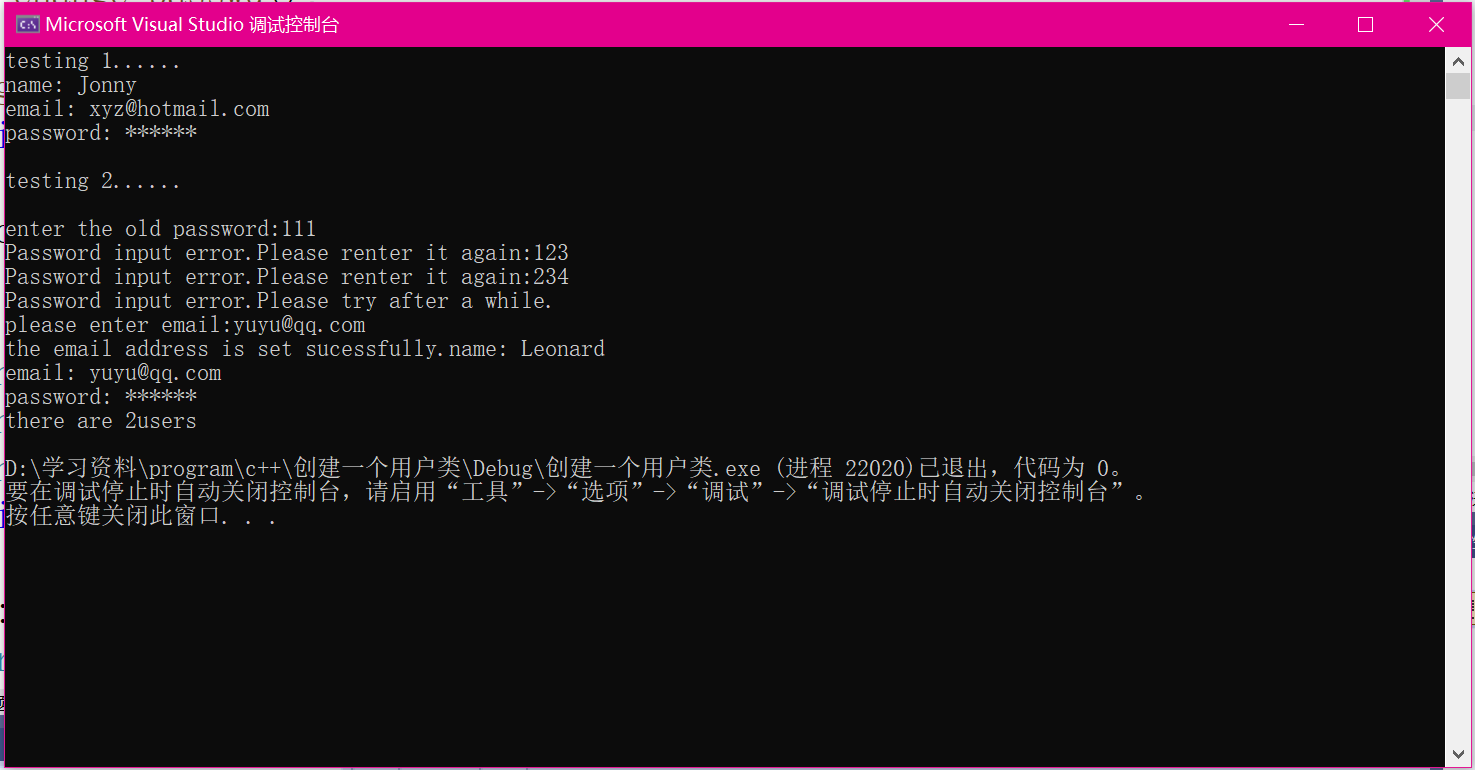
    cout << "testing 1......" << endl;
    User user1("Jonny", "92197", "xyz@hotmail.com");
    user1.print_info();
    cout << endl
        << "testing 2......" << endl
        << endl;
    User user2("Leonard");
    user2.change_passwd();
    user2.set_email();
    user2.print_info();
    User::print_n();
}
![]()
![]()


 浙公网安备 33010602011771号