

循环链表实现的队列
循环链表实现队列
队列的实现并不复杂,可以使用数组,也可以使用链表。不管使用哪种方式,队列的数据在逻辑上是线性的,并且遵循先进先出的原则。队列的数据结构中通常要保留两个指向位置,一个头一个尾,头表示先进去的数据,尾表示后进去的数据。我们有时也会使用循环结构来实现队列,比如循环数组、循环链表。使用循环的一个好处是我们通常只需保留一个指向位置。因为队列主要操作是两个,入队与出队,所以只保留一个指向位置要考虑选择哪个位置。队列的第一个元素位置还是队列最后一个元素位置?我们一般选择最后一个位置,当然这并非绝对的。如果使用循环的双向链表,选择哪个位置通常没有影响,但是双向链表会涉及到哨兵节点,这会降低代码简洁性;而对于单向链表,选择最后一个位置可以很自然的过渡到第一个位置。
入队操作比较简单,只需要将最后位置往后添加一个新元素即可,因为它们是循环的。循环链表实现队列的模式图如下:
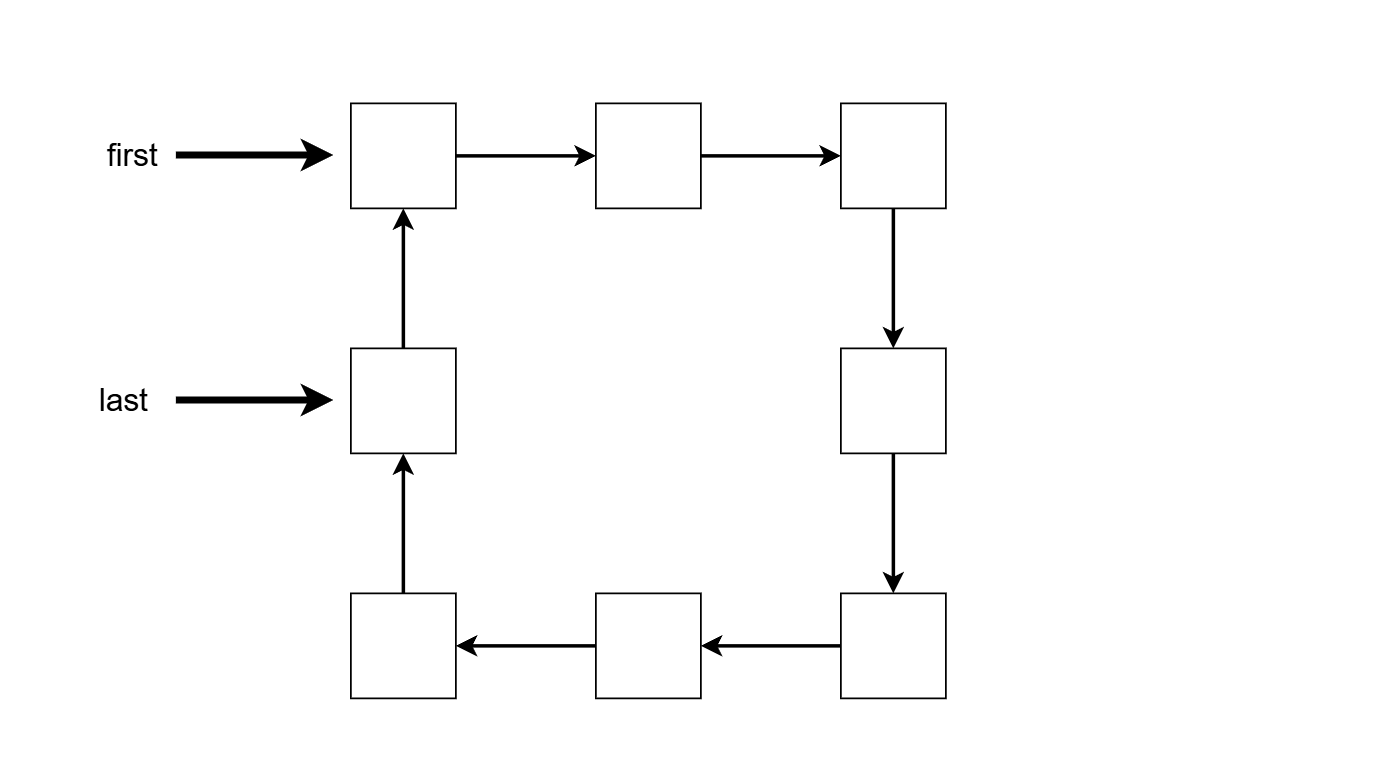
入队操作的代码:
void enqueue( const Object & x )
{ insert( end( ), x ); }

iterator insert( iterator itr, const Object & x )
{
    Node * p = itr.current;
    if( empty( ) )
    {
        ++theSize;
        p->data = x;
        return { p };
    }
    else if( size( ) == 1 )
        p->next = new Node{ x, p };
    else
        p->next = new Node{ x, p->next };
    if( itr == end( ) )
        last = p->next;
    ++theSize;
    return { p->next };
}
iterator是内置的迭代器。以上作为方法整合在类中。因为是循环的,特别要注意当前队列的大小。在设计时我们需要标记最后位置,所以初始化时有last节点,这个节点并没有数据,并且记录当前队列大小为0。当队列大小为0时,入队操作仅对已被初始化但没有实际数据的last节点补充数据即可;而当队列大小1时,入队要注意形成二元环。入队结束以后要重新设置last位置。
出队操作与入队操作注意点也是队列大小。代码如下:
void dequeue( )
{ erase( end( ) ); }

iterator erase( iterator itr )
{
    Node * p = itr.current;
    Node * d;
    iterator retVal;
    if( size( ) > 1 )
    {
        d = p->next;
        p->next = d->next;
        retVal = d->next;
    }
    else
    {
        d = p;
        retVal = nullptr;
    }
    delete d;
    --theSize;
    return retVal;
}
在方法dequeue( )中,传入的参数是end( )而非begin( ),这是因为如果队列大小为1时,begin( )与end( )相一致,传入end( )能够处理这一特殊情况。因为传入节点实际是last,而要删除的是第一个元素,基于循环实现,只需last->next即可,这在代码中也体现出来。
完整代码
template <typename Object>
class queueCircular
{
private:
    struct Node
    {
        Object data;
        Node * next;

        Node( const Object & d = Object{ }, Node * n = nullptr ):
            data{ d }, next{ n } { }
        Node( Object && d, Node * n = nullptr ):
            data{ std::move( d ) }, next{ n } { }
    };
    int theSize;
    Node * last;
    void init( )
    {
        theSize = 0;
        last = new Node;
    }

public:
    class const_iterator
    {
    protected:
        Node * current;
        Object & retrieve( )
        { return current->data; }
        const_iterator( Node * p ): current{ p } { }
    public:
        const_iterator( ): current{ nullptr } { }
        const Object & operator*( ) const
        { return retrieve( ); }
        const_iterator & operator++( )
        {
            current = current->next;
            return *this;
        }
        const_iterator operator++( int )
        {
            const_iterator old = *this;
            ++( *this );
            return old;
        }
        const_iterator operator+( int step )
        {
            const_iterator new_ = *this;
            for( int i = 0; i < step; ++i )
                ++new_;
            return new_;
        }
        bool operator==( const const_iterator & rhs ) const
        { return current == rhs.current; }
        bool operator!=( const const_iterator & rhs ) const
        { return !( *this == rhs ); }

        friend class queueCircular<Object>;
    };
    class iterator: public const_iterator
    {
    protected:
        iterator( Node * p ): const_iterator{ p } { }
    public:
        iterator( ) { }
        Object & operator*( )
        { return const_iterator::retrieve( ); }
        const Object & operator*( ) const
        { return const_iterator::operator*( ); }
        iterator & operator++( )
        {
            this->current = this->current->next;
            return *this;
        }
        iterator operator++( int )
        {
            iterator old = *this;
            ++( *this );
            return old;
        }
        iterator operator+( int step )
        {
            iterator new_ = *this;
            for( int i = 0; i < step; ++i )
                ++new_;
            return new_;
        }

        friend class queueCircular<Object>;
    };

    queueCircular( ) { init( ); }
    queueCircular( std::initializer_list<Object> initial )
    {
        init( );
        for( auto & x: initial )
            enqueue( x );
    }
    ~queueCircular( )
    { clear( ); }

    bool empty( ) const
    { return theSize == 0; }
    int size( ) const
    { return theSize; }

    iterator begin( )
    {
        if( empty( ) )
        {
            std::cerr << "No any element.\n";
            exit( EXIT_FAILURE );
        }
        else if( size( ) == 1 )
            return { last };
        else
            return { last->next };
    }
    const_iterator begin( ) const
    {
        if( empty( ) )
        {
            std::cerr << "No any element.\n";
            exit( EXIT_FAILURE );
        }
        else if( size( ) == 1 )
            return { last };
        else
            return { last->next };
    }
    iterator end( )
    { return { last }; }
    const_iterator end( ) const
    { return { last }; }
    Object & front( )
    { return *begin( ); }
    const Object & front( ) const
    { return *begin( ); }
    Object & back( )
    { return *end( ); }
    const Object & back( ) const
    { return *end( ); }

    void enqueue( const Object & x )
    { insert( end( ), x ); }
    void enqueue( Object && x )
    { insert( end( ), std::move( x ) ); }
    void dequeue( )
    { erase( end( ) ); }
    void clear( )
    {
        while( !empty( ) )
            dequeue( );
    }

    void show( ) const
    {
        Node * p = begin( ).current;
        if( !empty( ) )
            for( int i = 0; i < size( ) + 1; ++i, p = p->next )
                std::cout << p->data << ' ';
        std::cout << std::endl;
    }

protected:
    iterator insert( iterator itr, const Object & x )
    {
        Node * p = itr.current;
        if( empty( ) )
        {
            ++theSize;
            p->data = x;
            return { p };
        }
        else if( size( ) == 1 )
            p->next = new Node{ x, p };
        else
            p->next = new Node{ x, p->next };
        if( itr == end( ) )
            last = p->next;
        ++theSize;
        return { p->next };
    }
    iterator insert( iterator itr, Object && x )
    {
        ++theSize;
        Node * p = itr.current;
        if( empty( ) )
        {
            ++theSize;
            p->data = std::move( x );
            return { p };
        }
        else if( size( ) == 1 )
            p->next = new Node{ std::move( x ), p };
        else
            p->next = new Node{ std::move( x ), p->next };
        if( itr == end( ) )
            last = p->next;
        ++theSize;
        return { p->next };
    }
    iterator erase( iterator itr )
    {
        Node * p = itr.current;
        Node * d;
        iterator retVal;
        if( size( ) > 1 )
        {
            d = p->next;
            p->next = d->next;
            retVal = d->next;
        }
        else
        {
            d = p;
            retVal = nullptr;
        }
        delete d;
        --theSize;
        return retVal;
    }
};
protected部分不能被外部使用,这会破坏队列的规则与完整性。

 浙公网安备 33010602011771号