
Go之路(十六):结构体
结构体
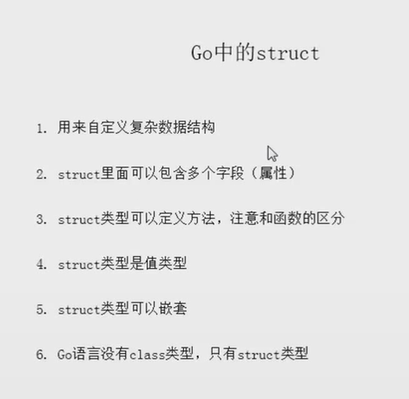
结构体也叫struct,与其他语言中class类似
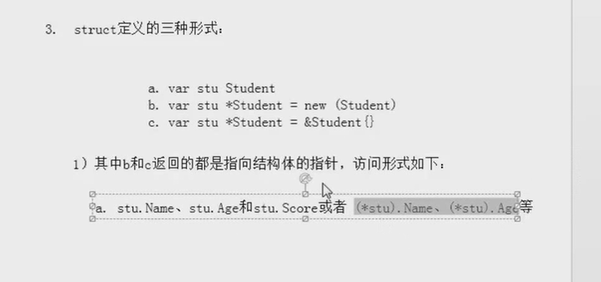
除了直接var stu Student 之外 其他方式返回的都是指针
但是go已经做了优化,也可以直接stu.属性直接访问,正常来说应该加星号的
例子:
package main

import(
	"fmt"
)

type Studnet struct{
	Name string
	Age int
	socre float32
}


func main()  {
	var stu1 Studnet
	stu1.Name = "小明"
	stu1.Age = 12
	stu1.socre = 99.5

	fmt.Println(stu1)
	fmt.Print(stu1.Name, stu1.Age, stu1.socre)


	stu2 := new(Studnet)
	stu2.Name = "小红"
	stu2.Age = 13
	stu2.socre = 89.5
	fmt.Println(stu2)
	fmt.Print(stu2.Name, stu2.Age, stu2.socre)


	stu3 := &Studnet{
		Name :"小绿",
		Age :13,
		socre :100,

	}

	fmt.Print(stu3.Name, stu3.Age, stu3.socre)
}
例子2链表(尾部插入法):
package main

import(
	"fmt"
	"math/rand"
)

type Student struct{
	Name string
	Age int
	socre float32
	Next *Student
}

func inserTail(p *Student){
	var tail *Student = p
	for i := 0; i<10; i++{
		var stu *Student=new(Student)
		stu.Name = fmt.Sprintf("stu%d",i)
		stu.Age = rand.Intn(100)
		stu.socre = rand.Float32()*100
		tail.Next = stu
		tail = stu
	}
}


func trans(head *Student){
	for head != nil{
		fmt.Println((*head))
		head = (*head).Next
	}
}

func main()  {
	var head Student = Student{
		Name:"tom",
		Age:12,
		socre:100,
	}
	inserTail(&head)
	trans(&head)

}
头部插入法:
package main

import(
	"fmt"
	"math/rand"
)

type Student struct{
	Name string
	Age int
	socre float32
	Next *Student
}

func inserTail(p *Student){
	var tail *Student = p
	for i := 0; i<10; i++{
		var stu *Student=new(Student)
		stu.Name = fmt.Sprintf("stu%d",i)
		stu.Age = rand.Intn(100)
		stu.socre = rand.Float32()*100
		tail.Next = stu
		tail = stu
	}
}


func trans(head *Student){
	for head != nil{
		fmt.Println((*head))
		head = (*head).Next
	}
}


func insertHead(head *Student) *Student{
	for i := 0; i<10; i++{
		var stu *Student=new(Student)
		stu.Name = fmt.Sprintf("stu%d",i)
		stu.Age = rand.Intn(100)
		stu.socre = rand.Float32()*100
		stu.Next = head
		head = stu
	}
	return head

}

func main()  {
	var head Student = Student{
		Name:"tom",
		Age:12,
		socre:100,
	}
	inserTail(&head)
	// new_head := insertHead(&head)
	trans(&head)


}
解释一下为什么要返回新指针,因为传入函数时候会复制一份指针,但是函数里边并没有对之前的数据进行操作。所以原值不变
结构体的另外一些方法
1.json中的tag功能
就是如果有tag字段的话,json打包的时候名称就会引用tag中所设置的
package main

import(
	"fmt"
	"encoding/json"
)
type Student struct {
    Name   string    `json:"name"`
    Age    int   	 `json:"age"`
}


func main()  {
	var stu1 = Student{
		Name:"tom",
		Age:12,
	}
	data,err := json.Marshal(stu1)
	if err != nil{
		fmt.Print("出错了")
	}
	fmt.Println(string(data))
}
结构体的方法
package main

import(
	"fmt"
)
type Student struct {
    Name   string    `json:"name"`
    Age    int   	 `json:"age"`
}

func (self *Student)init(name string, age int){
	self.Name = name
	self.Age = age
}

func main()  {
	var stu1 Student
	stu1.init("tom",12)
	fmt.Println(stu1)
}
结构体的继承是通过匿名字段来实现的
可以通过stu.结构体名.属性直接访问,如果有同名的,优先访问自己的
package main

import(
	"fmt"
)
type Student struct {
    Name   string    `json:"name"`
	Age    int   	 `json:"age"`
	Father
	Mother
}

type Father struct{
	Name string
	Age int
}

type Mother struct{
	Name string
	Age int
}

func (self *Student)init(name string, age int){
	self.Name = name
	self.Age = age
	self.Father.Name = "小明"
	self.Mother.Name = "小红"
}

func main()  {
	var stu1 Student
	stu1.init("tom",12)
	fmt.Println(stu1)
}

 浙公网安备 33010602011771号