Django的Contenttypes应用,缓存相关
一.django的contenttypes
contenttypes是django内置的一个应用,可以追踪项目中所有app和model的对应关系,并记录在django_content_type表中
每当我们创建新的model并执行数据库迁移后,django_content_type表中就会自动新增一条记录,我们新建一个项目,先不创建表结构,直接迁移数据库,就会生成一个django_content的表
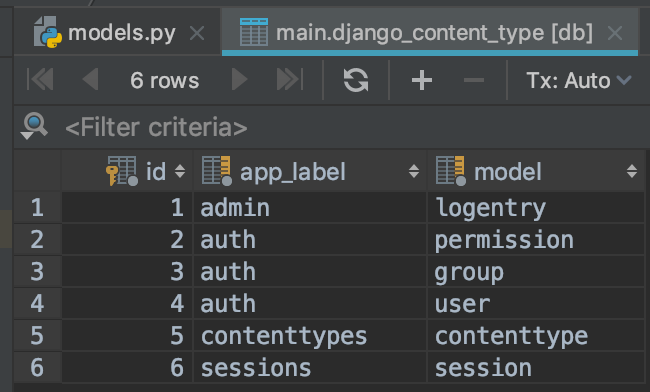
可以看到默认的admin,auth,session等内置应用等,我们来添加一个应用并创建一些表模型,同步迁移后,在看看contenttypes表的变化

会发现应用中的每个模型类都对应有一条记录生成,这些数据配合一些语法会在一些特定的场景优化程序的设计模式。
我们看下面一个场景:
网上商城购物时,会有各种各样的优惠券,比如通用优惠券,满减券,或者是仅限特定品类的优惠券。在数据库中,可以通过外键将优惠券和不同品类的商品表关联起来:
from django.db import models

class Electrics(models.Model):
    """
    id  name
  日立冰箱
  三星电视
  小天鹅洗衣机
    """
    name = models.CharField(max_length=32)


class Foods(models.Model):
    """
    id   name
   面包
   烤鸭
    """
    name = models.CharField(max_length=32)


class Clothes(models.Model):
    name = models.CharField(max_length=32)


class Coupon(models.Model):
    """
    id   name        Electrics    Foods      Clothes     more...
  通用优惠券     null         null        null
  冰箱满减券       2          null        null
  面包狂欢节     null          1          null

    """
    name = models.CharField(max_length=32)
    electric = models.ForeignKey(to='Electrics', null=True, on_delete=models.CASCADE)
    food = models.ForeignKey(to='Foods', null=True, on_delete=models.CASCADE)
    cloth = models.ForeignKey(to='Clothes', null=True, on_delete=models.CASCADE)
coupon表中,如果是通用优惠券,那么所有的ForeignKey为null;如果仅限某些商品,那么对应商品ForeignKey记录该商品的ID,不相关的记录为null。但是这样做的问题是:实际中商品种类繁多,而且很可以持续增加,那么优惠券表中的外键字段越来越多,但是每条记录仅使用其中的一个或某几个外籍字段,这样会导致每条coupon记录的字段越来越多,且空间使用率越来越低。
在这里就可以使用contenttypes应用中提供的特殊字段GenericForeignKey,我们可以很好的解决这个问题,只需要以下三步:
-在coupon model中定义ForeignKey字段,关联到contenttype表。通常这个字段命名为content_type;
-在coupon model中定义PositiveIntegerField字段,用来存储关联表中的主键。通常这个字段命名为object_id.
-在coupon model中定义GenericForeignKey字段,传入上述两个字段的名字。
为了更方便查询商品的优惠券,我们还可以在商品类中通过GenericRelation字段定义反向关系。
from django.db import models
from django.contrib.contenttypes.models import ContentType
from django.contrib.contenttypes.fields import GenericForeignKey, GenericRelation


class Electrics(models.Model):
    name = models.CharField(max_length=32)
    coupons = GenericRelation(to='Coupon')  # 用于反向查询,不会生成表字段

    def __str__(self):
        return self.name


class Foods(models.Model):
    name = models.CharField(max_length=32)
    coupons = GenericRelation(to='Coupon')

    def __str__(self):
        return self.name


class Clothes(models.Model):
    name = models.CharField(max_length=32)
    coupons = GenericRelation(to='Coupon')

    def __str__(self):
        return self.name


class Coupon(models.Model):
    name = models.CharField(max_length=32)

    content_type = models.ForeignKey(to=ContentType, on_delete=models.CASCADE)  # step1
    object_id = models.PositiveIntegerField()  # step2
    content_object = GenericForeignKey('content_type', 'object_id')  # step3

    def __str__(self):
        return self.name
ContentType表对象有model_class()方法,能取到对应model,如下:
def contenttypes_get(request):
    content = ContentType.objects.filter(app_label='app01', model='electrics').first()
    electrics_class = content.model_class()  # 得到模型对象
    res = electrics_class.objects.all()  #相当于Electrics.object.all()
    print(res)  # <QuerySet [<Electrics: 小米电视>, <Electrics: 格力空调>]>
    return HttpResponse('OK')
以下是表操作示例:
    # 为小米电视创建一张优惠券
    s_tv = Electrics.objects.filter(name='小米电视').first()
    Coupon.objects.create(name='小米电视优惠券', content_object=s_tv)
    # 查询优惠券绑定了哪些商品
    coupon_obj = Coupon.objects.filter(id=1).first()
    pro_obj = coupon_obj.content_object
    print(pro_obj)

    # 查询小米电视所有的优惠券
    res = s_tv.coupons.all()
    print(res)  # <QuerySet [<Coupon: 小米电视优惠券>]>
总结:当一张表和多个表FK关联,并且多个FK中只能选择其中一个或者其中n个时,可以利用contenttypes应用,只需要定义这三个字段就可以搞定!
二.django的缓存相关
有时有你不想缓存一个页面,甚至不想某个页面的一部分,只是想缓存某个数据库检索的结果,djang提供了底层的APi,你可以使用这些API来缓存任何粒度的数据
如果你想了解所有的API,强烈建议你去看django\core\cache\backends目录下的cache.py文件,这里仅仅列举一些简单的用法:
>>> from django.core.cache import cache
>>> cache.set('token', 'safrgerjge')         # 在缓存中设置一个类似字典的键值对
>>> cache.get('token')    # 通过键取出值
'safrgerjge'
>>> cache.set('token', 'safrgerjge', 5)     # 第三个参数代表过期时间,5秒后清除
>>> cache.get('token')   # 在5秒内取出,可以取出对应的值
'safrgerjge'
>>> cache.get('token')    # 超过5秒,键值被清除
>>> cache.get('token')


 浙公网安备 33010602011771号