
第八周作业
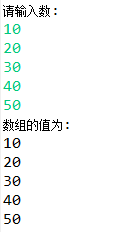
1、编写一个简单程序,要求数组长度为5,分别赋值10,20,30,40,50,在控制台输出该数组的值。(知识点:数组定义和创建、一维数组初始化)[必做题]?
package Test5;

import java.util.Scanner;

public class h1 {

    /**
     * @param args
     */
    public static void main(String[] args) {
        // TODO Auto-generated method stub
        int a[] = new int[5];
        Scanner input = new Scanner(System.in);
        System.out.println("请输入数:");
        for (int i = 0; i < a.length; i++) {
            a[i] = input.nextInt();
        }
        System.out.println("数组的值为:");
        for (int i = 0; i < a.length; i++) {
            System.out.println(a[i]);

        }

    }

}
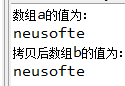
2、将一个字符数组的值(neusoft)拷贝到另一个字符数组中。(知识点:数组复制) [必做题]?
package Test5;

public class h1 {

    /**
     * @param args
     */
    public static void main(String[] args) {
        // TODO Auto-generated method stub
        char a[]={'n','e','u','s','o','f','t','e'};
        char b[]=new char[8];
        System.arraycopy(a, 0, b, 0, a.length);
        System.out.println("数组a的值为:");
        System.out.println(a);
        System.out.println("拷贝后数组b的值为:");
        System.out.println(b);
    }

}
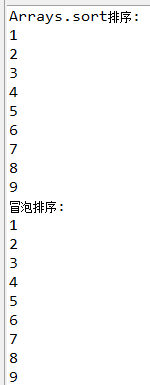
3、给定一个有9个整数(1,6,2,3,9,4,5,7,8)的数组,先排序,然后输出排序后的数组的值。(知识点:Arrays.sort排序、冒泡排序)
package Test5;

import java.util.Arrays;

public class h1 {

    /**
     * @param args
     */
    public static void main(String[] args) {
        // TODO Auto-generated method stub
        int a[] = { 1, 6, 2, 3, 9, 4, 5, 7, 8 };
        System.out.println("Arrays.sort排序:");
        Arrays.sort(a);
        for (int i : a) {
            System.out.println(i);
        }
        System.out.println("冒泡排序:");
        for (int i = 0; i < a.length - 1; i++) {
            for (int j = 0; j < a.length - 1 - i; j++) {
                if (a[j] > a[j + 1]) {
                    int temp = a[j];
                    a[j] = a[j + 1];
                    a[j + 1] = temp;
                }
            }
        }
        for (int i : a) {
            System.out.println(i);
        }
    }
}
4、 输出一个double型二维数组(长度分别为5、4,值自己设定)的值。(知识点:数组定义和创建、多维数组初始化、数组遍历)
package Test5;

public class h1 {

    /**
     * @param args
     */
    public static void main(String[] args) {
        // TODO Auto-generated method stub
        double a[][] = new double[5][4];
        for (int i = 0; i < a.length; i++) {
            for (int j = 0; j < a[i].length; j++) {
                a[i][j] = i;
            }
        }
        for (int i = 0; i < a.length; i++) {
            for (int j = 0; j < a[i].length; j++) {
                System.out.print(a[i][j]+" ");
            }
            System.out.println();
        }
    }

}

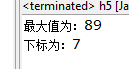
5、 在一个有8个整数(18,25,7,36,13,2,89,63)的数组中找出其中最大的数及其下标。(知识点:数组遍历、数组元素访问)
package Test5;

public class h1 {

    /**
     * @param args
     */
    public static void main(String[] args) {
        // TODO Auto-generated method stub
        int a[]={18,25,7,36,13,2,89,63};
        int max=a[0];
        int number=0;
        for (int i = 1; i < a.length; i++) {
            if (a[i]>max) {
                max=a[i];
            }
            number++;
        }
        System.out.println("最大值为:"+max);
        System.out.println("下标为:"+number);
    }

}
作业
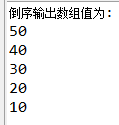
6、将一个数组中的元素逆序存放(知识点:数组遍历、数组元素访问)
package Test5;

public class h1 {

    /**
     * @param args
     */
    public static void main(String[] args) {
        // TODO Auto-generated method stub
        int a[] = { 10, 20, 30, 40, 50 };
        int b;
        for (int i = 0; i < a.length / 2; i++) {
            b = a[i];
            a[i] = a[a.length - i - 1];
            a[a.length - i - 1] = b;
        }
        System.out.println("倒序输出数组值为:");
        for (int i = 0; i < a.length; i++) {
            System.out.println(a[i]);
        }
    }

}
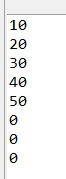
7. 将一个数组中的重复元素保留一个其他的清零。(知识点:数组遍历、数组元素访问)
package Test5;

public class h2 {

    /**
     * @param args
     */
    public static void main(String[] args) {
        // TODO Auto-generated method stub
        int a[] = { 10, 20, 30, 40, 50, 30, 10, 40 };
        for (int i = 0; i < a.length; i++) {
            for (int j = 0; j < a.length; j++) {
                if (a[i] == a[j] && i != j) {
                    a[j] = 0;
                }
            }
        }
        for (int i = 0; i < a.length; i++) {
            System.out.println(a[i]);
        }
    }

}
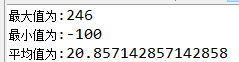
8、给定一维数组{ -10,2,3,246,-100,0,5},计算出数组中的平均值、最大值、最小值。(知识点:数组遍历、数组元素访问)
package Test5;

public class h3 {

    /**
     * @param args
     */
    public static void main(String[] args) {
        // TODO Auto-generated method stub
        int a[] = { -10, 2, 3, 246, -100, 0, 5 };
        int max = a[0];
        int min = a[0];
        double sum = 0;
        for (int i = 1; i < a.length; i++) {
            if (a[i] > max) {
                max = a[i];
            }
            if (a[i] < min) {
                min = a[i];
            }
        }
        for (int i = 0; i < a.length; i++) {
            sum += a[i];
        }
        System.out.println("最大值为:" + max);
        System.out.println("最小值为:" + min);
        System.out.println("平均值为:" + sum / a.length);
    }

}
9、使用数组存放裴波那契数列的前20项 ,并输出 1 1 2 3 5 8 13 21
package Test5;

public class h4 {

    /**
     * @param args
     */
    public static void main(String[] args) {
        // TODO Auto-generated method stub
        int a = 1, b = 1, c = 0;
        int x[] = new int[20];
        x[0] = a;
        x[1] = b;
        for (int i = 1; i <= 18; i++) {
            c = a + b;
            a = b;
            b = c;
            x[i + 1] = c;
        }
        System.out.println("输出前8项为:");
        for (int i = 0; i < 8; i++) {
            System.out.println(x[i]);
        }
    }

}

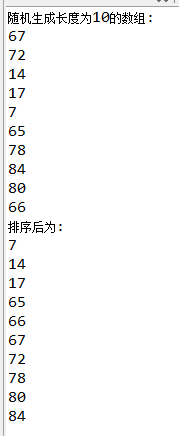
10、生成一个长度为10的随机整数数组(每个数都是0-100之间),输出,排序后,再输出
package Test5;

import java.util.Arrays;

public class h5 {

    /**
     * @param args
     */
    public static void main(String[] args) {
        // TODO Auto-generated method stub
        int a[] = new int[10];
        System.out.println("随机生成长度为10的数组:");
        for (int i = 0; i < a.length; i++) {
            a[i] = (int) (Math.random() * 100);
        }
        for (int i = 0; i < a.length; i++) {
            System.out.println(a[i]);
        }
        System.out.println("排序后为:");
        Arrays.sort(a);
        for (int i = 0; i < a.length; i++) {
            System.out.println(a[i]);
        }
    }

}

 浙公网安备 33010602011771号