
WEB框架--Tornado
Tornado是FriendFeed使用的可扩展的非阻塞式web服务器及其相关工具的开源版本。这个Web框架看起来有些像web.py 或者Google的webapp,不过为了能有效利用非阻塞式服务器环境,这个Web框架还包含了一些相关的有用工具 和优化。
Tornado和现在的主流Web服务器框架(包括大多数Python的框架)有着明显的区别:它是非阻塞式服务器,而且速度相当快。得利于其 非阻塞的方式和对epoll的运用,Tornado 每秒可以处理数以千计的连接,因此Tornado是实时Web服务的一个 理想框架。我们开发这个Web服务器的主要目的就是为了处理FriendFeed的实时功能 ——在FriendFeed的应用里每一个活动用户都会保持着一个服务器连接。(关于如何扩容 服务器,以处理数以千计的客户端的连接的问题,请参阅The C10K problem)。(百度百科)
下载安装:
pip3 install tornado
一 基础使用
import tornado.ioloop
from tornado.web import RequestHandler


class IndexHandler(RequestHandler):
    def get(self):
        self.write("Hello, world")

application = tornado.web.Application([
    (r"/index", IndexHandler),
])


if __name__ == "__main__":
    application.listen(8888)
    tornado.ioloop.IOLoop.instance().start()
执行过程:
- 第一步:执行脚本,监听 8888 端口
- 第二步:浏览器客户端访问 /index --> http://127.0.0.1:8888/index
- 第三步:服务器接受请求,并交由对应的类处理该请求
- 第四步:类接受到请求之后,根据请求方式(post / get / delete ...)的不同调用并执行相应的方法
- 第五步:方法返回值的字符串内容发送浏览器
二 路由系统
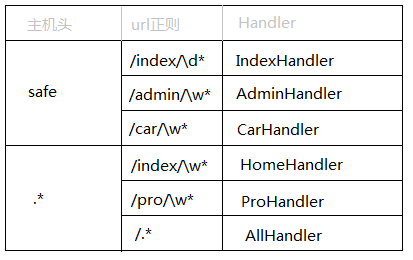
路由系统其实就是 url 和类的对应关系,Tornado不同于其他框架,其他很多框架均是 url 对应函数,Tornado中每个url对应的是一个类,如上示例。
Tornado中原生支持二级域名的路由,如:
三 模板引擎
Tornao中的模板语言和Django类似,模板引擎将模板文件载入内存,然后将数据嵌入其中,最终获取到一个完整的字符串,再将字符串返回给请求者。
Tornado 的模板支持“控制语句”和“表达语句”
- 控制语句是使用
{%和%}包起来的 例如{% if len(items) > 2 %} 表达语句是使用{{和}}包起来的,例如{{ items[0] }}。
控制语句和对应的 Python 语句的格式基本完全相同。支持 if、for、while 和 try,这些语句逻辑结束的位置需要用 {% end %} 做标记。
另外,还通过 extends 和 block 语句实现了模板继承及通过include导入
注:在使用模板前需要在setting中设置模板路径:"template_path" : "xxxx"
3.1 基础使用


import tornado.ioloop
from tornado.web import RequestHandler

class IndexHandler(RequestHandler):
    def get(self):
        self.render("index.html", book_info=['西游记','红楼梦','水浒传','三国演义'])

settings = {
    'template_path':'templates',                 # 设置模板文件路径
    'static_path':'static',                      # 设置静态文件路径
    # 'static_url_prefix':'/static/',
}

application = tornado.web.Application([
    (r"/index.html", IndexHandler),
],**settings)


if __name__ == "__main__":
    application.listen(8888)
    tornado.ioloop.IOLoop.instance().start()
<!DOCTYPE html>
<html>
<head>
    <meta http-equiv="Content-Type" content="text/html; charset=UTF-8"/>
    <title>Titel</title>
    <link rel="stylesheet" href="/static/comment.css">
    <!--<link rel="stylesheet" href="{{static_url('comment.css')}}" >-->
</head>
<body>
    <h3 class="c1">书籍清单</h3>
    <div>
        <ul>
            {% for item in book_info %}
                <li>{{item}}</li>
            {% end %}
        </ul>
    </div>
</body>
</html>
在模板中默认提供了一些函数、字段、类以供模板使用:

escape: tornado.escape.xhtml_escape 的別名
xhtml_escape: tornado.escape.xhtml_escape 的別名
url_escape: tornado.escape.url_escape 的別名
json_encode: tornado.escape.json_encode 的別名
squeeze: tornado.escape.squeeze 的別名
linkify: tornado.escape.linkify 的別名
datetime: Python 的 datetime 模组
handler: 当前的 RequestHandler 对象
request: handler.request 的別名
current_user: handler.current_user 的別名
locale: handler.locale 的別名
_: handler.locale.translate 的別名
static_url: for handler.static_url 的別名
xsrf_form_html: handler.xsrf_form_html 的別名
3.2 模板
<!DOCTYPE html>
<html lang="en">
<head>
    <meta charset="UTF-8">
    <title>Title</title>

    {% block css %}{% end %}

</head>
<body>
    <div style="height: 48px;background-color: olivedrab"></div>

    {% block content %}{% end %}

    {% block javascript %}{% end %}
</body>
</html>
{% extends "layout.html" %}

{% block css %}
     <link rel="stylesheet" href="/static/comment.css">
    <!--<link rel="stylesheet" href="{{static_url('comment.css')}}" >-->
{% end %}

{% block content %}
    <h3 class="c1">书籍清单</h3>
    <div>
        <ul>
            {% for item in book_info %}
                <li>{{item}}</li>
            {% end %}
        </ul>
    </div>
{% end %}

{% block javascript %}{% end %}
3.3 导入
<div>
    <ul>
        <li>网络是怎样连接的</li>
        <li>计算机是怎样跑起来的</li>
        <li>程序是怎样跑起来的</li>
    </ul>
</div>
{% extends "layout.html" %}

{% block css %}
     <link rel="stylesheet" href="/static/comment.css">
    <!--<link rel="stylesheet" href="{{static_url('comment.css')}}" >-->
{% end %}

{% block content %}
    <h3 class="c1">书籍清单</h3>
    <div>
        <ul>
            {% for item in book_info %}
                <li>{{item}}</li>
            {% end %}
        </ul>
    </div>
    <h4 class="c2">补充书籍</h4>
    {% include 'other.html' %}

{% end %}

{% block javascript %}{% end %}
3.4 自定义UIMethod以UIModule
a. 定义
def func(self):
    print(self)    # <__main__.IndexHandler object at 0x0000020A1FCEC518>
    return 'func返回值'
from tornado.web import UIModule

class Foo(UIModule):

    def render(self, *args, **kwargs):
        print(self, args, kwargs)   # <uimodules.Foo object at 0x0000020A1FCFEAC8> (123,) {}
        return 'UIModule返回值'

    def css_files(self):
        """引入css文件"""
        return ["/xxx/common.css",]

    def embedded_css(self):
        """引入css代码"""
        tpm = """
        .c2{
            color:green
        }
        """
        return tpm

    def javascript_files(self):
        """引入js文件"""
        return ["/xxx/common.js",]

    def embedded_javascript(self):
        """引入js代码"""
        tpm ="""
        v = 123;
        console.log(v);
        """
        return tpm
b. 注册
import tornado.ioloop
from tornado.web import RequestHandler
import uimodules as md
import uimethods as mt


class IndexHandler(RequestHandler):
    def get(self):
        self.render("index.html", book_info=['西游记','红楼梦','水浒传','三国演义'])

settings = {
    'template_path':'templates',                 # 设置模板文件路径
    'static_path':'static',                      # 设置静态文件路径
    # 'static_url_prefix':'/static/',
    'ui_methods': mt,
    'ui_modules': md,
}

application = tornado.web.Application([
    (r"/index.html", IndexHandler),
],**settings)


if __name__ == "__main__":
    application.listen(8888)
    tornado.ioloop.IOLoop.instance().start()
c.使用
{% extends "layout.html" %}

{% block css %}
     <link rel="stylesheet" href="/static/comment.css">
    <!--<link rel="stylesheet" href="{{static_url('comment.css')}}" >-->
{% end %}

{% block content %}

    {% module Foo(123) %}
    {{ func() }}

{% end %}

{% block javascript %}{% end %}
四 静态文件
对于静态文件,可以配置静态文件的目录和前段使用时的前缀,并且Tornaodo还支持静态文件缓存。
settings = {
    'template_path': 'template',
    'static_path': 'static',
    'static_url_prefix': '/static/',
}
<link rel="stylesheet" href="{{static_url("comment.css")}}"/>
def get_content_version(cls, abspath):
    """Returns a version string for the resource at the given path.

    This class method may be overridden by subclasses.  The
    default implementation is a hash of the file's contents.

    .. versionadded:: 3.1
    """
    data = cls.get_content(abspath)
    hasher = hashlib.md5()
    if isinstance(data, bytes):
        hasher.update(data)
    else:
        for chunk in data:
            hasher.update(chunk)
    return hasher.hexdigest()
五 Cookie
Tornado中可以对Cookie进行操作,并且还可以对Cookie进行签名以防止伪造
5.1 基本操作
class CookieHandler(RequestHandler):
    def get(self):
        if not self.get_cookie("mycookie"):
            self.set_cookie("mycookie", "myvalue")
            self.write("Your cookie was not set yet!")
        else:
            self.write("Your cookie was set!")
5.2 加密Cookie(签名)
Cookie 很容易被恶意的客户端伪造。假如你想在 Cookie 中保存当前登陆用户的 id 之类的信息,你需要对 Cookie 作签名以防止伪造。Tornado 通过 set_secure_cookie 和 get_secure_cookie 方法直接支持了这种功能。 要使用这些方法,你需要在创建应用时提供一个密钥,名字为 cookie_secret。 你可以把它作为一个关键词参数传入应用的设置中:
class CookieHandler(RequestHandler):
    def get(self):
        if not self.get_secure_cookie("mycookie"):
            self.set_secure_cookie("mycookie", "myvalue")
            self.write("Your cookie was not set yet!")
        else:
            self.write("Your cookie was set!")

application = tornado.web.Application([
    (r"/index.html", IndexHandler),
    (r"/cookie.html", CookieHandler),
],cookie_secret='abcdefg111',)
def _create_signature_v1(secret, *parts):
    hash = hmac.new(utf8(secret), digestmod=hashlib.sha1)
    for part in parts:
        hash.update(utf8(part))
    return utf8(hash.hexdigest())

# 加密
def _create_signature_v2(secret, s):
    hash = hmac.new(utf8(secret), digestmod=hashlib.sha256)
    hash.update(utf8(s))
    return utf8(hash.hexdigest())

def create_signed_value(secret, name, value, version=None, clock=None,
                        key_version=None):
    if version is None:
        version = DEFAULT_SIGNED_VALUE_VERSION
    if clock is None:
        clock = time.time

    timestamp = utf8(str(int(clock())))
    value = base64.b64encode(utf8(value))
    if version == 1:
        signature = _create_signature_v1(secret, name, value, timestamp)
        value = b"|".join([value, timestamp, signature])
        return value
    elif version == 2:
        # The v2 format consists of a version number and a series of
        # length-prefixed fields "%d:%s", the last of which is a
        # signature, all separated by pipes.  All numbers are in
        # decimal format with no leading zeros.  The signature is an
        # HMAC-SHA256 of the whole string up to that point, including
        # the final pipe.
        #
        # The fields are:
        # - format version (i.e. 2; no length prefix)
        # - key version (integer, default is 0)
        # - timestamp (integer seconds since epoch)
        # - name (not encoded; assumed to be ~alphanumeric)
        # - value (base64-encoded)
        # - signature (hex-encoded; no length prefix)
        def format_field(s):
            return utf8("%d:" % len(s)) + utf8(s)
        to_sign = b"|".join([
            b"2",
            format_field(str(key_version or 0)),
            format_field(timestamp),
            format_field(name),
            format_field(value),
            b''])

        if isinstance(secret, dict):
            assert key_version is not None, 'Key version must be set when sign key dict is used'
            assert version >= 2, 'Version must be at least 2 for key version support'
            secret = secret[key_version]

        signature = _create_signature_v2(secret, to_sign)
        return to_sign + signature
    else:
        raise ValueError("Unsupported version %d" % version)

# 解密
def _decode_signed_value_v1(secret, name, value, max_age_days, clock):
    parts = utf8(value).split(b"|")
    if len(parts) != 3:
        return None
    signature = _create_signature_v1(secret, name, parts[0], parts[1])
    if not _time_independent_equals(parts[2], signature):
        gen_log.warning("Invalid cookie signature %r", value)
        return None
    timestamp = int(parts[1])
    if timestamp < clock() - max_age_days * 86400:
        gen_log.warning("Expired cookie %r", value)
        return None
    if timestamp > clock() + 31 * 86400:
        # _cookie_signature does not hash a delimiter between the
        # parts of the cookie, so an attacker could transfer trailing
        # digits from the payload to the timestamp without altering the
        # signature.  For backwards compatibility, sanity-check timestamp
        # here instead of modifying _cookie_signature.
        gen_log.warning("Cookie timestamp in future; possible tampering %r",
                        value)
        return None
    if parts[1].startswith(b"0"):
        gen_log.warning("Tampered cookie %r", value)
        return None
    try:
        return base64.b64decode(parts[0])
    except Exception:
        return None


def _decode_fields_v2(value):
    def _consume_field(s):
        length, _, rest = s.partition(b':')
        n = int(length)
        field_value = rest[:n]
        # In python 3, indexing bytes returns small integers; we must
        # use a slice to get a byte string as in python 2.
        if rest[n:n + 1] != b'|':
            raise ValueError("malformed v2 signed value field")
        rest = rest[n + 1:]
        return field_value, rest

    rest = value[2:]  # remove version number
    key_version, rest = _consume_field(rest)
    timestamp, rest = _consume_field(rest)
    name_field, rest = _consume_field(rest)
    value_field, passed_sig = _consume_field(rest)
    return int(key_version), timestamp, name_field, value_field, passed_sig


def _decode_signed_value_v2(secret, name, value, max_age_days, clock):
    try:
        key_version, timestamp, name_field, value_field, passed_sig = _decode_fields_v2(value)
    except ValueError:
        return None
    signed_string = value[:-len(passed_sig)]

    if isinstance(secret, dict):
        try:
            secret = secret[key_version]
        except KeyError:
            return None

    expected_sig = _create_signature_v2(secret, signed_string)
    if not _time_independent_equals(passed_sig, expected_sig):
        return None
    if name_field != utf8(name):
        return None
    timestamp = int(timestamp)
    if timestamp < clock() - max_age_days * 86400:
        # The signature has expired.
        return None
    try:
        return base64.b64decode(value_field)
    except Exception:
        return None


def get_signature_key_version(value):
    value = utf8(value)
    version = _get_version(value)
    if version < 2:
        return None
    try:
        key_version, _, _, _, _ = _decode_fields_v2(value)
    except ValueError:
        return None

    return key_version
签名Cookie的本质是:
写Cookie过程:
- 将值进行base64加密
- 对除值以外的内容进行签名,哈希算法(无法逆向解析)
- 拼接签名 + 加密值
读Cookie过程:
- 读取 签名 + 加密值
- 对签名进行验证
- base64解密,获取值内容
import tornado.ioloop
from tornado.web import RequestHandler
import uimodules as md
import uimethods as mt


class IndexHandler(RequestHandler):
    """主页"""
    def get(self):
        login_user = self.get_cookie("login_user")
        if login_user:
            self.render("index.html", book_info=['西游记','红楼梦','水浒传','三国演义'])
        else:
            self.redirect('/login.html')


class LoginHandler(RequestHandler):
    """登录"""
    def get(self, *args, **kwargs):
        self.render('login.html',**{'msg':''})       # 不返回会报错

    def post(self, *args, **kwargs):
        user = self.get_argument('user')       # 同时从get/post中获取数据
        pwd = self.get_argument('pwd')
        if user == 'root' and pwd == '123':
            import time
            v = time.time()+60
            self.set_cookie('login_user',user,expires=v)              # 设置cookie,expires代表保持时间
            self.redirect('/index.html')
        else:
            self.render('login.html',**{'msg':'用户名或密码错误'})

settings = {
    'template_path':'templates',                 # 设置模板文件路径
    'static_path':'static',                      # 设置静态文件路径
    'static_url_prefix':'/static/',
    'ui_methods': mt,
    'ui_modules': md,
}

application = tornado.web.Application([
    (r"/login.html", LoginHandler),
    (r"/index.html", IndexHandler),
],**settings)


if __name__ == "__main__":
    application.listen(8888)
    tornado.ioloop.IOLoop.instance().start()
import tornado.ioloop
from tornado.web import RequestHandler
import uimodules as md
import uimethods as mt


class IndexHandler(RequestHandler):
    """主页"""
    def get(self):
        login_user = self.get_secure_cookie("login_user")
        if login_user:
            self.render("index.html", book_info=['西游记','红楼梦','水浒传','三国演义'])
        else:
            self.redirect('/login.html')

class LoginHandler(RequestHandler):
    """登录"""
    def get(self, *args, **kwargs):
        self.render('login.html',**{'msg':''})       # 不返回msg会报错

    def post(self, *args, **kwargs):
        user = self.get_argument('user')       # 同时从get/post中获取数据
        pwd = self.get_argument('pwd')
        if user == 'root' and pwd == '123':
            import time
            v = time.time()+60
            # self.set_cookie('login_user',user,expires=v)              # 设置cookie,expires代表保持时间
            self.set_secure_cookie('login_user', user, expires=v)   # 设置加密cookie
            self.redirect('/index.html')
        else:
            self.render('login.html',**{'msg':'用户名或密码错误'})

settings = {
    'template_path':'templates',                 # 设置模板文件路径
    'static_path':'static',                      # 设置静态文件路径
    'static_url_prefix':'/static/',
    'cookie_secret':'abcd111',
    'ui_methods': mt,
    'ui_modules': md,
}

application = tornado.web.Application([
    (r"/login.html", LoginHandler),
    (r"/index.html", IndexHandler),
],**settings)


if __name__ == "__main__":
    application.listen(8888)
    tornado.ioloop.IOLoop.instance().start()
import tornado.ioloop
from tornado.web import RequestHandler
import uimodules as md
import uimethods as mt
from tornado.web import authenticated


class XRequestHandler(RequestHandler):
    def get_current_user(self):
        return self.get_secure_cookie('login_user')


class IndexHandler(XRequestHandler):
    """主页"""
    @authenticated
    def get(self):
        self.render("index.html", book_info=['西游记','红楼梦','水浒传','三国演义'])


class LoginHandler(RequestHandler):
    """登录"""
    def get(self, *args, **kwargs):
        self.render('login.html',**{'msg':''})       # 不返回msg会报错

    def post(self, *args, **kwargs):
        user = self.get_argument('user')       # 同时从get/post中获取数据
        pwd = self.get_argument('pwd')
        if user == 'root' and pwd == '123':
            import time
            v = time.time()+60
            # self.set_cookie('login_user',user,expires=v)              # 设置cookie,expires代表保持时间
            self.set_secure_cookie('login_user', user, expires=v)   # 设置加密cookie
            self.redirect('/index.html')
        else:
            self.render('login.html',**{'msg':'用户名或密码错误'})

settings = {
    'template_path':'templates',             # 设置模板文件路径
    'static_path':'static',                  # 设置静态文件路径
    'static_url_prefix':'/static/',
    'cookie_secret':'abcd111',
    'ui_methods': mt,
    'ui_modules': md,
    'login_url':'/login.html',               # 验证不通过跳转到该页面
}

application = tornado.web.Application([
    (r"/login.html", LoginHandler),
    (r"/index.html", IndexHandler),
],**settings)


if __name__ == "__main__":
    application.listen(8888)
    tornado.ioloop.IOLoop.instance().start()
5.3 JavaScript操作Cookie
由于Cookie保存在浏览器端,所以在浏览器端也可以使用JavaScript来操作Cookie
# 设置cookie,指定秒数过期

function setCookie(name,value,expires){
    var temp = [];
    var current_date = new Date();
    current_date.setSeconds(current_date.getSeconds() + 5);
    document.cookie = name + "= "+ value +";expires=" + current_date.toUTCString();
}
对于参数:
- domain 指定域名下的cookie
- path 域名下指定url中的cookie
- secure https使用
六 CSRF
Tornado中的夸张请求伪造和Django中的相似
settings = {
    'xsrf_cookies':True,
}

application = tornado.web.Application([
    (r"/login.html", LoginHandler),
    (r"/index.html", IndexHandler),
],**settings)
<form method="post">
    {{ xsrf_form_html() }}      <!-- 页面直接显示 -->
    {% raw xsrf_form_html() %}
    <p>用户名:<input type="text" name="user"></p>
    <p>密码:<input type="password" name="pwd"></p>
    <input type="submit" value="提交">{{ msg }}
</form>
function getCookie(name) {
    var r = document.cookie.match("\\b" + name + "=([^;]*)\\b");
    return r ? r[1] : undefined;
}

jQuery.postJSON = function(url, args, callback) {
    args._xsrf = getCookie("_xsrf");
    $.ajax({url: url, data: $.param(args), dataType: "text", type: "POST",
        success: function(response) {
        callback(eval("(" + response + ")"));
    }});
};
七上传文件


 浙公网安备 33010602011771号