
网络编程--大作业
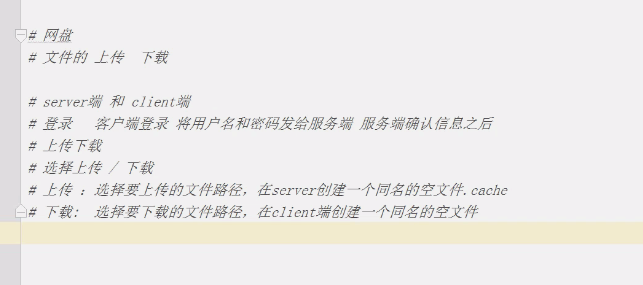


import socket
import struct
import os
import json
sk = socket.socket()
sk.bind(('127.0.0.1',8090))
sk.listen()
buffer = 1024
conn,addr = sk.accept()
# 接收文件目录
res_filepath = conn.recv(4)
struct_filepath = struct.unpack('i',res_filepath)[0]
res_filepath = conn.recv(struct_filepath).decode('utf-8')
# res_filepath = conn.recv(1024).decode('utf-8')
# json_filepath = json.loads(res_filepath)
new_filepath = res_filepath+'\\'+'test2'
rnew_dir = os.mkdir(new_filepath)
# 接收文件名并创建文件
res_filename = conn.recv(4)
struct_filename = struct.unpack('i',res_filename)[0]
filename = conn.recv(struct_filename).decode('utf-8')
# 接收文件大小
res_filesize = conn.recv(4)
struct_filesize = struct.unpack('i',res_filesize)[0]
#开始文件写入
with open(new_filepath+'\\'+filename,'wb') as f:
    while True:
        if struct_filesize >= buffer:
            connnect = conn.recv(buffer)
            f.write(connnect)
            struct_filesize -= buffer
        else:
            connnect = conn.recv(struct_filesize)
            f.write(connnect)
            break

conn.close()
sk.close()
import socket
import os
import struct
import json
sk = socket.socket()
sk.connect(('127.0.0.1',8090))
buffer = 1024
# 先找到文件目录位置
head = {'filepath':r"C:\Users\allen\Desktop\python\day32",
        'filename':r'1.struct.py',
        'filesize':None}
file = os.path.join(head['filepath'],head['filename'])
# 发送文件目录到服务端
len_filepath = len(head['filepath'])
struct_filepath = struct.pack('i',len_filepath)
sk.send(struct_filepath)
# filepath = json.dumps(head['filepath']).encode('utf-8')
filepath = head['filepath'].encode('utf-8')
send_filepath = sk.send(filepath)
# 发送文件名到服务端
len_filename = len(head['filename'])
struct_filename = struct.pack('i',len_filename)
sk.send(struct_filename)
# 发送文件大小到服务端
head['filesize'] = os.path.getsize(file)
filesize = head['filesize']
# 开始进行文件大小发送
struct_filesize = struct.pack('i',head['filesize'])
sk.send(head['filename'].encode('utf-8'))
sk.send(struct_filesize)
with open(file,'rb') as f:
    while True:
        if filesize >= buffer:
            content = f.read(buffer)
            sk.send(content)
            filesize -= buffer
        else:
            content = f.read(filesize)
            sk.send(content)
            break

sk.close()
import socket
import struct
import json
sk = socket.socket()
sk.bind(('127.0.0.1',8090))
sk.listen()

buffer = 1024

conn,addr = sk.accept()

# 接受报头长度
head_len = conn.recv(4)
head_len = struct.unpack('i',head_len)[0]
json_head = conn.recv(head_len).decode('utf-8')
head = json.loads(json_head)
filesize = head['filesize']
with open(head['filename'],'wb') as f:
    while True:
        if filesize >= buffer:
            content = conn.recv(buffer)
            f.write(content)
            filesize -= buffer
        else:
            content = conn.recv(filesize)
            f.write(content)
            break

conn.close()
sk.close()
import socket
import os
import json
import struct
sk = socket.socket()
sk.connect(('127.0.0.1',8090))

buffer = 1024 # 定义一个固定的字节数

# 定制抱头
head = {'filename':r'01 python fullstack s9day31 复习和认识tcp的长连接.mp4',
        'filepath':r'D:\jerry\python全栈\Python全栈9期(第一部分):基础\day31',
        'filesize':None}

filepath = os.path.join(head['filepath'],head['filename'])
filesize = os.path.getsize(filepath)

head['filesize'] = filesize
json_head = json.dumps(head) # 字典转成了字符串
bytes_head = json_head.encode('utf-8') # 字符串转bytes

# 计算head的长度
head_len = len(bytes_head)  # 计算报头长度
struct_head = struct.pack('i',head_len)
sk.send(struct_head)  # 先发报头长度
sk.send(bytes_head) # 再发bytes数据类型的报头

# 发送文件内容
with open(filepath,'rb') as f:
    while True:
        if filesize >= buffer:
            content = f.read(buffer) # 每次读buffer长度的内容
            sk.send(content)
            filesize -= buffer
        else:
            content = f.read(filesize)
            sk.send(content)
            break

sk.close()

 浙公网安备 33010602011771号