由 Mybatis 源码畅谈软件设计(七):从根上理解 Mybatis 一级缓存
本篇我们来讲 一级缓存,重点关注它的实现原理:何时生效、生效范围和何时失效,在未来设计缓存使用时,提供一些借鉴和参考。
1. 准备工作
定义实体
public class Department {

    public Department(String id) {
        this.id = id;
    }

    private String id;

    /**
     * 部门名称
     */
    private String name;

    /**
     * 部门电话
     */
    private String tel;

    /**
     * 部门成员
     */
    private Set<User> users;
}
public class User {

    private String id;

    private String name;

    private Integer age;

    private LocalDateTime birthday;

    private Department department;
}
定义 Mapper.xml
DepartmentMapper.xml,两条 SQL:一条根据 ID 查询;一条清除缓存,标记了 fulshCache 标签,将其设置为 true 后,只要语句被调用,都会将本地缓存和二级缓存清空(默认值为 false)
<select id="findById" resultType="Department">
    select * from department
    where id = #{id}
</select>

<select id="cleanCathe" resultType="int" flushCache="true">
    select count(department.id) from department;
</select>
UserMapper.xml,联表查询用户信息:
<select id="findAll" resultMap="userMap">
    select u.*, td.id, td.name as department_name
    from user u
    left join department td
    on u.department_id = td.id
</select>
2. 一级缓存
一级缓存的生效范围 SqlSession 级别的,不同 SqlSession 间不共享缓存,它默认情况下是启用的。主要作用是减少在同一个查询 SQL 会话中对数据库的重复查询,从而提高性能。以如下用例为例:
    public static void main(String[] args) throws IOException {
        InputStream xml = Resources.getResourceAsStream("mybatis-config.xml");
        SqlSessionFactoryBuilder sqlSessionFactoryBuilder = new SqlSessionFactoryBuilder();
        // 开启二级缓存需要在同一个SqlSessionFactory下,二级缓存存在于 SqlSessionFactory 生命周期,如此才能命中二级缓存
        SqlSessionFactory sqlSessionFactory = sqlSessionFactoryBuilder.build(xml);

        SqlSession sqlSession = sqlSessionFactory.openSession();
        DepartmentMapper departmentMapper = sqlSession.getMapper(DepartmentMapper.class);
        System.out.println("----------department第一次查询 ↓------------");
        departmentMapper.findById("18ec781fbefd727923b0d35740b177ab");
        System.out.println("----------department一级缓存生效,控制台看不见SQL ↓------------");
        departmentMapper.findById("18ec781fbefd727923b0d35740b177ab");

    }
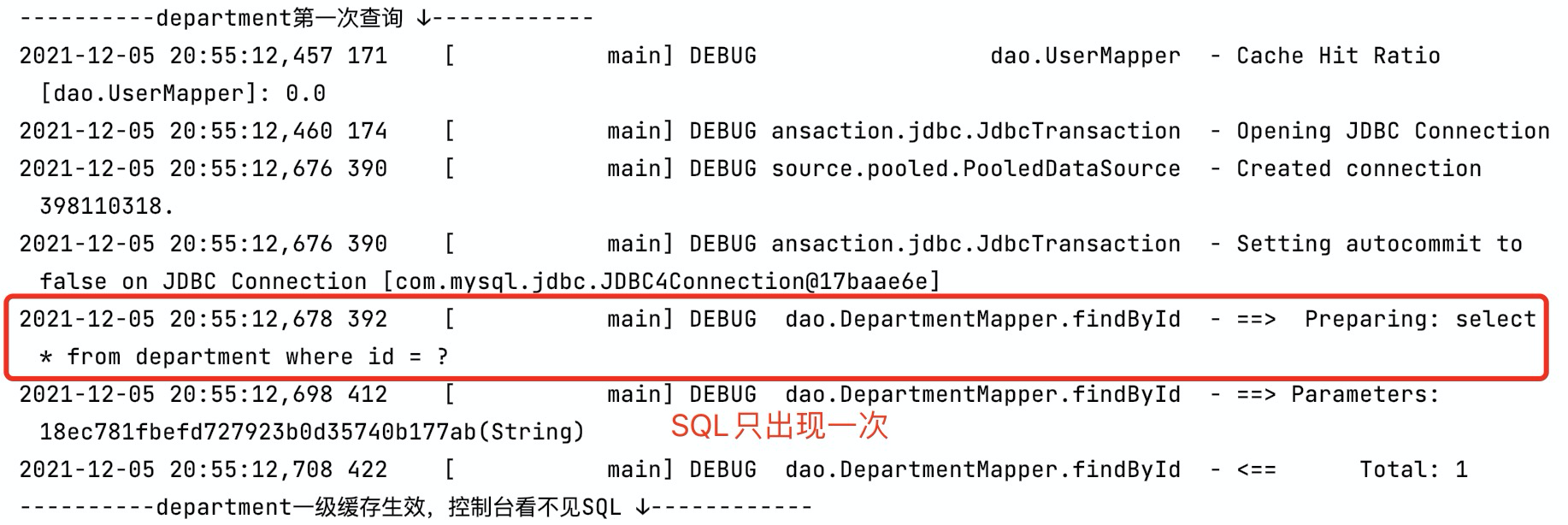
可以发现在第二次查询时,一级缓存生效,控制台没有出现SQL:
而我们清空下一级缓存再试试:
    public static void main(String[] args) throws IOException {
        InputStream xml = Resources.getResourceAsStream("mybatis-config.xml");
        SqlSessionFactoryBuilder sqlSessionFactoryBuilder = new SqlSessionFactoryBuilder();
        // 开启二级缓存需要在同一个SqlSessionFactory下,二级缓存存在于 SqlSessionFactory 生命周期,如此才能命中二级缓存
        SqlSessionFactory sqlSessionFactory = sqlSessionFactoryBuilder.build(xml);

        SqlSession sqlSession = sqlSessionFactory.openSession();
        DepartmentMapper departmentMapper = sqlSession.getMapper(DepartmentMapper.class);
        System.out.println("----------department第一次查询 ↓------------");
        departmentMapper.findById("18ec781fbefd727923b0d35740b177ab");
        System.out.println("----------department一级缓存生效,控制台看不见SQL ↓------------");
        departmentMapper.findById("18ec781fbefd727923b0d35740b177ab");
        System.out.println("----------清除一级缓存 ↓------------");
        departmentMapper.cleanCathe();
        System.out.println("----------清除后department再一次查询,SQL再次出现 ↓------------");
        departmentMapper.findById("18ec781fbefd727923b0d35740b177ab");
    }
控制台日志很清晰,清除缓存后又重新查了一遍:

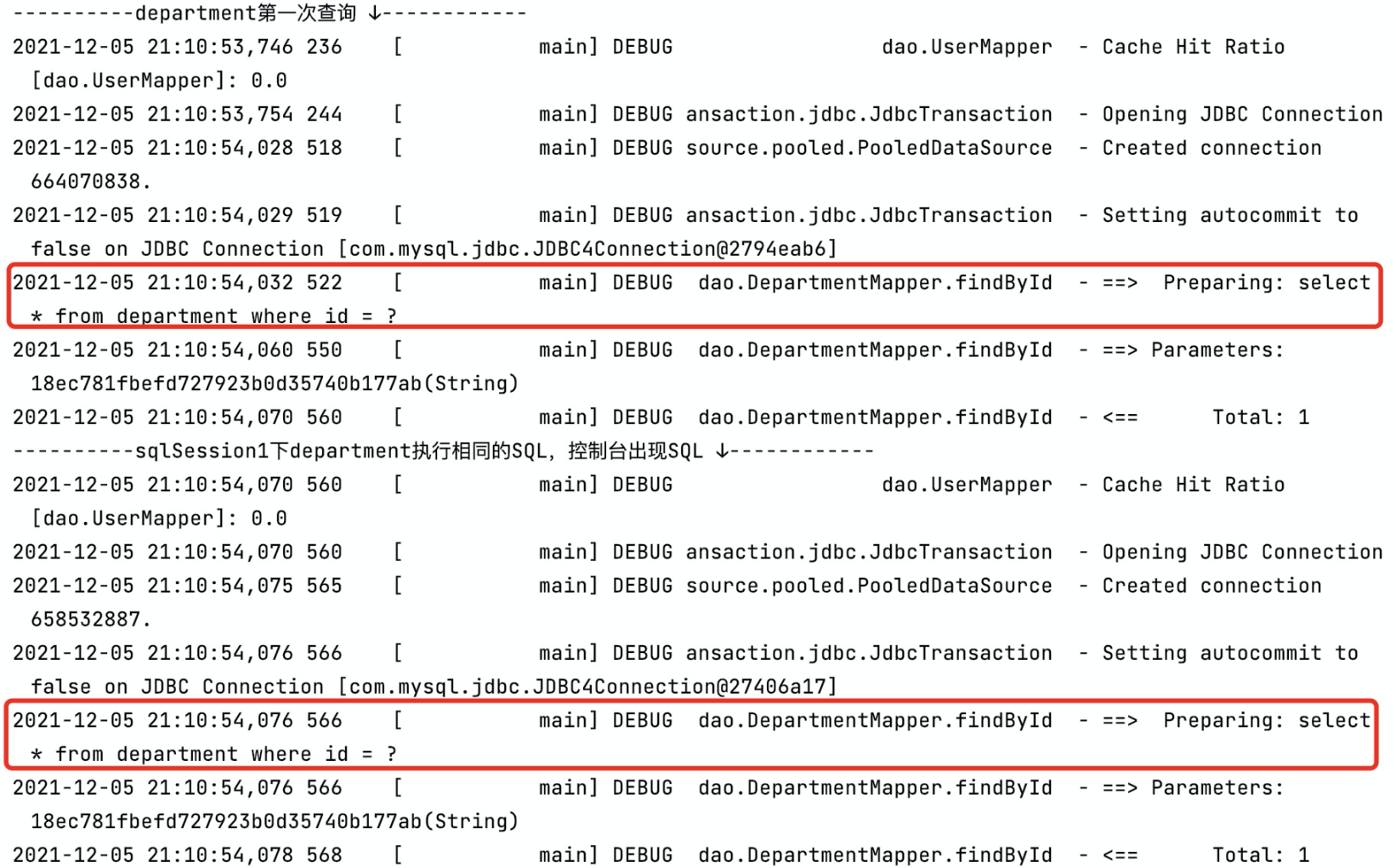
接下来我们看一下不同 SqlSession 间一级缓存是否共享,创建一个新的 SqlSession sqlSession1 执行相同的SQL:
    public static void main(String[] args) throws IOException {
        SqlSession sqlSession = sqlSessionFactory.openSession();
        SqlSession sqlSession1 = sqlSessionFactory.openSession();
        DepartmentMapper departmentMapper = sqlSession.getMapper(DepartmentMapper.class);
        DepartmentMapper departmentMapper1 = sqlSession1.getMapper(DepartmentMapper.class);
        System.out.println("----------department第一次查询 ↓------------");
        departmentMapper.findById("18ec781fbefd727923b0d35740b177ab");
        System.out.println("----------sqlSession1下department执行相同的SQL,控制台出现SQL ↓------------");
        departmentMapper1.findById("18ec781fbefd727923b0d35740b177ab");
    }
如控制台日志所示,可以发现在不同的 SqlSession 下不共享一级缓存:
3. 一级缓存原理
一级缓存在查询方法 org.apache.ibatis.executor.BaseExecutor#query 中生效,如下所示:
public abstract class BaseExecutor implements Executor {
    // ...

    // 一级缓存
    protected PerpetualCache localCache;

    public <E> List<E> query(MappedStatement ms, Object parameter, RowBounds rowBounds, ResultHandler resultHandler,
                             CacheKey key, BoundSql boundSql) throws SQLException {
        ErrorContext.instance().resource(ms.getResource()).activity("executing a query").object(ms.getId());
        if (closed) {
            throw new ExecutorException("Executor was closed.");
        }
        // 判断是否刷新本地缓存
        if (queryStack == 0 && ms.isFlushCacheRequired()) {
            clearLocalCache();
        }
        List<E> list;
        try {
            queryStack++;
            // 判断一级缓存是否存在,存在则直接作为结果返回,否则查询数据库
            list = resultHandler == null ? (List<E>) localCache.getObject(key) : null;
            if (list != null) {
                // 存储过程相关逻辑
                handleLocallyCachedOutputParameters(ms, key, parameter, boundSql);
            } else {
                // 未命中一级缓存,查询数据库
                list = queryFromDatabase(ms, parameter, rowBounds, resultHandler, key, boundSql);
            }
        } finally {
            queryStack--;
        }
        if (queryStack == 0) {
            for (DeferredLoad deferredLoad : deferredLoads) {
                deferredLoad.load();
            }
            // issue #601
            deferredLoads.clear();
            if (configuration.getLocalCacheScope() == LocalCacheScope.STATEMENT) {
                // issue #482
                clearLocalCache();
            }
        }
        return list;
    }

    private <E> List<E> queryFromDatabase(MappedStatement ms, Object parameter, RowBounds rowBounds,
                                          ResultHandler resultHandler, CacheKey key, BoundSql boundSql) throws SQLException {
        List<E> list;
        // 一级缓存占位
        localCache.putObject