
网络编程
javaweb 网页编程:B/S
TCP/IP参考模型:
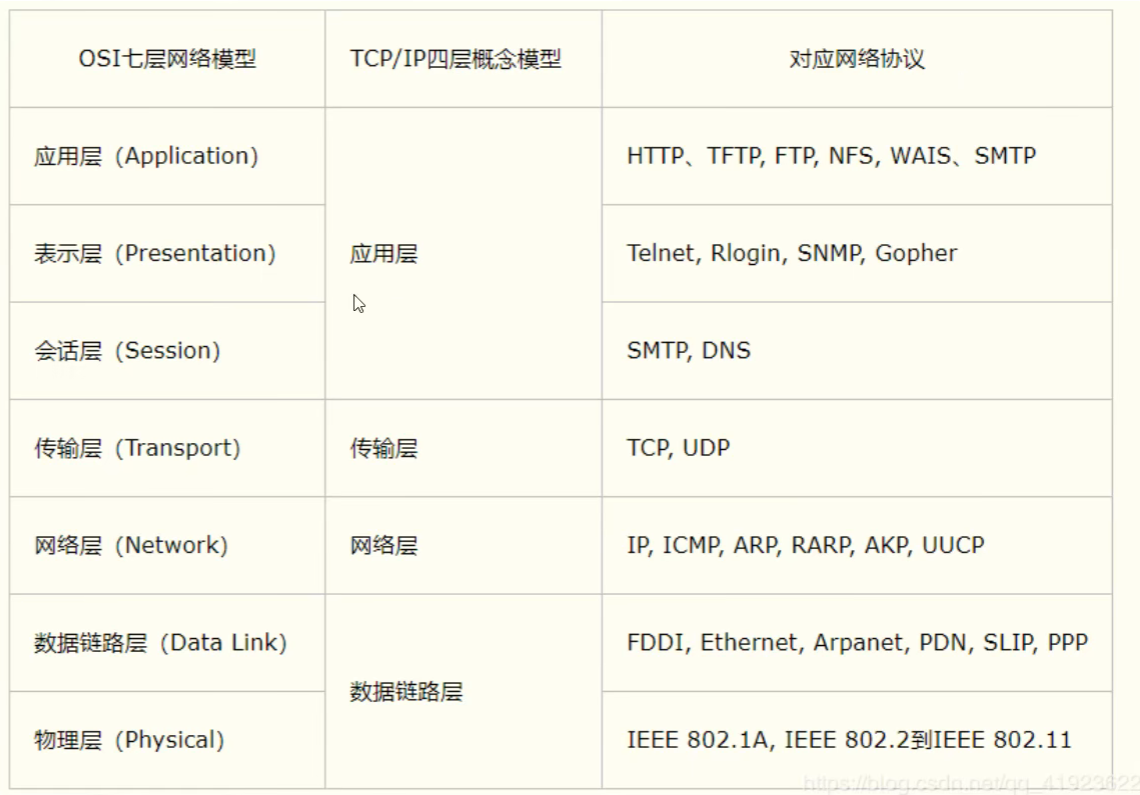
问题:
-
定位网络上的一台或者多台主机
-
找到主机之后,如何进行通信
网络编程中的要素:
-
IP 和端口号
-
网络通信协议
IP
IP地址:InetAddress
-
唯一定位一台网络上的计算机
-
127.0.0.1:本机 localhost
-
IP地址分类
-
IPV4 / IPV6
-
IPV4 127.0.0.1,四个字节组成。0 - 255,42亿左右的地址。30亿在北美,亚洲4亿。2011年就用尽了;
-
IPV6 fe80::f4ea:b072:3e83:fed7%14,128位。8个无符号整数!用不完
2001:0bb2:aaaa:0015:0000:0000:1aaa:1312(伪造)
-
-
公网(互联网) / 私网(局域网)
-
192.168.xx.xx,专门给组织内部使用的
-
A、B、C、D类地址
-
-
-
域名:记忆 IP 问题!
-
IP:www.vip.com
-
//测试IP
public class TestInetAddress {
public static void main(String[] args) {
try {
//查询本机地址
InetAddress inetAddress1 = InetAddress.getByName("127.0.0.1");
System.out.println(inetAddress1);
InetAddress inetAddress3 = InetAddress.getByName("localhost");
System.out.println(inetAddress3);
InetAddress inetAddress4 = InetAddress.getLocalHost();
System.out.println(inetAddress4);
//查询网站 ip 地址
InetAddress inetAddress2 = InetAddress.getByName("www.baidu.com");
System.out.println(inetAddress2);
//常用方法
System.out.println(inetAddress2.getAddress()); //返回一组地址,一般没什么用
System.out.println(inetAddress2.getCanonicalHostName()); //规范的名字,没什么用
System.out.println(inetAddress2.getHostAddress()); //获得ip
System.out.println(inetAddress2.getHostName()); //获得域名,或者是本机的名字
} catch (UnknownHostException e) {
e.printStackTrace();
}
}
}
端口
端口表示计算机上的一个程序的进程:
-
不同的进程有不同的端口号!用来区分软件!
-
端口被规定0 - 65535
-
TCP,UDP:65535*2;TCP用了端口8080,UDP还能用。单个协议下,端口不能冲突
-
端口分类
-
公有端口:0 - 1023
-
HTTP:80
-
HTTPS:443
-
FTP:21
-
TELENT:23
-
-
程序注册端口:1024- 49151,分配用户或者程序
-
Tomcat:8080
-
MySQL:3306
-
Oracle:1521
-
SQLServer:1633
-
-
动态、私有:49152 - 65535
     netstat -ano # 查看所有的端口
     netstat -ano|findstr "5900" #查看指定的端口
     tasklist|findstr "8696" #查看指定端口的进程
     Ctrl + shift + ESC
public static void main(String[] args) {
InetSocketAddress inetSocketAddress = new InetSocketAddress("127.0.0.1",8080);
InetSocketAddress inetSocketAddress2 = new InetSocketAddress("localhost",8080);
System.out.println(inetSocketAddress);
System.out.println(inetSocketAddress2);
System.out.println(inetSocketAddress.getAddress());
System.out.println(inetSocketAddress.getHostName()); //地址
System.out.println(inetSocketAddress.getPort()); //端口
}
-
通信协议
协议:约定,就好比我们现在说的是普通话
网络协议:速率、传输码率、代码结构、传输控制.......
TCP/IP协议族:实际上是一组协议
重要:
-
TCP:用户传输协议
-
UDP:用户数据报协议
-
IP:网络互连协议
TCP VS UDP
TCP:打电话
-
连接、稳定
-
三次握手,四次挥手
     最少需要三次,保证稳定连接!
     A:你瞅啥?
     B:瞅你咋地?
     A:干一场!

     A:我断开了
     B:你要断开了?
     B:你真的断开了?
A:我真的断开了 -
客户端、服务端
-
传输完成、释放连接、效率低
UDP:发短信
-
不连接、不稳定
-
客户端、服务端:没有明确的界限
-
不管有没有准备好,都可以发给你
-
DDOS:洪水攻击(饱和攻击)
TCP
客户端:
-
连接服务器,通过Socket
-
发送消息
public static void main(String[] args) {
Socket socket = null;
OutputStream os = null;
try {
//1、要知道服务器的地址,端口号
InetAddress serverIP = InetAddress.getByName("127.0.0.1");
int port = 9999;
//2、创建一个 socket 连接
socket = new Socket(serverIP,port);
//3、发送消息 IO 流
os = socket.getOutputStream();
os.write("Hello world!".getBytes());
} catch (Exception e) {
e.printStackTrace();
}finally {
if(os != null){
try {
os.close();
} catch (IOException e) {
e.printStackTrace();
}
}
if(socket != null){
try {
socket.close();
} catch (IOException e) {
e.printStackTrace();
}
}
}
}
服务器:
-
建立服务器的端口:ServerSocket
-
等待用户的连接:accpet
-
接受用的消息
public static void main(String[] args) {
ServerSocket serverSocket = null;
Socket socket = null;
InputStream is = null;
ByteArrayOutputStream baos = null;
try {
//1、我得有一个地址
serverSocket = new ServerSocket(9999);
//2、等待客户端连接
socket = serverSocket.accept();
//3、读取客户端信息
is = socket.getInputStream();
//管道流
baos = new ByteArrayOutputStream();
byte[] buffer = new byte[1024];
int len;
while((len = is.read(buffer)) != -1){
baos.write(buffer,0,len);
}
System.out.println(baos);
} catch (IOException e) {
e.printStackTrace();
}finally {
//关闭资源
if (baos != null) {
try {
baos.close();
} catch (IOException e) {
e.printStackTrace();
}
}
if(is != null){
try {
is.close();
} catch (IOException e) {
e.printStackTrace();
}
}
if(socket != null){
try {
socket.close();
} catch (IOException e) {
e.printStackTrace();
}
}
if(serverSocket != null){
try {
serverSocket.close();
} catch (IOException e) {
e.printStackTrace();
}
}
}
}
文件上传
客户端:
public static void main(String[] args) throws Exception {
//1、创建一个 Socket 连接
Socket socket = new Socket(InetAddress.getByName("127.0.0.1"), 9000);
//2、创建一个输出流
OutputStream os = socket.getOutputStream();
//3、读取文件
FileInputStream fis = new FileInputStream("1.png");
//4、写出文件
byte[] buffer = new byte[1024];
int len;
while((len = fis.read(buffer)) != -1){
os.write(buffer,0,len);
}
//通知服务器,我已经传输完了
socket.shutdownOutput();
//确定服务器接收完毕,才能断开连接
InputStream inputStream = socket.getInputStream();
//String byte[]
ByteArrayOutputStream baos = new ByteArrayOutputStream();
byte[] buffer2 = new byte[1024];
int len2;
while((len2 = inputStream.read(buffer2)) != -1){
baos.write(buffer2,0,len2);
}
System.out.println(baos.toString());
//5、关闭资源
baos.close();
inputStream.close();
fis.close();
os.close();
}
服务端:
public static void main(String[] args) throws Exception {
//1、创建服务
ServerSocket serverSocket = new ServerSocket(9000);
//2、监听客户端的连接
Socket socket = serverSocket.accept();//阻塞式监听,会一直等待客户段连接
//3、获取输入流
InputStream is = socket.getInputStream();
//4、文件输出
FileOutputStream fos = new FileOutputStream(new File("receive.png"));
byte[] buffer = new byte[1024];
int len;
while((len = is.read(buffer)) != -1){
fos.write(buffer,0,len);
}
//通知客户端我接收完毕了
OutputStream os = socket.getOutputStream();
os.write("receive over!".getBytes());
//关闭资源
os.close();
fos.close();
is.close();
socket.close();
serverSocket.close();
}
Tomcat
CS,BS
服务端:
-
我们可以自定义:S
-
可以使用 Tomcat 服务器:S
客户端:
-
可以自定义:C
-
可以使用浏览器:B
UDP
发短信:不用连接,需要知道对方的地址。不存在真正意义上的服务端和客户端。
客户端:
//不需要连接服务器(也不会报错,但是送到哪就不知道了,所以要创建一个地址来接收)
public static void main(String[] args) throws Exception {
//1、建立一个Socket
DatagramSocket socket = new DatagramSocket();
//2、建个包
String msg = "Hello,Server!";
//发送给谁
InetAddress localhost = InetAddress.getByName("localhost");
int port = 9090;
// 数据,数据的长度其实,需要发送给谁
DatagramPacket packet =
new DatagramPacket(msg.getBytes(), 0, msg.getBytes().length, localhost, port);
//3、发送包
socket.send(packet);
//4、关闭流
socket.close();
}
服务端:
//还是要等待客户端的连接
public static void main(String[] args) throws Exception {
//开放端口
DatagramSocket socket = new DatagramSocket(9090);
//接收数据包
byte[] buffer = new byte[1024];
DatagramPacket packet = new DatagramPacket(buffer,0,buffer.length);
//阻塞接收
socket.receive(packet);
//关闭连接
socket.close();
}
发送消息
循环发送消息
public static void main(String[] args) throws Exception {
DatagramSocket socket = new DatagramSocket(8888);
//准备数据: 控制台读取 System.in
BufferedReader reader = new BufferedReader(new InputStreamReader(System.in));
while(true){
String data = reader.readLine();
byte[] datas = data.getBytes();
DatagramPacket packet =
new DatagramPacket(datas,0,datas.length,new InetSocketAddress("localhost",6666));
socket.send(packet);
if(data.equals("bye")){
break;
}
}
socket.close();
}
循环接收消息
     public static void main(String[] args) throws Exception {

         DatagramSocket socket = new DatagramSocket(6666);

         while(true){

             //准备接收包裹
             byte[] container = new byte[1024];
             DatagramPacket packet = new DatagramPacket(container,0,container.length);
             socket.receive(packet);//阻塞式接收包裹

             //显示消息
             byte[] data = packet.getData();
             String receiveData = new String(data, 0, data.length);

             System.out.println(receiveData);

             //断开连接  bye
             if(receiveData.equals("bye")){
                 break;
             }
         }

     }
在线咨询:两个人都可以是发送方,也都可以是接收方!
TalkSend发送类:
public class TalkSend implements Runnable{
DatagramSocket socket = null;
BufferedReader reader = null;
private int fromPort;
private String toIP;
private int toPort;
public TalkSend(int fromPort, String toIP, int toPort) {
this.fromPort = fromPort;
this.toIP = toIP;
this.toPort = toPort;
try {
socket = new DatagramSocket(fromPort);
reader = new BufferedReader(new InputStreamReader(System.in));
} catch (SocketException e) {
e.printStackTrace();
}
}
TalkReceive接收类:
public class TalkReceive implements Runnable{
DatagramSocket socket = null;
private int port;
private String msgFrom;
public TalkReceive(int port, String msgFrom) {
this.port = port;
this.msgFrom = msgFrom;
try {
socket = new DatagramSocket(this.port);
} catch (SocketException e) {
e.printStackTrace();
}
}
学生端:
 public static void main(String[] args) {
     //开启两个线程,从7777端口 发到9999端口
     new Thread(new TalkSend(7777,"localhost",9999)).start();
     //在8888端口接收老师消息
     new Thread(new TalkReceive(8888,"老师")).start();
 }
老师端:
 public static void main(String[] args) {
     //开启两个线程,从5555端口 发到8888端口
     new Thread(new TalkSend(5555,"localhost",8888)).start();
     //在9999端口接收学生消息
     new Thread(new TalkReceive(9999,"学生")).start();
 }
URL
统一资源定位符:定位资源的,定位互联网上热度某一个资源
DNS:域名解析
协议://ip地址:端口号/项目名/资源
public static void main(String[] args) throws Exception {
//前提是要将当前的资源处于一个开启的状态
//1、下载地址
// URL url = new URL("此处填写下载的地址");
URL url = new URL("https://m701.music.126.net/20220701210846/4bd39b507daf2ab41b61f3bd66a2353e/jdyyaac/obj/w5rDlsOJwrLDjj7CmsOj/15081270189/c2dd/8993/9b45/3ceae4164e9a77b267408087bae1a93f.m4a");
//2、连接到这个资源
HttpURLConnection urlConnection = (HttpURLConnection) url.openConnection();
InputStream inputStream = urlConnection.getInputStream();
// FileOutputStream fos = new FileOutputStream("此处填写文件名,例:xxx.txt");
FileOutputStream fos = new FileOutputStream("f.m4a");
byte[] buffer = new byte[1024];
int len;
while((len = inputStream.read(buffer)) != -1){
fos.write(buffer,0,len);//写出这个数据
}
fos.close();
inputStream.close();
urlConnection.disconnect();
}

 浙公网安备 33010602011771号