
water pollution
Economic growth and rapid industrialisation have contributed to significant water quality issues in China. But strong policy and people power suggest that the government is keen to clean up the country’s act, Michael Webber writes.
China’s water pollution problems are both serious and widespread. Officials monitor the quality of surface water at 12,226 sites across the country. According to the Institute of Public and Environmental Affairs – a Beijing-based NGO – of these sites, just 35 per cent have water of good quality, another 32 per cent are suitable for water supply, 20 per cent are suitable for industrial or agricultural use – but not for human contact – and 13 per cent are useless. Even in Shanghai, one of China’s richest, most environmentally-aware and modern cities, 52 out of 65 monitoring sites have water not suitable for human contact.
It is easy to understand how this problem arose. In China, decades of high economic growth driven by rapid industrialisation were fuelled by a single-minded orientation to development, even at the expense of water quality. On the part of the West, corporations were happy to outsource production to Chinese firms that paid low wages and were unconstrained by environmental controls. For their part, Western consumers were content to turn a blind eye, so long as it meant lower prices for products.
The problem is that the environmental legacy of China’s industrialisation affects everyone, not just Chinese people. Dirty water discharges into the world oceans. Water-borne pollutants are embedded in the food products that China exports. And if polluted water cannot be used for irrigation, then Chinese agricultural production falls and global food prices rise.
The central government has recently intensified efforts to control and remedy water pollution. A comprehensive suite of laws governs pollution prevention and remediation, and the State Council and ministries set detailed objectives and standards for water managers. Often these objectives are set in Five Year Plans that set quantitative targets for water quality. Successive plans have raised not just the standards, but also the proportions of cities and counties that must meet these standards. In the last three years, these efforts have become more intense.
In 2014 Premier Li Keqiang set aside US $330 billion to tackle water pollution. Drinking water standards, wastewater treatment, and pollution control all received attention, in order to reduce water pollution by 30 to 50 per cent. Three “red lines” were declared, with targets set for 2015, 2020 and 2030 that covered maximum total water use, efficiency of water use and pollution control.
In April 2015 there followed the State Council’s Water Pollution Prevention and Control Action Plan. The Plan drew on advice from many ministries and incorporated prior announcements like the three “red lines”. The Plan aims to enforce stricter standards, increase water monitoring efforts, strengthen the enforcement of environmental laws, punish polluters and especially target heavily polluting industries. Specific performance indicators are set, with definite goals and timelines. For example, the Plan states that by 2020, 70 per cent of the water in the major watersheds and 93 per cent of the drinking water sources in major cities are to meet Grade III or higher standards.
The Thirteenth Five Year Plan in 2016 set specific goals for water consumption and water quality. The Plan aims to reduce water consumption by 23 per cent from 2015 levels by 2020, to upgrade urban sewage facilities, and to increase rates of wastewater treatment. It also demands reduced contamination from agricultural pollutants, by lowering the use of chemical fertilisers and insecticides.
These initiatives suggest that the Chinese government is serious about tackling water pollution. The question is whether it has the institutional capacity to do so. For all that it is represented as a monolithic, authoritarian government, the central government is constrained. Although Beijing sets objectives and targets, the design of policies to achieve those targets is largely the responsibility of provincial authorities, and their implementation the responsibility of county- and lower-level officials. Officials have to meet multiple, conflicting objectives: maintain social stability (for example by supporting factories that provide jobs), maintain desired rates of GDP growth (including encouraging investment by new firms), and clean up water pollution (for instance by prohibiting new polluting factories).
Furthermore, it is not always clear who is responsible for enforcing laws on water pollution – the Ministries of Environmental Pollution, Water Resources, Housing and Urban-Rural Development, Agriculture, and Land and Resources all have a role. Finally, water carries pollution across boundaries: therefore, different jurisdictions (often with competing interests) regularly have to cooperate to control pollution in a given river or lake.
Cleaning up China’s rivers and lakes is not easy, and such administrative arrangements only hinder it. But in an interesting innovation, the Law on Environmental Protection was modified in 2014 to strengthen mechanisms for the release of data, following which the Ministry of Environmental Protection began to use citizen participation as a means of improving environmental monitoring and governance.
The Ministry is establishing a compulsory national, real-time online system that by 2020 will publish data about fixed sources of pollution. The Ministry also maintains a WeChat account, onto which citizens can upload photographs of rivers that they consider excessively polluted; the Ministry promises to respond to such reports and to add the data to the national list of highly polluted rivers.
The implications of such initiatives for deeper citizen participation in China’s governance remain to be seen. But what is clear is that the Chinese government is growing an appetite for cleaning up the environmental impacts of its rapid industrialisation. For China, and for the planet, this is a change which can’t come too soon.

Most of China’s marine ecosystems are still in poor health despite recent improvements, and more efforts are needed to restore, protect and monitor coastal waters, an environment ministry official said on Thursday.
“Most of the typical marine ecosystems that are monitored remain in a sub-healthy condition,” said Zhang Zhifeng, deputy director of the marine ecology department of the Ministry of Ecology and Environment, at a briefing.
China has warned that rapid and high-intensity development in coastal regions has created immense environmental pressures, with pollution and habitat destruction still not fully under control. It has already promised to set up a system to restore large sections of its coastline.
Zhang said China approved 15 coastal infrastructure projects this year with a total investment of 66.9 billion yuan ($9.98 billion). It has also issued 378 permits allowing enterprises to dump waste in the sea.
He said marine biodiversity in China had improved in recent years, with almost 30% of coastal waters and 37% of the country’s continental coastline now part of a “red line” scheme aimed at protecting them from degradation.
China launched the “ecological protection red line” system in 2011, with each region ordered to draw up maps of natural forests, rivers, wetlands and other vulnerable ecosystems that must be shielded from development.
About 25% of China’s territory is now covered by the scheme, but it is under pressure to join other countries in pledging to protect at least 30% of its land and sea by 2030.
The target was due to be discussed during negotiations for a new post-2020 global biodiversity pact. The final stage of negotiations was originally set to take place in southeast China’s Kunming but has now moved to Montreal amid concerns that China’s tough zero-Covid measures would disrupt the talks.



Policy Initiatives
Deng Xiaoping’s “Open Door Policy” in the late 1970’s ended China’s period of isolationism and allowed the influence of foreigners to expedite industrialization in China. Rapid deterioration of water quality resultant from the increased industrialization led China to take policy action.
China has some of the most stringent environmental protection laws but there are concerns with policy implementation, enforcement, and compliance in rural industrial areas (Wang, Webber, Finlayson & Barnett, 2008, p. 648). The continued pollution is therefore not entirely the fault of lacking policies.
According to the United Nations Environmental Programme, “ever since 1996, China has designated water pollution prevention as the essential work of environmental protection of the entire country” (UNEPProvince, China. Source: Wanghongliu (Photographer). (2010)
This prioritization of water quality concerns has led to several new policies:
- Water Pollution Prevention Law
- Measure of the Implementation of Water Pollution Prevention
- New State Environmental Protection Agency (SEPA) water protection standards – Standards of Ground Quality, Comprehensive Standards of Sewage Discharge, Standards of Ambient Surface Water Quality
Scientific/Geographical Context
- Water pollution in China more drastically impacts rural regions, especially rural areas that have been industrialized in recent years due to…
- Lacking waste management programs in rural regions
- Inadequate enforcement of environmental law in rural areas due to “local protectionism” – the idea that local officials weigh their own interests (economic benefits) over environmental protection
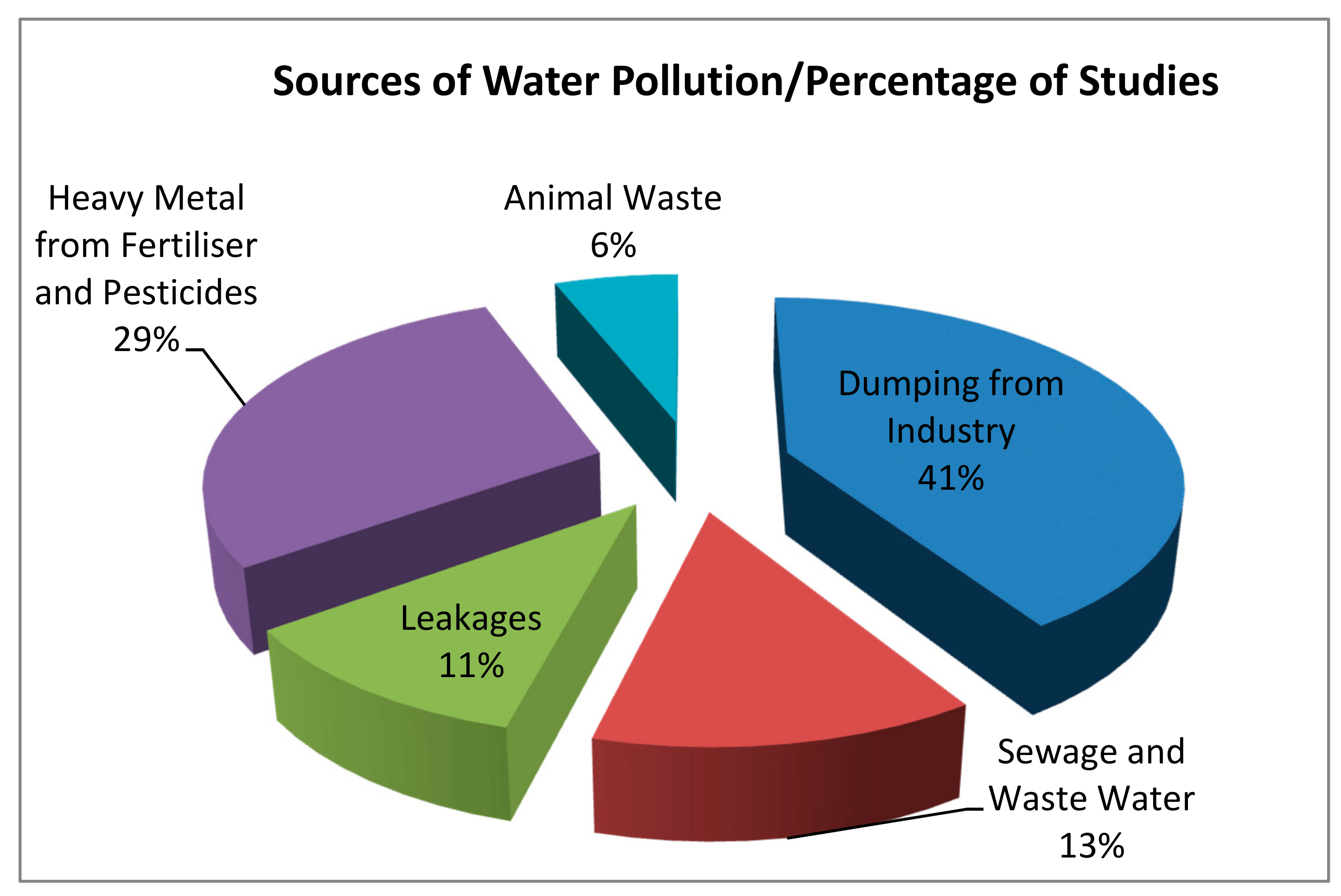
- The degree of pollution varies and is partially dependent on the geographical setting. Pollution can be caused by point and non-point source pollutants, as well as direct and indirect drivers:

Demographics of Populations Impacted by Water Pollution
Water pollution in China most directly impacts the lives of people living along the basin of polluted rivers and lakes in China’s rural regions. Populations in these regions typically are of lower socioeconomic status and are more likely to be of a minority ethnicity within China. For example, twenty-six ethnic minority groups live within the urban and rural boundaries of Kunming, the capital of Yunnan province and a site of heavy rural industrialization and pollution (PRC 2008).

 浙公网安备 33010602011771号