//在Java中,所有的类,都默认直接或者间接继承objec类
// Person 人 :父类
public class Person /*extends object*/ {
    public Person() {
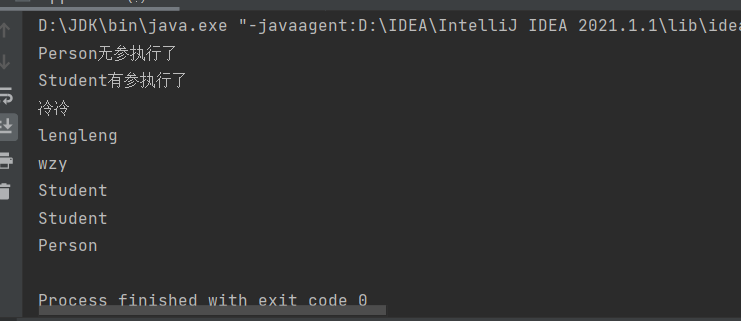
        System.out.println("Person无参执行了");
    }

    protected String name = "wzy";

    //私有的东西无法被继承
    public void print(){
          System.out.println("Person");
    }

}
//学生 是   人 :派生类,子类
//子类继承父类,就会拥有父类的全部方法!
public class Student extends Person {
    private String name = "lengleng";

    public Student() {
        //隐藏代码;默认调用了父类的无参构造
        //若父类为有参,则可以 super(“name”);调用父类的有参
        super(); //调用父类的构造器,必须要在子类构造器的第一行
        System.out.println("Student有参执行了");
    }
    public void print() {
        System.out.println("Student");
    }
    public void text1() {
        print();
        this.print();
        super.print();
    }

    public void text(String name) {
        System.out.println(name);
        System.out.println(this.name);
        System.out.println(super.name);

    }

}
public class Application {
    public static void main(String[] args) {
        Student student = new Student();
        //student.text("冷冷");
        //student.text1();

    }

}
super注意点:
    1.super调用父类的构造方法,必须在构造方法的第一个
    2.super  必须只能出现在子类的方法或者构造方法中!
    3.super 和 this 不能同时调用构造方法

VS this
    代表的对象不同:
        this :本身调用者这个对象
        super : 代表父类这个对象的应用
    前提
        this :没有继承也可以使用
        super :只能在继承的条件下才可以使用
    构造方法
        this :本类的构造
        super :父类的构造


 浙公网安备 33010602011771号