
[Spring]Bean生命周期
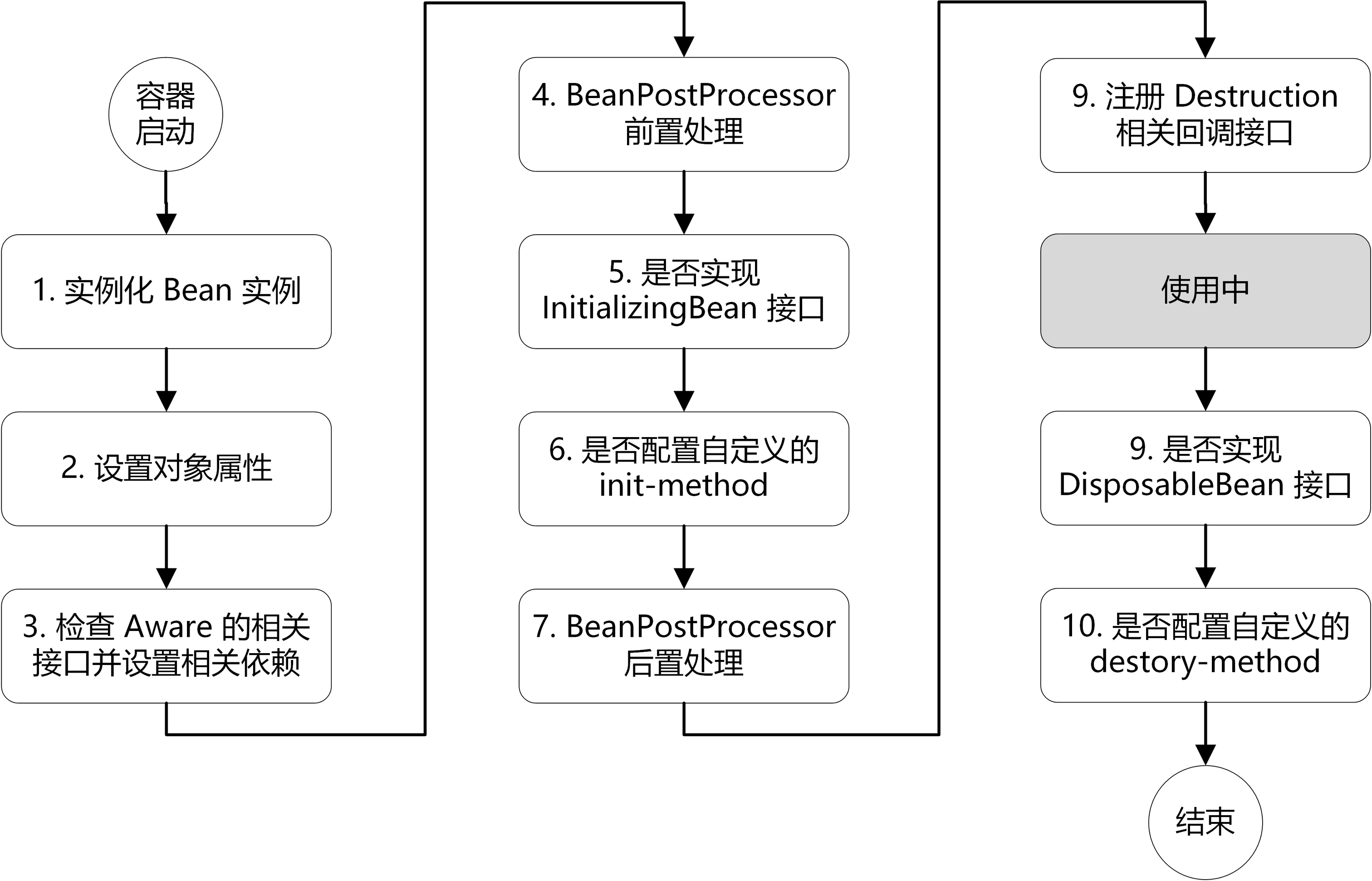
生命周期的概要流程
Bean 的生命周期概括起来就是 4 个阶段:
- 实例化(Instantiation)
- 属性赋值(Populate)
- 初始化(Initialization)
- 销毁(Destruction)
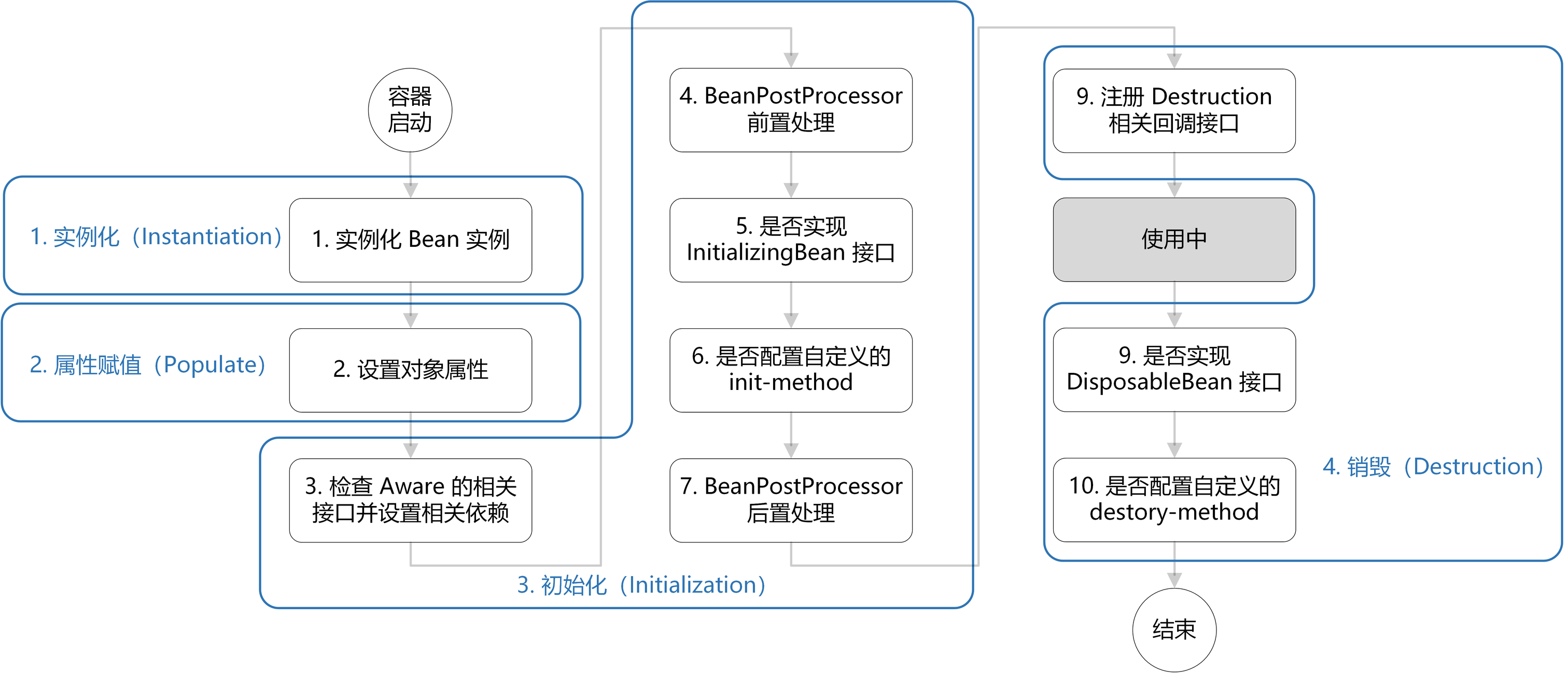
实例化:第 1 步,实例化一个 bean 对象;
属性赋值:第 2 步,为 bean 设置相关属性和依赖;
初始化:第 3~7 步,步骤较多,其中第 5、6 步为初始化操作,第 3、4 步为在初始化前执行,第 7 步在初始化后执行,该阶段结束,才能被用户使用;
销毁:第 8~10步,第8步不是真正意义上的销毁(还没使用呢),而是先在使用前注册了销毁的相关调用接口,为了后面第9、10步真正销毁 bean 时再执行相应的方法。
下面我们结合代码来直观的看下,在 doCreateBean() 方法中能看到依次执行了这 4 个阶段:
// AbstractAutowireCapableBeanFactory.java
protected Object doCreateBean(final String beanName, final RootBeanDefinition mbd, final @Nullable Object[] args)
    throws BeanCreationException {

    // 1. 实例化
    BeanWrapper instanceWrapper = null;
    if (instanceWrapper == null) {
        instanceWrapper = createBeanInstance(beanName, mbd, args);
    }

    Object exposedObject = bean;
    try {
        // 2. 属性赋值
        populateBean(beanName, mbd, instanceWrapper);
        // 3. 初始化
        exposedObject = initializeBean(beanName, exposedObject, mbd);
    }

    // 4. 销毁-注册回调接口
    try {
        registerDisposableBeanIfNecessary(beanName, bean, mbd);
    }

    return exposedObject;
}
由于初始化包含了第 3~7步,较复杂,所以我们进到 initializeBean() 方法里具体看下其过程(注释的序号对应图中序号):
// AbstractAutowireCapableBeanFactory.java
protected Object initializeBean(final String beanName, final Object bean, @Nullable RootBeanDefinition mbd) {
    // 3. 检查 Aware 相关接口并设置相关依赖
    if (System.getSecurityManager() != null) {
        AccessController.doPrivileged((PrivilegedAction<Object>) () -> {
            invokeAwareMethods(beanName, bean);
            return null;
        }, getAccessControlContext());
    }
    else {
        invokeAwareMethods(beanName, bean);
    }

    // 4. BeanPostProcessor 前置处理
    Object wrappedBean = bean;
    if (mbd == null || !mbd.isSynthetic()) {
        wrappedBean = applyBeanPostProcessorsBeforeInitialization(wrappedBean, beanName);
    }

    // 5. 若实现 InitializingBean 接口,调用 afterPropertiesSet() 方法
    // 6. 若配置自定义的 init-method方法,则执行
    try {
        invokeInitMethods(beanName, wrappedBean, mbd);
    }
    catch (Throwable ex) {
        throw new BeanCreationException(
            (mbd != null ? mbd.getResourceDescription() : null),
            beanName, "Invocation of init method failed", ex);
    }
    // 7. BeanPostProceesor 后置处理
    if (mbd == null || !mbd.isSynthetic()) {
        wrappedBean = applyBeanPostProcessorsAfterInitialization(wrappedBean, beanName);
    }

    return wrappedBean;
}
在 invokInitMethods() 方法中会检查 InitializingBean 接口和 init-method 方法,销毁的过程也与其类似:
// DisposableBeanAdapter.java
public void destroy() {
    // 9. 若实现 DisposableBean 接口,则执行 destory()方法
    if (this.invokeDisposableBean) {
        try {
            if (System.getSecurityManager() != null) {
                AccessController.doPrivileged((PrivilegedExceptionAction<Object>) () -> {
                    ((DisposableBean) this.bean).destroy();
                    return null;
                }, this.acc);
            }
            else {
                ((DisposableBean) this.bean).destroy();
            }
        }
    }

	// 10. 若配置自定义的 detory-method 方法,则执行
    if (this.destroyMethod != null) {
        invokeCustomDestroyMethod(this.destroyMethod);
    }
    else if (this.destroyMethodName != null) {
        Method methodToInvoke = determineDestroyMethod(this.destroyMethodName);
        if (methodToInvoke != null) {
            invokeCustomDestroyMethod(ClassUtils.getInterfaceMethodIfPossible(methodToInvoke));
        }
    }
}
从 Spring 的源码我们可以直观的看到其执行过程,而我们记忆其过程便可以从这 4 个阶段出发,实例化、属性赋值、初始化、销毁。其中细节较多的便是初始化,涉及了 Aware、BeanPostProcessor、InitializingBean、init-method 的概念。这些都是 Spring 提供的扩展点,其具体作用将在下一节讲述。
扩展点的作用
Aware 接口
若 Spring 检测到 bean 实现了 Aware 接口,则会为其注入相应的依赖。所以通过让bean 实现 Aware 接口,则能在 bean 中获得相应的 Spring 容器资源。
Spring 中提供的 Aware 接口有:
BeanNameAware:注入当前 bean 对应 beanName;
BeanClassLoaderAware:注入加载当前 bean 的 ClassLoader;
BeanFactoryAware:注入 当前BeanFactory容器 的引用。
其代码实现如下:
// AbstractAutowireCapableBeanFactory.java
private void invokeAwareMethods(final String beanName, final Object bean) {
    if (bean instanceof Aware) {
        if (bean instanceof BeanNameAware) {
            ((BeanNameAware) bean).setBeanName(beanName);
        }
        if (bean instanceof BeanClassLoaderAware) {
            ((BeanClassLoaderAware) bean).setBeanClassLoader(bcl);

        }
        if (bean instanceof BeanFactoryAware) {
            ((BeanFactoryAware) bean).setBeanFactory(AbstractAutowireCapableBeanFactory.this);
        }
    }
}
以上是针对 BeanFactory 类型的容器,而对于 ApplicationContext 类型的容器,也提供了 Aware 接口,只不过这些 Aware 接口的注入实现,是通过 BeanPostProcessor 的方式注入的,但其作用仍是注入依赖。
EnvironmentAware:注入 Enviroment,一般用于获取配置属性;
EmbeddedValueResolverAware:注入 EmbeddedValueResolver(Spring EL解析器),一般用于参数解析;
ApplicationContextAware(ResourceLoader、ApplicationEventPublisherAware、MessageSourceAware):注入 ApplicationContext 容器本身。
其代码实现如下:
// ApplicationContextAwareProcessor.java
private void invokeAwareInterfaces(Object bean) {
    if (bean instanceof EnvironmentAware) {
        ((EnvironmentAware)bean).setEnvironment(this.applicationContext.getEnvironment());
    }

    if (bean instanceof EmbeddedValueResolverAware) {
        ((EmbeddedValueResolverAware)bean).setEmbeddedValueResolver(this.embeddedValueResolver);
    }

    if (bean instanceof ResourceLoaderAware) {
        ((ResourceLoaderAware)bean).setResourceLoader(this.applicationContext);
    }

    if (bean instanceof ApplicationEventPublisherAware) {
        ((ApplicationEventPublisherAware)bean).setApplicationEventPublisher(this.applicationContext);
    }

    if (bean instanceof MessageSourceAware) {
        ((MessageSourceAware)bean).setMessageSource(this.applicationContext);
    }

    if (bean instanceof ApplicationContextAware) {
        ((ApplicationContextAware)bean).setApplicationContext(this.applicationContext);
    }

}
BeanPostProcessor
BeanPostProcessor 是 Spring 为修改 bean提供的强大扩展点,其可作用于容器中所有 bean,其定义如下:
public interface BeanPostProcessor {

	// 初始化前置处理
	default Object postProcessBeforeInitialization(Object bean, String beanName) throws BeansException {
		return bean;
	}

	// 初始化后置处理
	default Object postProcessAfterInitialization(Object bean, String beanName) throws BeansException {
		return bean;
	}

}
常用场景有:
对于标记接口的实现类,进行自定义处理。例如3.1节中所说的ApplicationContextAwareProcessor,为其注入相应依赖;再举个例子,自定义对实现解密接口的类,将对其属性进行解密处理;
为当前对象提供代理实现。例如 Spring AOP 功能,生成对象的代理类,然后返回。
// AbstractAutoProxyCreator.java
public Object postProcessBeforeInstantiation(Class<?> beanClass, String beanName) {
    TargetSource targetSource = getCustomTargetSource(beanClass, beanName);
    if (targetSource != null) {
        if (StringUtils.hasLength(beanName)) {
            this.targetSourcedBeans.add(beanName);
        }
        Object[] specificInterceptors = getAdvicesAndAdvisorsForBean(beanClass, beanName, targetSource);
        Object proxy = createProxy(beanClass, beanName, specificInterceptors, targetSource);
        this.proxyTypes.put(cacheKey, proxy.getClass());
        // 返回代理类
        return proxy;
    }

    return null;
}
3.3 InitializingBean 和 init-method
InitializingBean 和 init-method 是 Spring 为 bean 初始化提供的扩展点。
InitializingBean接口 的定义如下:
public interface InitializingBean {
	void afterPropertiesSet() throws Exception;
}
在 afterPropertiesSet() 方法写初始化逻辑。
指定 init-method 方法,指定初始化方法:
<?xml version="1.0" encoding="UTF-8"?>
<beans xmlns="http://www.springframework.org/schema/beans"
       xmlns:xsi="http://www.w3.org/2001/XMLSchema-instance"
       xsi:schemaLocation="http://www.springframework.org/schema/beans http://www.springframework.org/schema/beans/spring-beans.xsd">

    <bean id="demo" class="com.chaycao.Demo" init-method="init()"/>

</beans>
DisposableBean 和 destory-method 与上述类似,就不描述了。
最后总结下如何记忆 Spring Bean 的生命周期:
首先是实例化、属性赋值、初始化、销毁这 4 个大阶段;
再是初始化的具体操作,有 Aware 接口的依赖注入、BeanPostProcessor 在初始化前后的处理以及 InitializingBean 和 init-method 的初始化操作;
销毁的具体操作,有注册相关销毁回调接口,最后通过DisposableBean 和 destory-method 进行销毁。
示例
创建一个PersonBean,让它实现几个特殊的接口,我们来观察一下它的生命周期的流转。
public class PersonBean implements InitializingBean, BeanFactoryAware, BeanNameAware, DisposableBean {

    /**
     * 身份证号
     */
    private Integer no;

    /**
     * 姓名
     */
    private String name;

    public PersonBean() {
        System.out.println("1.调用构造方法:我出生了!");
    }

    public Integer getNo() {
        return no;
    }

    public void setNo(Integer no) {
        this.no = no;
    }

    public String getName() {
        return name;
    }

    public void setName(String name) {
        this.name = name;
        System.out.println("2.设置属性:我的名字叫"+name);
    }

    @Override
    public void setBeanName(String s) {
        System.out.println("3.调用BeanNameAware#setBeanName方法:我要上学了,起了个学名");
    }

    @Override
    public void setBeanFactory(BeanFactory beanFactory) throws BeansException {
        System.out.println("4.调用BeanFactoryAware#setBeanFactory方法:选好学校了");
    }

    @Override
    public void afterPropertiesSet() throws Exception {
        System.out.println("6.InitializingBean#afterPropertiesSet方法:入学登记");
    }

    public void init() {
        System.out.println("7.自定义init方法:努力上学ing");
    }

    @Override
    public void destroy() throws Exception {
        System.out.println("9.DisposableBean#destroy方法:平淡的一生落幕了");
    }

    public void destroyMethod() {
        System.out.println("10.自定义destroy方法:睡了,别想叫醒我");
    }

    public void work(){
        System.out.println("Bean使用中:工作,只有对社会没有用的人才放假。。");
    }

}
实现了InitializingBean, BeanFactoryAware, BeanNameAware, DisposableBean四个接口
定义了no、name两个属性和对应的getter、setter方法
定义了一个实例方法work
MyBeanPostProcessor
自定义了一个后处理器MyBeanPostProcessor:
public class MyBeanPostProcessor implements BeanPostProcessor {

    @Override
    public Object postProcessBeforeInitialization(Object bean, String beanName) throws BeansException {
        System.out.println("5.BeanPostProcessor.postProcessBeforeInitialization方法:到学校报名啦");
        return bean;
    }

    @Override
    public Object postProcessAfterInitialization(Object bean, String beanName) throws BeansException {
        System.out.println("8.BeanPostProcessor#postProcessAfterInitialization方法:终于毕业,拿到毕业证啦!");
        return bean;
    }
}
配置文件
定义一个配置文件spring-config.xml:
使用setter注入
定义init-method和destroy-method
<?xml version="1.0" encoding="UTF-8"?>
<beans xmlns="http://www.springframework.org/schema/beans"
       xmlns:xsi="http://www.w3.org/2001/XMLSchema-instance"
       xsi:schemaLocation="http://www.springframework.org/schema/beans http://www.springframework.org/schema/beans/spring-beans.xsd">

    <bean name="myBeanPostProcessor" class="cn.fighter3.spring.life.MyBeanPostProcessor" />
    <bean name="personBean" class="cn.fighter3.spring.life.PersonBean"
          init-method="init" destroy-method="destroyMethod">
        <property name="idNo" value= "80669865"/>
        <property name="name" value="张铁钢" />
    </bean>

</beans>
测试
最后测试一下,观察PersonBean的生命周期的流转:
public class Main {

    public static void main(String[] args) {
        ApplicationContext context = new ClassPathXmlApplicationContext("spring-config.xml");
        PersonBean personBean = (PersonBean) context.getBean("personBean");
        personBean.work();
        ((ClassPathXmlApplicationContext) context).destroy();
    }
}
运行结果:
1.调用构造方法:我出生了!
2.设置属性:我的名字叫张铁钢
3.调用BeanNameAware#setBeanName方法:我要上学了,起了个学名
4.调用BeanFactoryAware#setBeanFactory方法:选好学校了
5.BeanPostProcessor#postProcessBeforeInitialization方法:到学校报名啦
6.InitializingBean#afterPropertiesSet方法:入学登记
7.自定义init方法:努力上学ing
8.BeanPostProcessor#postProcessAfterInitialization方法:终于毕业,拿到毕业证啦!
Bean使用中:工作,只有对社会没有用的人才放假。。
9.DisposableBean#destroy方法:平淡的一生落幕了
10.自定义destroy方法:睡了,别想叫醒我
总结:
- 实例化,调用构造方法
- 属性填充,调用set方法
- 如果这个bean实现了各种aware接口,去执行对应的重写方法,比如beannameaware,beanfactoryaware,beanclassloaderaware等等
- 执行beanPostProcessor中的postprocessorbeforeinitialize
- 如果这个Bean实现了initialiingbean接口,执行afterpropertiesset方法
- 如果这个bean指明了init-method方法,执行这个方法
- 执行beanPostProcessor中的postprocessorafterinitialize
- bean的使用
- 如果这个bean实现了销毁的接口
- 如果这个Bean指定了自定义的销毁方法

 浙公网安备 33010602011771号