
HelloSpring
第一个Spring代码
1.新建实体类
@Data
@NoArgsConstructor
@AllArgsConstructor
public class Hello {
    private String name;
    private  int age;
    public void show(){
        System.out.println("hello" + " "+name);
    }
}
2.xml配置文件
https://docs.spring.io/spring-framework/docs/current/reference/html/core.html#spring-core
使用Spring来生成对象,在Spring中这些都称为Bean
<?xml version="1.0" encoding="UTF-8"?>
<beans xmlns="http://www.springframework.org/schema/beans"
       xmlns:xsi="http://www.w3.org/2001/XMLSchema-instance"
       xsi:schemaLocation="http://www.springframework.org/schema/beans
        https://www.springframework.org/schema/beans/spring-beans.xsd">
    <!--
      原来创建对象
      类型   变量名   new  类型();
      Hello hello = new Hello();
      id   hello  对应原来的变量名,也可以看做是对象名字
      class  com.chen.pojo.Hello  全局类型
      property  给对象中的某个属性复制   name 就确定了某个属性
      value  给属性复制的值
-->
    <bean class="com.chen.pojo.Hello" id="hello">
        <property name="name" value="Spring"/>
    </bean>

    <bean class="com.chen.pojo.Hello" id="hello1">
        <property name="name" value="Spring"/>
        <property name="age" value="10"/>   //age是int型
    </bean>
</beans>
3.实例化一个容器
ApplicationContext context = new ClassPathXmlApplicationContext("services.xml", "daos.xml"); //可以有多个配置文件
4.实现hello Spring
import com.chen.pojo.Hello;
import org.springframework.context.ApplicationContext;
import org.springframework.context.support.ClassPathXmlApplicationContext;

public class Mytest {
    public static void main(String[] args) {
        //实例化一个容器
        //参数可以有多个配置文件,用逗号分开就好了
        ApplicationContext context = new ClassPathXmlApplicationContext("beans.xml");
        //使用Spring来创建对象,就是从容器中获取
        Hello hello = (Hello) context.getBean("hello");//配置文件bean的id就是生成的对象的名字
        hello.show();
     Hello hello1 = (Hello) context.getBean("hello1");   //age是int型,在配置文件中value也是"10"
     System.out.println(hello1.toString());
  }
 }

hello对象是由Spring创建的。我们再也不用new对象了!
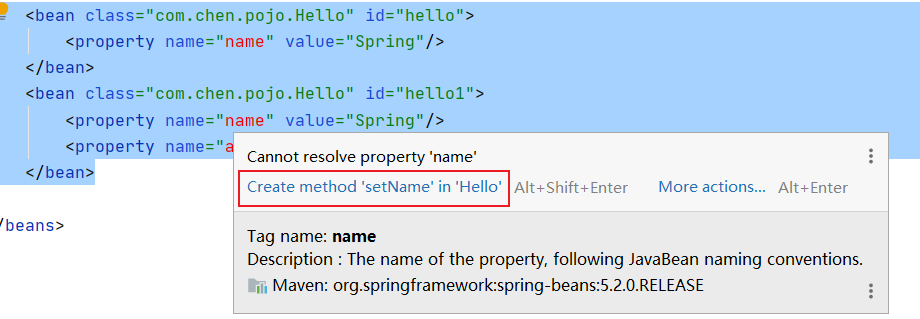
在配置文件中property就是依靠set注入的。如果将代码中的set注释掉的话,直接配置文件报错!
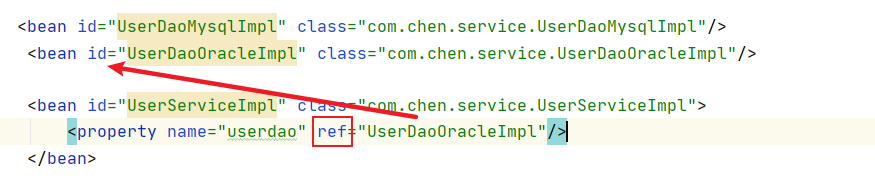
在传递参数时候,value是基本类型
ref是配置文件中已经创建好的bean的id
5. 当一个实体类中没有无参构造方法时候
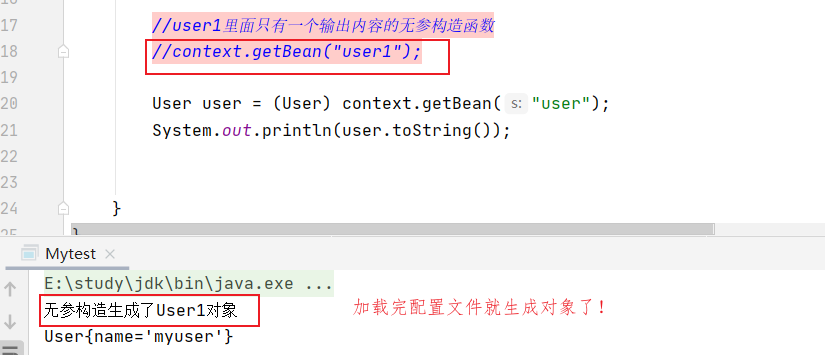
使用Spring时候,当配置文件被加载时候,就用无参的构造方法生成对象!生成的对象放在容器中。所以当存在没有无参构造器的类的时候生成对象时候就发生变化了
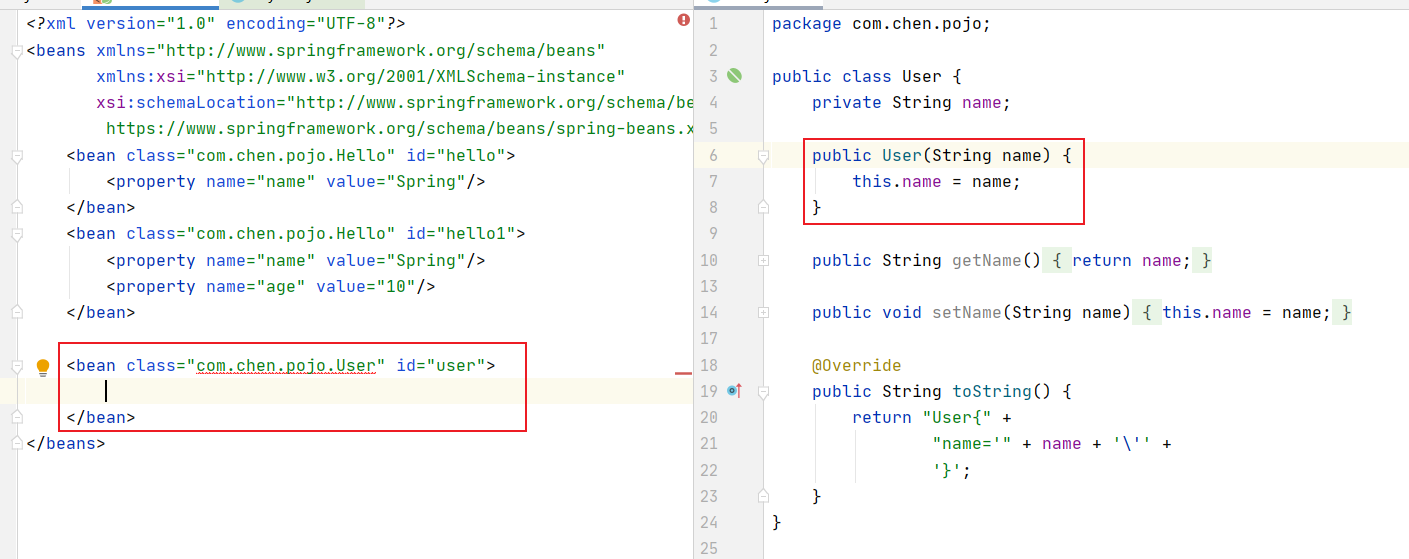
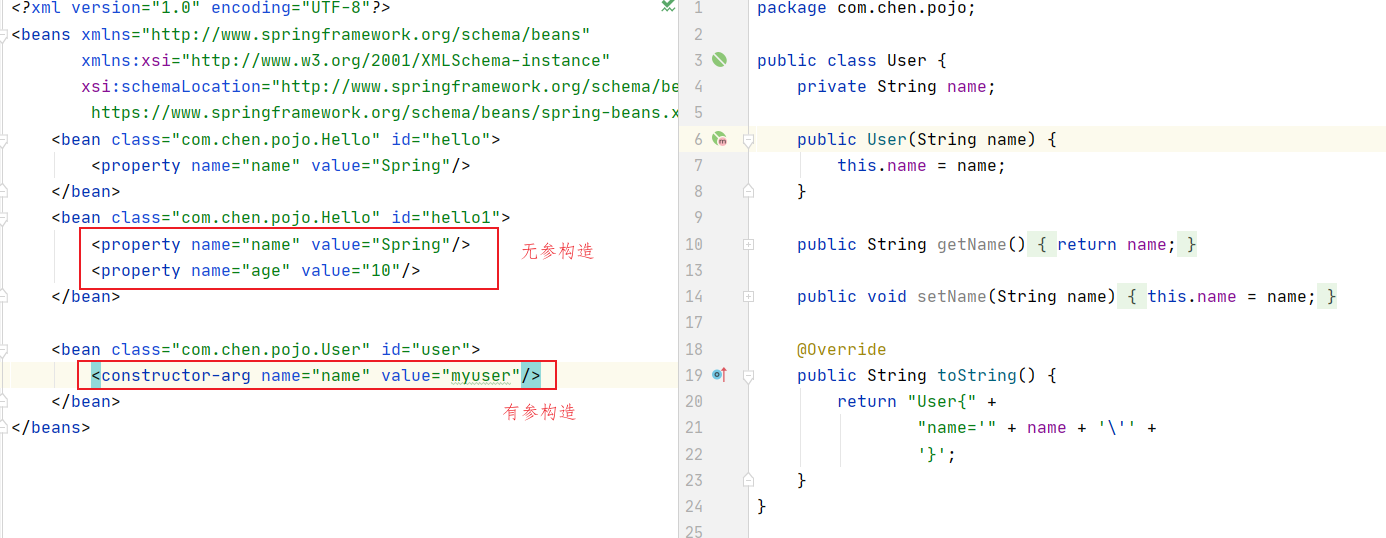
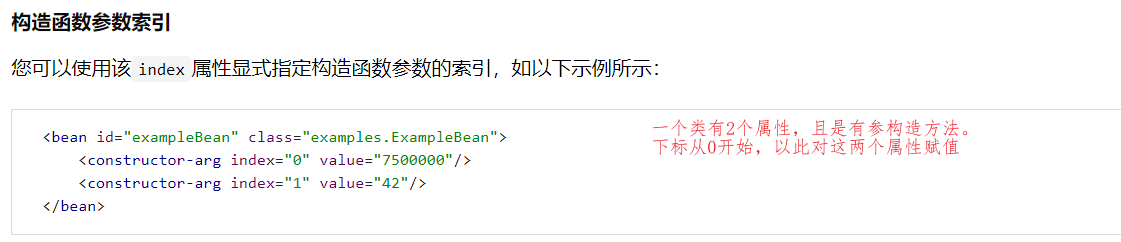
有参构造还可以通过下标去实现注入,下标从0开始!

 浙公网安备 33010602011771号