
Collection的contions(All)方法
Java集合可分为Collection和Map两种体系
-
Collection接口: 单列集合,定义了存取一组对象的方法的集合。
-
List:元素有序、可重复的集合 ---> “动态数组”
-
ArrayList、LinkedList、Vector
-
-
Set: 元素无序、不可重复的集合
-
HashSet 、LinkedHashSet 、TreeSet
-
-
-
Map接口:双列集合,保存具有映射关系“key-value对”的集合。
-
HashMap、LinkedHashMap、TreeMap、Hashtable、 Properties
-
什么是枚举类?枚举类的对象声明的修饰符有哪些?
枚举类:类中对象的个数是确定的,有限个。
public static final
什么是元注解?说明Retention和Target元注解的作用
元注解:对现有注解进行解释说明的注解
@Retention :用来说明该注解类的生命周期。它有以下三个参数:
RetentionPolicy.SOURCE : 注解只保留在源文件中
RetentionPolicy.CLASS : 注解保留在class文件中,在加载到JVM虚拟机时丢弃
RetentionPolicy.RUNTIME : 注解保留在程序运行期间,此时可以通过反射获得定义在某个类上的所有注解。
@Target : 用来说明该注解可以被声明在那些元素之前。
ElementType.TYPE:说明该注解只能被声明在一个类前。
ElementType.FIELD:说明该注解只能被声明在一个类的字段前。
ElementType.METHOD:说明该注解只能被声明在一个类的方法前。
ElementType.PARAMETER:说明该注解只能被声明在一个方法参数前。
ElementType.CONSTRUCTOR:说明该注解只能声明在一个类的构造方法前。
ElementType.LOCAL_VARIABLE:说明该注解只能声明在一个局部变量前。
ElementType.ANNOTATION_TYPE:说明该注解只能声明在一个注解类型前。
ElementType.PACKAGE:说明该注解只能声明在一个包名前。
比较throw和throws的异同。
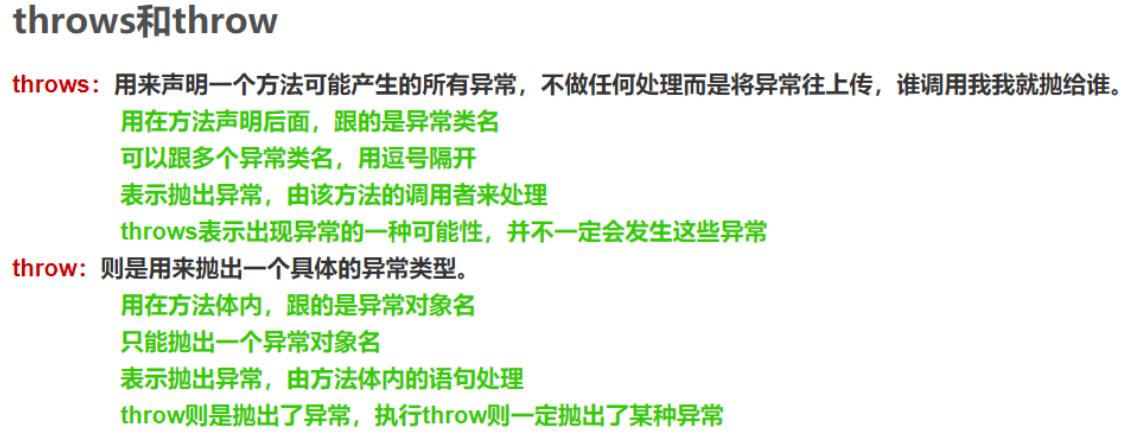
同步监视器:
俗称锁。 任何一个类的对象都可以充当锁,多个线程公用一把锁。
Collection 常用方法:
package com.cheng.collection;
import java.util.ArrayList;
import java.util.Collection;
import java.util.Date;
public class Demo01 {
public static void main(String[] args) {
Collection coll = new ArrayList();
//集合添加元素add
coll.add("aa");
coll.add("bb");
coll.add(123);
coll.add(new Date()); //当前时间
System.out.println(coll);
System.out.println(coll.size());//size获取集合中元素的个数 4个
Collection coll1 = new ArrayList();
coll1.add("asd");
coll1.add("niu");
coll1.add(456);
coll.addAll(coll1);//addall 将括号内的集合元素全部添加到coll集合中
System.out.println(coll1.size());//3
System.out.println(coll.size());//7
System.out.println(coll.isEmpty());//isEmpty 输出coll集合是否为空
coll.clear();
System.out.println(coll.size());//0
System.out.println(coll.isEmpty());//true
}
}
package com.cheng.collection;
import java.util.ArrayList;
import java.util.Arrays;
import java.util.Collection;
//集合: contions(Object obj) 判断集合中是否包含对应字符
public class Methord2 {
public static void main(String[] args) {
Collection coll = new ArrayList();
coll.add(123);
coll.add(456);
coll.add(new String("牛不牛"));
coll.add(false);
coll.add(new Person("Ali",24));
//contions(Object obj) 判断集合中是否包含对应字符
boolean boo = new Boolean(coll.contains(123));
System.out.println(boo);//true
System.out.println(coll.contains(457));//false
System.out.println(coll.contains(new String("牛不牛")));//true
//为true事因为String类中重写了equals方法 比较的是内容
System.out.println(coll.contains(new Person("Ali",24)));//false
//自定义的类中没有重写equals方法 所以比较的地址 是false
//如果想输出true 就要在自定义的Person类中重写toString方法 如Person类中末尾的注释所示
//coll.continonsall(Collection coll1) 判断coll1中的元素是否都在coll中
Collection coll1 = Arrays.asList(123,456);
System.out.println(coll.containsAll(coll1));//true
}
}
Person类:
package com.cheng.collection;
import java.util.Objects;
public class Person {
private String name;
private int age;
public Person() {
}
public Person(String name, int age) {
this.name = name;
this.age = age;
}
public String getName() {
return name;
}
public void setName(String name) {
this.name = name;
}
public int getAge() {
return age;
}
public void setAge(int age) {
this.age = age;
}

 浙公网安备 33010602011771号