
列表、元组、字典、集合的定义与操作
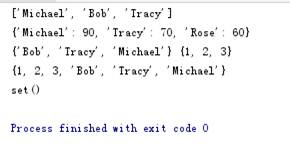
l =['Michael', 'Bob', 'Tracy']
l.append('Bob')
l.pop()
print(l)
t = ('Michael', 'Bob', 'Tracy')

scores = [90, 80, 70]
d = {'Michael': 90,'Bob': 80,  'Tracy': 70 }
d ['Bob'] = 95
d['Rose'] = 60
d.pop('Bob')

print(d)
s1 = {'Michael', 'Bob', 'Tracy'}
s2 = {1, 2, 3}
print(s1,s2)
print(s1 | s2)
print(s1 & s2)

dl = dict(zip(l,scores))
描述列表,元组,字典,集合的联系与区别:

totalStr = '201709090030周佩莹 201709090044方忻仪 201709090067黄嘉欣 201709090028粱梓蕙 201709090075胡铭炜 '
totalList = totalStr.split(' ')
totalSet = set(totalList)
print(totalList)
print(totalSet)

totalDict = {}
for s in totalSet:
    totalDict[s]= totalList.count(s)
print(totalDict)


 浙公网安备 33010602011771号