实验五
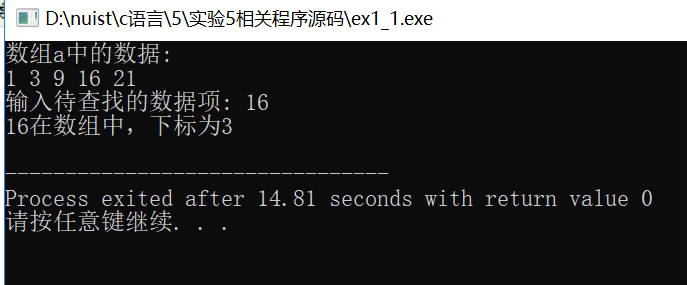
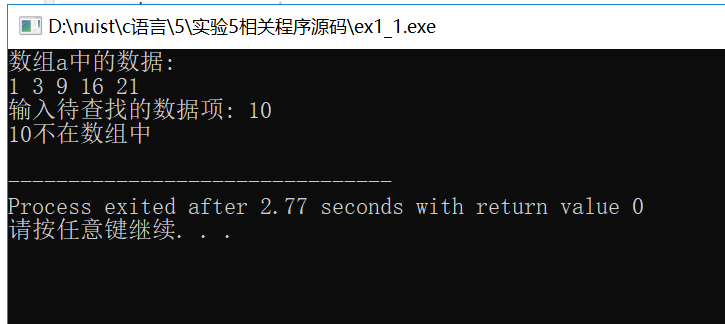
一.二分查找
1.
// 练习:使用二分查找,在一组有序元素中查找数据项
//  形参是数组,实参是数组名
#include  <stdio.h>
const int N=5;
int binarySearch(int x[], int n, int item);
int main() {
    int a[N]={1,3,9,16,21};
    int i,index, key;

    printf("数组a中的数据:\n");
    for(i=0;i<N;i++)
       printf("%d ",a[i]);
    printf("\n");

    printf("输入待查找的数据项: ");
    scanf("%d", &key);

    // 调用函数binarySearch()在数组a中查找指定数据项item,并返回查找结果给index
    // 补足代码①
    // ×××
    index=binarySearch(a,N,key);
    if(index>=0)
        printf("%d在数组中,下标为%d\n", key, index);
    else
        printf("%d不在数组中\n", key);

   return 0;
}


//函数功能描述:
//使用二分查找算法在数组x中查找特定值item,数组x大小为n
// 如果找到,返回其下标
// 如果没找到,返回-1
int binarySearch(int x[], int n, int item) {
    int low, high, mid;

    low = 0;
    high = n-1;

    while(low <= high) {
        mid = (low+high)/2;

        if (item == x[mid])
            return mid;
        else if(item < x[mid])
            high = mid - 1;
        else
            low = mid + 1;
    }

    return -1;
}
2.
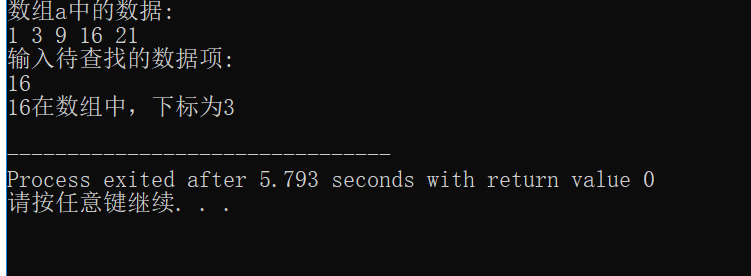
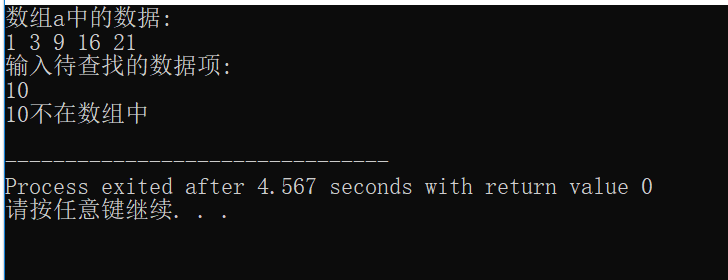
// 练习:使用二分查找,在一组有序元素中查找数据项
//  形参是指针变量,实参是数组名
#include  <stdio.h>
const int N=5;
int binarySearch(int *x, int n, int item);
int main() {
    int a[N]={1,3,9,16,21};
    int i,index, key;

    printf("数组a中的数据:\n");
    for(i=0;i<N;i++)
       printf("%d ",a[i]);
    printf("\n");

    printf("输入待查找的数据项: ");
    scanf("%d", &key);

    // 调用函数binarySearch()在数组a中查找指定数据项item,并返回查找结果
    // 补足代码①
    // ×××
    index-binarySearch(a, N, key);
    if(index>=0)
        printf("%d在数组中,下标为%d\n", key, index);
    else
        printf("%d不在数组中\n", key);

   return 0;
}

//函数功能描述:
//使用二分查找算法在x指向的数据项开始的n个数据中,查找item
// 如果找到,返回其位置
// 如果没找到,返回-1
int binarySearch(int *x, int n, int item) {
    int low, high, mid;

    low = 0;
    high = n-1;

    while(low <= high) {
        mid = (low+high)/2;

        if (item == *(x+mid))
            return mid;
        else if(item < *(x+mid))
            high = mid - 1;
        else
            low = mid + 1;
    }

    return -1;
}
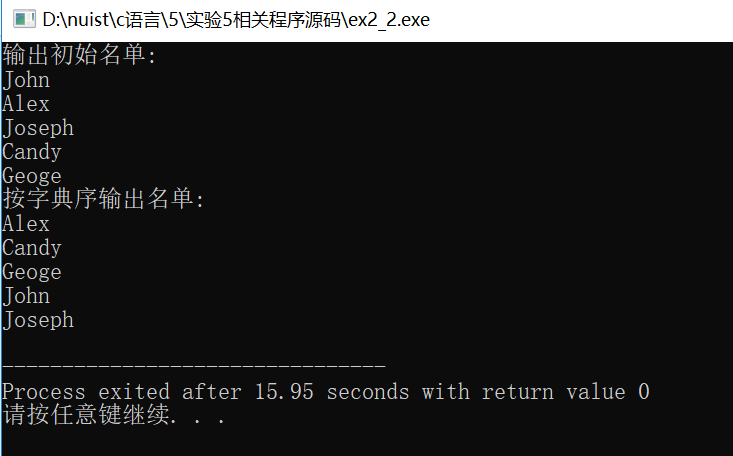
二.选择法排序
// 练习:使用选择法对字符串按字典序排序
#include <stdio.h>
#include <string.h>
void selectSort(char str[][20], int n ); // 函数声明,形参str是二维数组名
int main() {
    char name[][20] = {"John", "Alex", "Joseph", "Candy", "Geoge"};
    int i;

    printf("输出初始名单:\n");
    for(i=0; i<5; i++)
        printf("%s\n", name[i]);

    selectSort(name, 5);  // 调用选择法对name数组中的字符串排序

    printf("按字典序输出名单:\n");
    for(i=0; i<5; i++)
        printf("%s\n", name[i]);

    return 0;
}

// 函数定义
// 函数功能描述:使用选择法对二维数组str中的n个字符串按字典序排序
void selectSort(char str[][20], int n) {
    int i, j, k;
    char temp[20];
    for(i=0; i<n-1; i++) {
        k = i;

        for(j=i+1; j<n; j++)
            if (strcmp(str[j],str[k])<0)
                k = j;

        if(k != i) {
            strcpy(temp,str[i]);
            strcpy(str[i],str[k]);
            strcpy(str[k],temp);
        }
    }
}
1.数组名作为参数 vs. 指针变量作为参数,在形参、实参写法,以及函数实现中数组元素表示的差异
形参 实参 函数实现
数组名 int 【】 函数名(a) a[i]
指针变量 int *p 函数名 (pa) p[i]
2.择法排序 使用选择法对字符串排序时注意事项
使用字符串比较时要使用字符串处理函数
3.使用指针变量对字符串进行处理 注意事项总结
字符串和字符数组不一样,字符串只是存储首地址,而不是整个字符串都存储到指针变量里。
字符串要初始化才能使用。
字符串的值可以改变

 浙公网安备 33010602011771号