多线程(二)线程的安全隐患
有了多线程就有了资源竞争,当多个线程对同一资源进行操作时就容易出现安全隐患。
下面举一个卖票的例子来说明线程的安全隐患
@interface ViewController ()

@property (assign, nonatomic)NSInteger tickets;

@end

@implementation ViewController

- (void)viewDidLoad {
    [super viewDidLoad];
    //设置票的数量为5
    _tickets = 5;
    //线程一
    NSThread *threadOne = [[NSThread alloc] initWithTarget:self selector:@selector(saleTickets) object:nil];
    threadOne.name = @"threadOne";
    //线程二
    NSThread *threadTwo = [[NSThread alloc] initWithTarget:self selector:@selector(saleTickets) object:nil];

    //开启线程
    [threadOne start];
    [threadTwo start];

}

- (void)saleTickets
{
    while (1)
    {
        [NSThread sleepForTimeInterval:1];
        if (_tickets > 0)
        {
            _tickets--;
            NSLog(@"剩余票数= %ld",_tickets);
        }
        else
        {
            NSLog(@"票卖完了");
            break;
        }
    }

}
打印结果
可以看到票的余量是很混乱的,看下面一张图可以比较清楚的了解为什么会出现这种情况
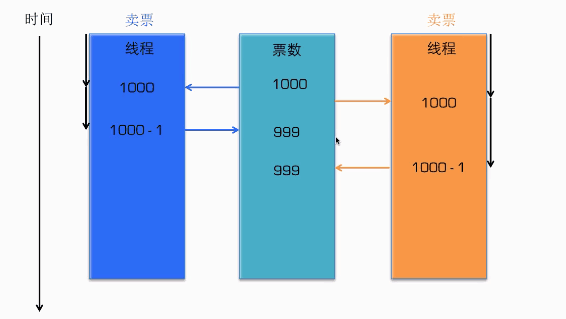
如何解决?添加互斥锁(当A线程对数据进行操作时(加锁),线程B不能访问当前数据,直到A对数据完成读写操作结束(解锁),线程B才能对数据进行操作)
这样就保证了数据的安全性;
下面是代码
@interface ViewController ()

@property (assign, nonatomic)NSInteger tickets;

@end

@implementation ViewController

- (void)viewDidLoad {
    [super viewDidLoad];
    //设置票的数量为5
    _tickets = 5;
    //线程一
    NSThread *threadOne = [[NSThread alloc] initWithTarget:self selector:@selector(saleTickets) object:nil];
    threadOne.name = @"threadOne";
    //线程二
    NSThread *threadTwo = [[NSThread alloc] initWithTarget:self selector:@selector(saleTickets) object:nil];

    //开启线程
    [threadOne start];
    [threadTwo start];

}

- (void)saleTickets
{
    while (1)
    {
        @synchronized(self) {
            [NSThread sleepForTimeInterval:1];
            if (_tickets > 0)
            {
                _tickets--;
                NSLog(@"剩余票数= %ld",_tickets);
            }
            else
            {
                NSLog(@"票卖完了");
                break;
            }
        }
    }

}
打印结果,可以看到数据正常了;
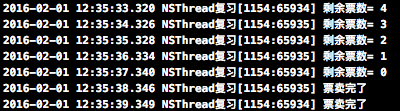
关于代码中用到的@synchronized,它是一个互斥锁,锁的概念将在下一篇中详细讲解

 浙公网安备 33010602011771号