 1 package com.imooc.bigdata.hadoop.hdfs;
 2
 3 import org.apache.hadoop.conf.Configuration;
 4 import org.apache.hadoop.fs.FSDataOutputStream;
 5 import org.apache.hadoop.fs.FileSystem;
 6 import org.apache.hadoop.fs.Path;
 7 import org.junit.After;
 8 import org.junit.Before;
 9 import org.junit.Test;
10
11 import java.net.URI;
12
13 /**
14  * 使用Java API操作HDFS文件系统
15  *
16  * 因为是放在test下面,所以最好使用单元测试的方式
17  * 在pom中引入的jUnit单元测试的方式
18  * 单元测试有两个方法:(1)在单元测试之前进行;(2)在单元测试之后进行
19  *
20  * 关键点:
21  * 1)创建Configuration
22  * 2)获取FileSystem
23  * 3)剩下的是HDFS API的操作
24  */
25
26 public class HDFSApp {
27
28     public static final String HDFS_PATH = "hdfs://hadoop000:8020";
29     //Configuration、FileSystem是每一个方法使用之前必须构建的
30     Configuration configuration = null;
31     FileSystem fileSystem = null;
32
33     @Before
34     public void setup() throws Exception{
35         System.out.println("-----setup-----");
36         configuration = new Configuration();
37         configuration.set("dfs.replication", "1");
38         /*
39          *构造一个访问指定HDFS系统的客户端对象
40          * 第一个参数:HDFS的URI
41          * 第二个参数:客户端指定的配置参数
42          * 第三个参数:客户的用户名
43          */
44         fileSystem = FileSystem.get(new URI("hdfs://hadoop000:8020"), configuration, "hadoop");
45     }
46
47     /*
48      * 创建HDFS文件并写入内容
49      */
50     @Test
51     public void create()throws Exception{
52         //FSDataOutputStream out = fileSystem.create(new Path("/hdfsApi/test/t.txt"));
53         FSDataOutputStream out = fileSystem.create(new Path("/hdfsApi/test/x.txt"));
54         out.writeUTF("hello JieQiong Replication 1");
55         out.flush();   //立即将缓冲区的数据输出到接收方
56         out.close();
57     }
58
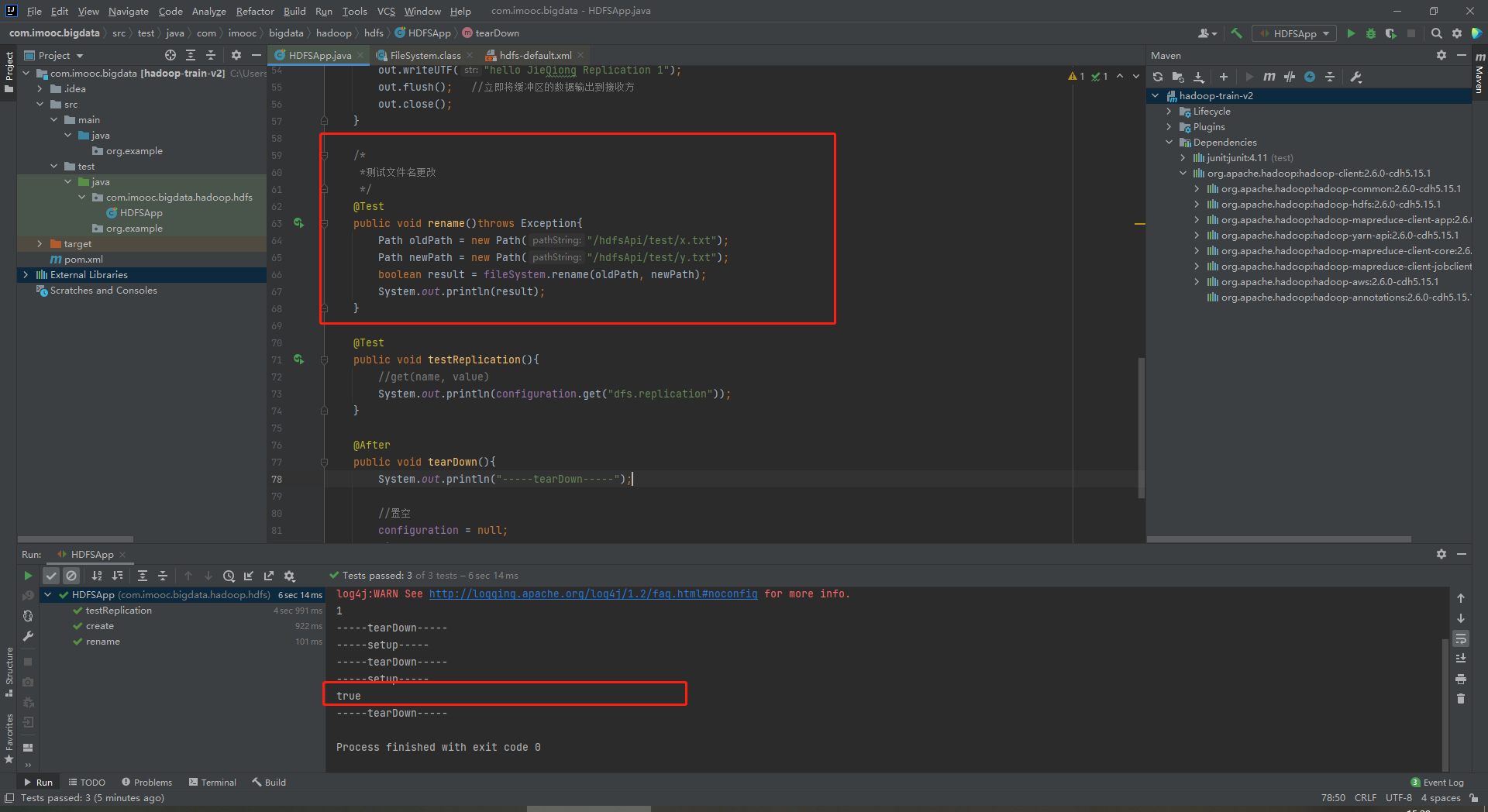
59     /*
60      *测试文件名更改
61      */
62     @Test
63     public void rename()throws Exception{
64         Path oldPath = new Path("/hdfsApi/test/x.txt");
65         Path newPath = new Path("/hdfsApi/test/y.txt");
66         boolean result = fileSystem.rename(oldPath, newPath);
67         System.out.println(result);
68     }
69
70     @Test
71     public void testReplication(){
72         //get(name, value)
73         System.out.println(configuration.get("dfs.replication"));
74     }
75
76     @After
77     public void tearDown(){
78         System.out.println("-----tearDown-----");
79
80         //置空
81         configuration = null;
82         fileSystem = null;
83     }
84 }
![]()
![]()




 浙公网安备 33010602011771号