
二、栈和队列
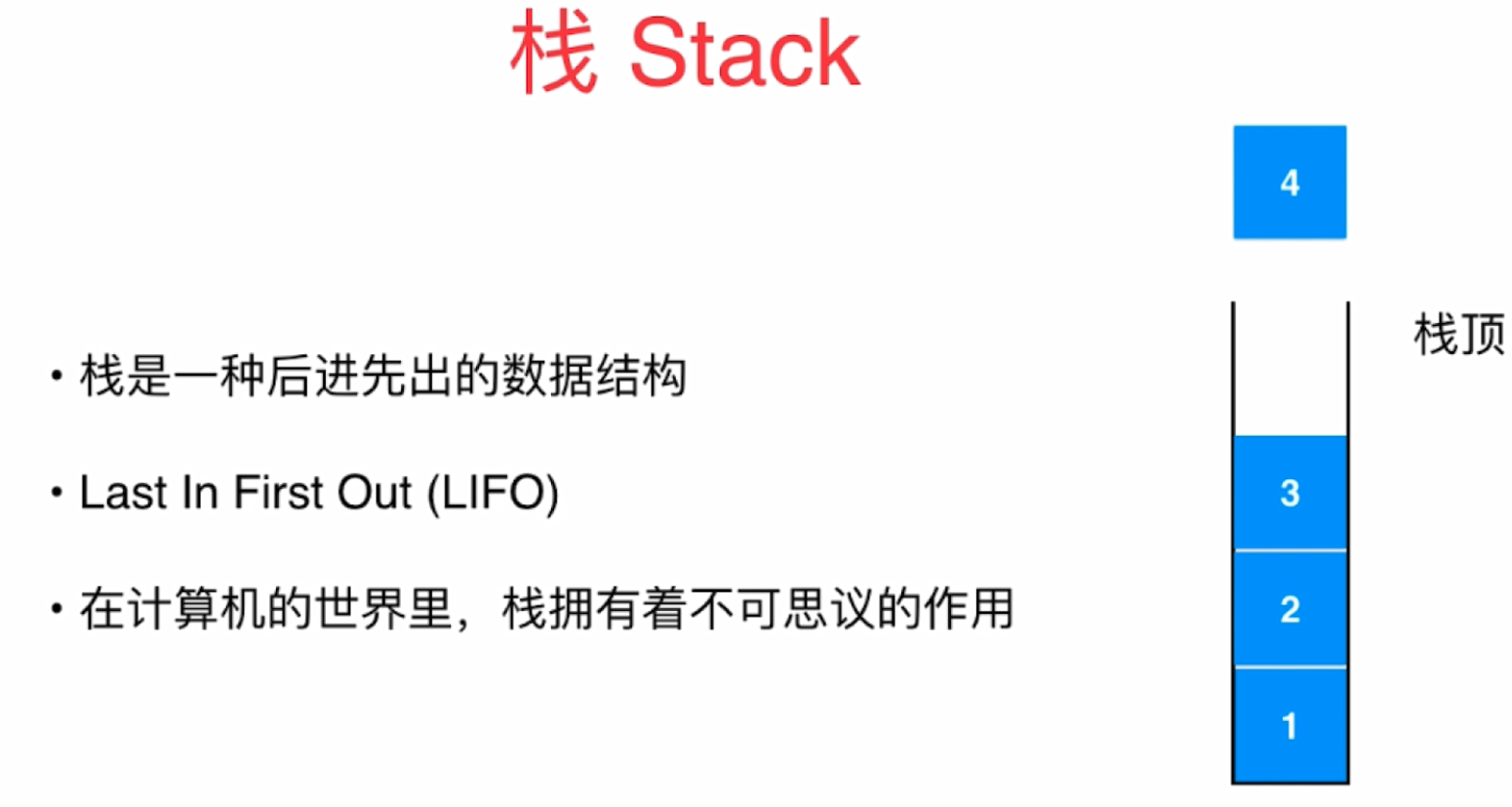
1.栈Stack
- 线性结构
- 栈对应的操作 是数组的子集
- 只能从一端存取元素
- 这一端称为栈顶
构建代码
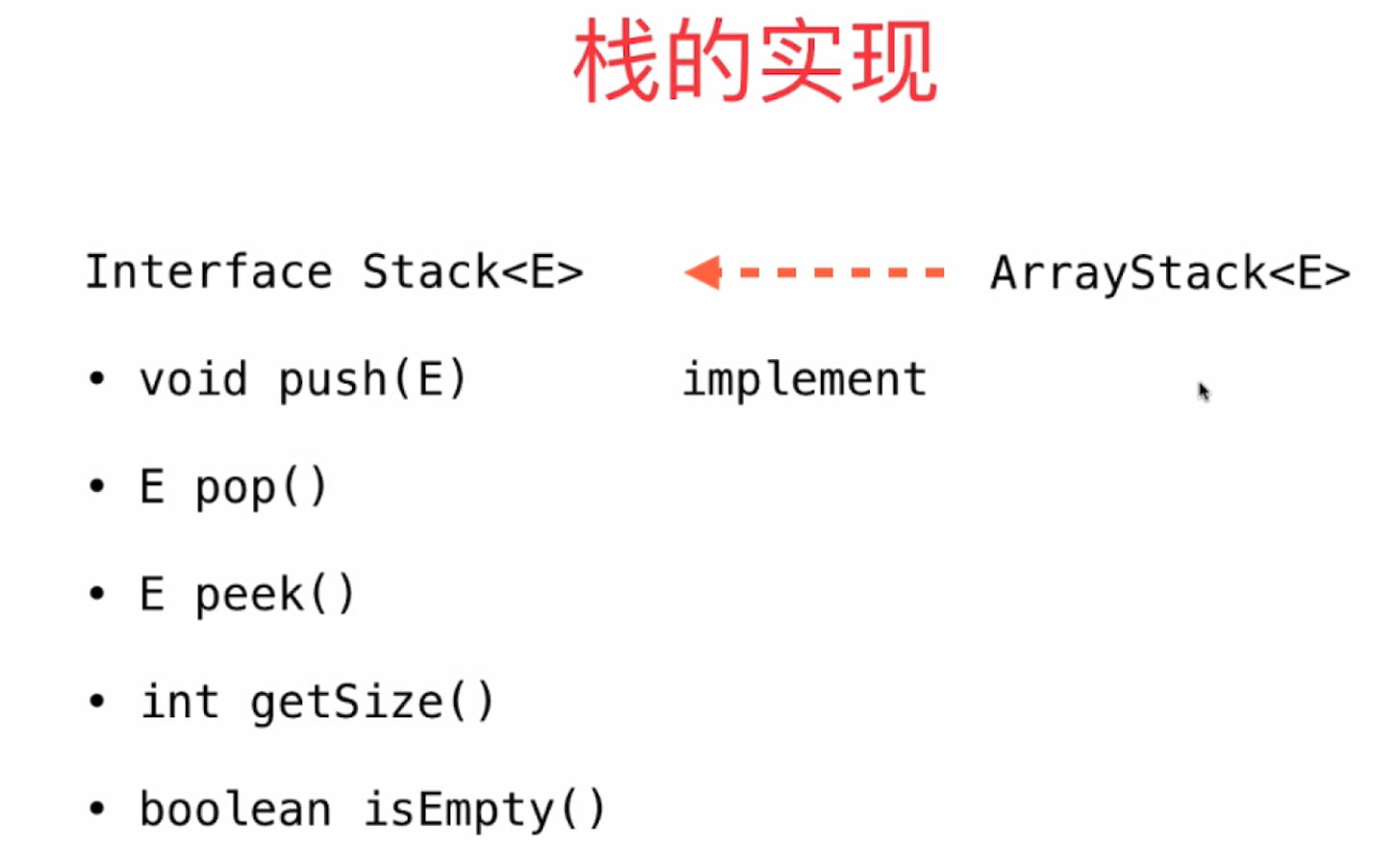
package dataStructure.stack;
// 栈接口
public interface Stack<E> {
    void push(E e);
    E pop();
    E peek();
    int getSize();
    boolean isEmpty();

}
package dataStructure.stack;
// 栈接口实现类
import dataStructure.arrays.Array;

public class ArrayStack<E> implements Stack<E> {
    Array<E> array;

    public ArrayStack(int capacity){
        array = new Array<>(capacity);
    }

    public ArrayStack(){
        array = new Array<>();
    }

    @Override
    public int getSize(){
        return array.getSize();
    }


    public int getCapacity(){
        return array.getCapacity();
    }

    @Override
    public boolean isEmpty(){
        return array.isEmpty();
    }

    @Override
    public E peek(){
        return array.getLast();
    }

    @Override
    public void push(E e){
        array.addLast(e);
    }

    @Override
    public E pop(){
        return array.removeLast();
    }


    public String toString(){
        StringBuilder res = new StringBuilder();
        res.append("stack: ");
        res.append("[");
        for(int i=0;i<array.getSize();i++){
            res.append(array.get(i));
            if(i != array.getSize() - 1){
                res.append(",");
            }
        }
        res.append("]");
        return res.toString();
    }


}
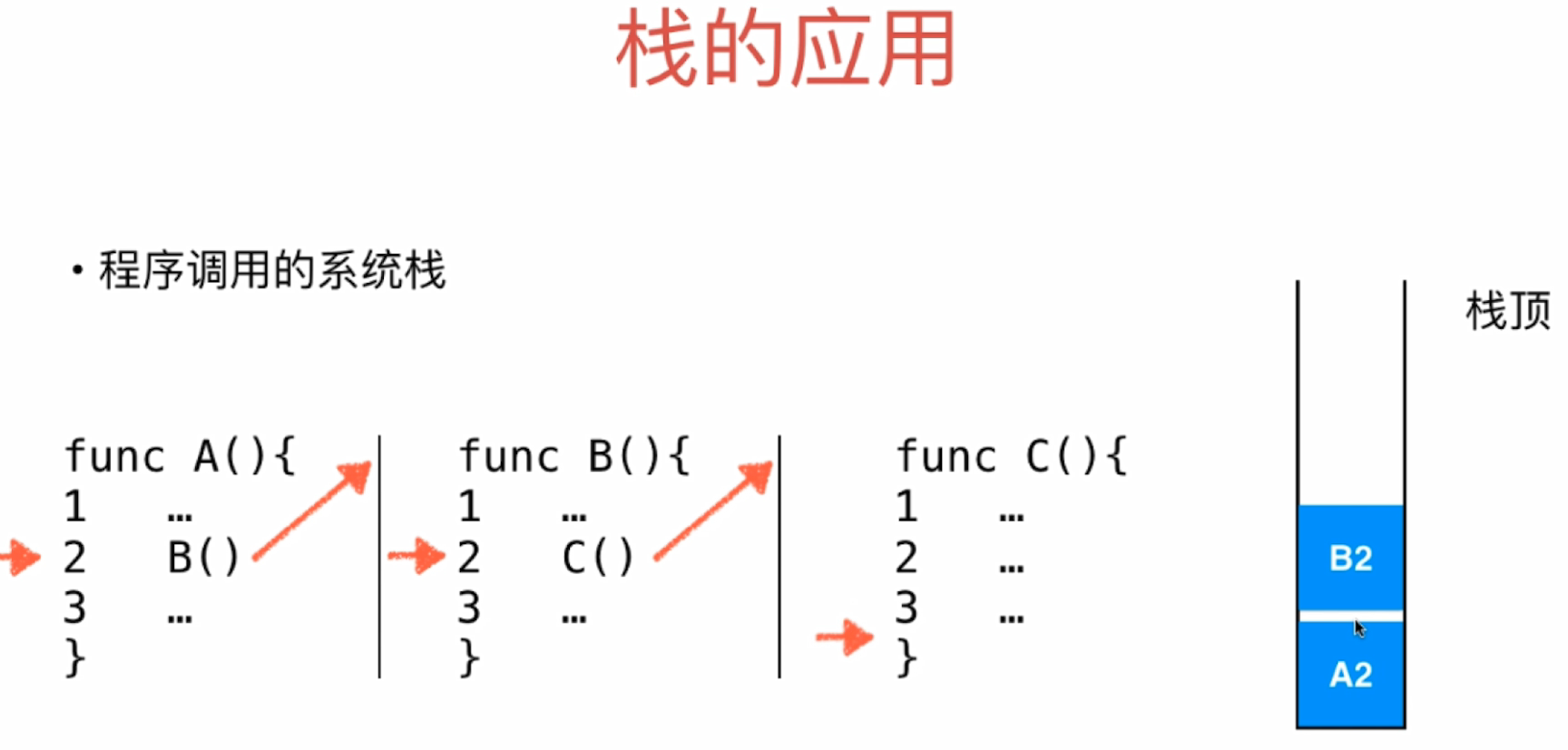
栈应用:有效括号
给定一个只包括 '(',')','{','}','[',']' 的字符串,判断字符串是否有效。

有效字符串需满足:

左括号必须用相同类型的右括号闭合。
左括号必须以正确的顺序闭合。
注意空字符串可被认为是有效字符串。

示例 1:

输入: "()"
输出: true
示例 2:

输入: "()[]{}"
输出: true
示例 3:

输入: "(]"
输出: false
示例 4:

输入: "([)]"
输出: false
示例 5:

输入: "{[]}"
输出: true

来源:力扣(LeetCode)
链接:https://leetcode-cn.com/problems/valid-parentheses
import java.util.Stack;
public class Solution {
    public boolean isValid(String s){
        Stack<Character> stack = new Stack<>();
        for(int i = 0; i<s.length(); i++){
            char ch = s.charAt(i);
            if(ch == '(' || ch == '[' || ch == '{'){
                stack.push(ch);
            }else{
                if(stack.isEmpty()){
                    return false;
                }

                char topChar = stack.pop();
                if(ch == ')' && topChar != '('){ return false;
                }
                if(ch == ']' && topChar != '['){ return false;
                }
                if(ch == '}' && topChar != '{'){ return false;
                }
            }
        }
        return stack.isEmpty();
    }
}
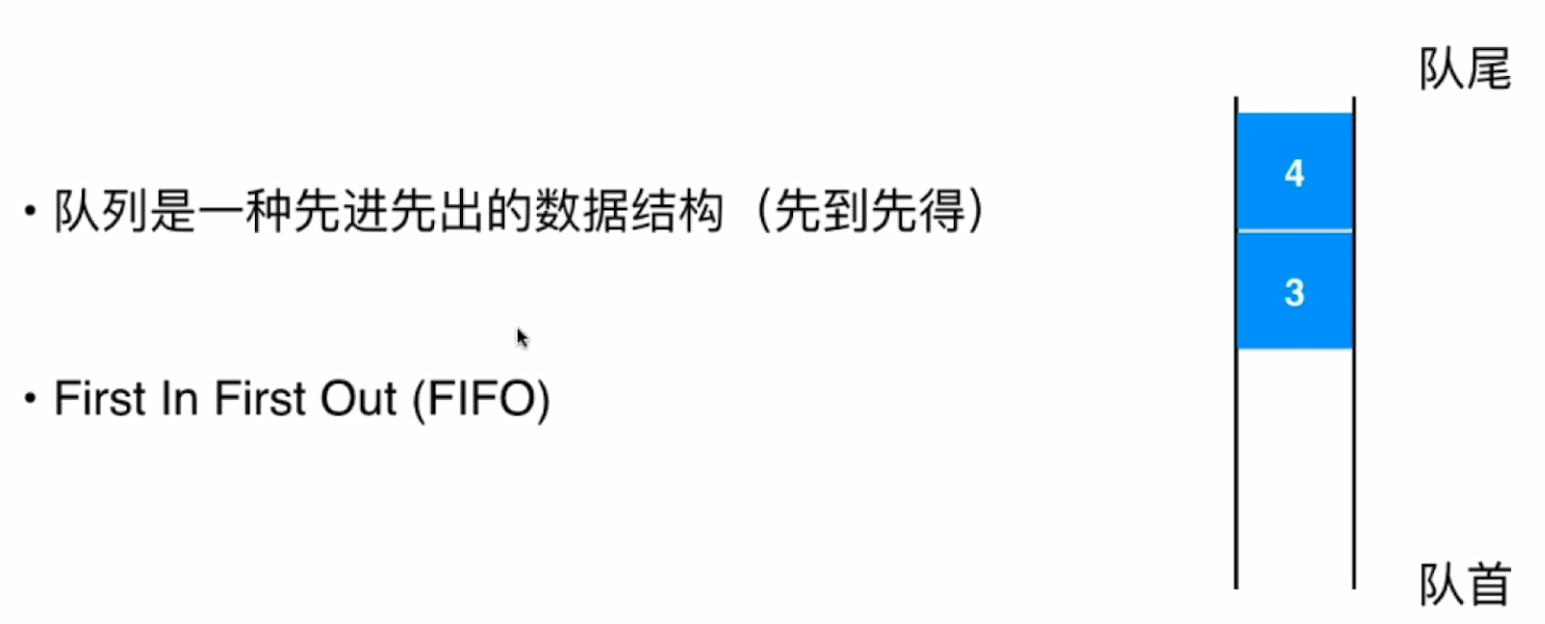
2.队列Queue
- 线性结构
- 队列的操作是数组的子集
- 只能从一端(队尾)添加元素,从另一端(队首)取出元素
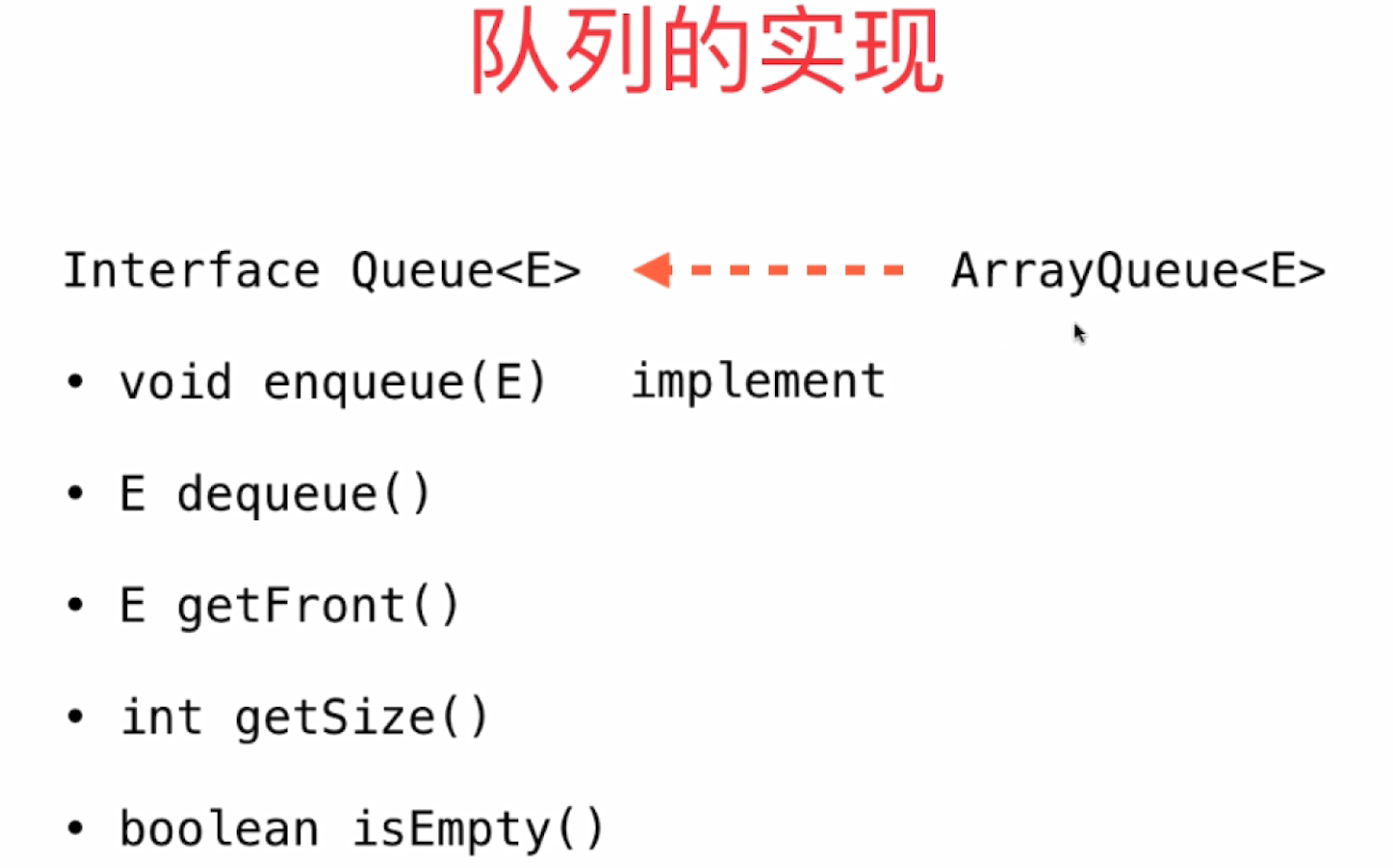
代码实现
package dataStructure.queue;

public interface Queue<E> {
    int getSize();
    boolean isEmpty();
    void enqueue(E e);
    E dequeue();
    E getFront();

}
package dataStructure.queue;

import dataStructure.arrays.Array;

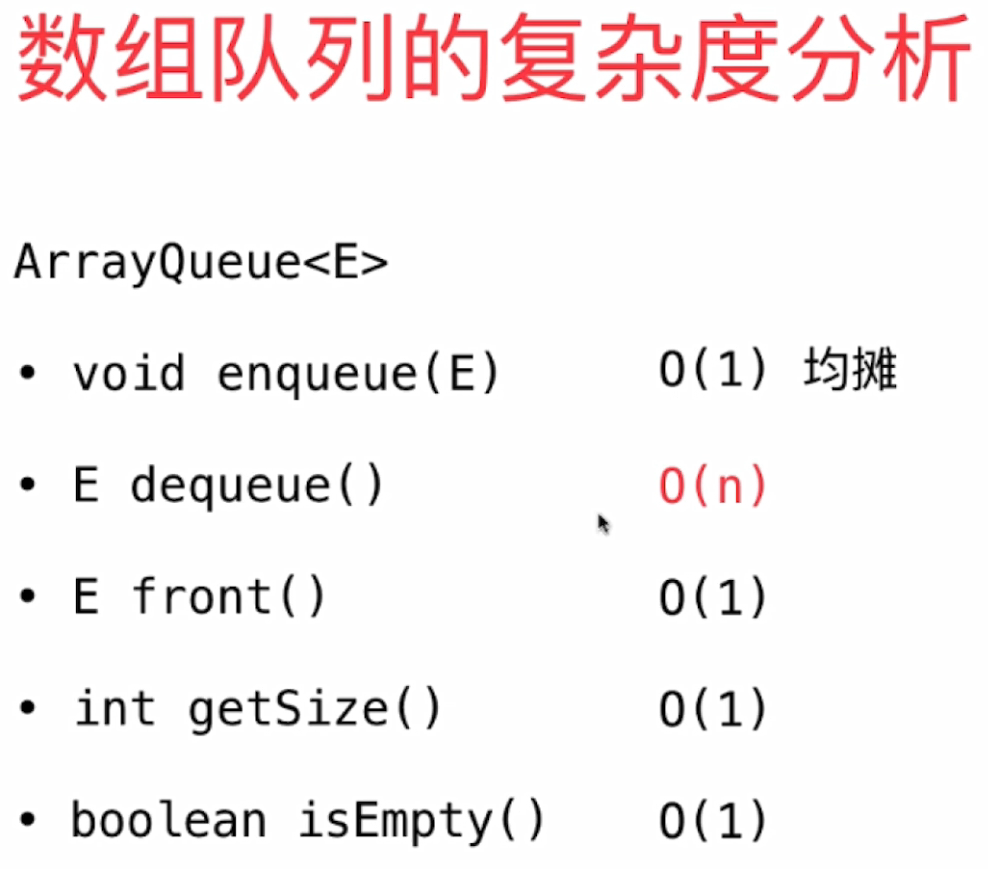
public class ArrayQueue<E> implements Queue<E> {
    Array<E> array;

    public ArrayQueue(int capacity) {
        array = new Array<>(capacity);
    }

    public ArrayQueue() {
        array = new Array<>();
    }

    @Override
    public int getSize() {
        return array.getSize();
    }

    public int getCapacity() {
        return array.getCapacity();
    }

    @Override
    public boolean isEmpty() {
        return array.isEmpty();
    }

    @Override
    public void enqueue(E e) {
        array.addLast(e);
    }

    @Override
    public E dequeue() {
        return array.removeFirst();
    }

    @Override
    public E getFront() {
        return array.getFirst();
    }

    public String toString() {
        StringBuilder res = new StringBuilder();
        res.append("Queue: ");
        res.append("front [");
        for (int i = 0; i < array.getSize(); i++) {
            res.append(array.get(i));
            if (i != array.getSize() - 1) {
                res.append(",");
            }
        }
        res.append("] tail");
        return res.toString();
    }

    public static void main(String[] args) {
        ArrayQueue<Integer> queue = new ArrayQueue<>();
        for (int i = 0; i <= 9; i++) {
            queue.enqueue(i);
            if (i % 3 == 0) {
                queue.dequeue();
            }
            System.out.println(queue.toString());
        }


    }
}
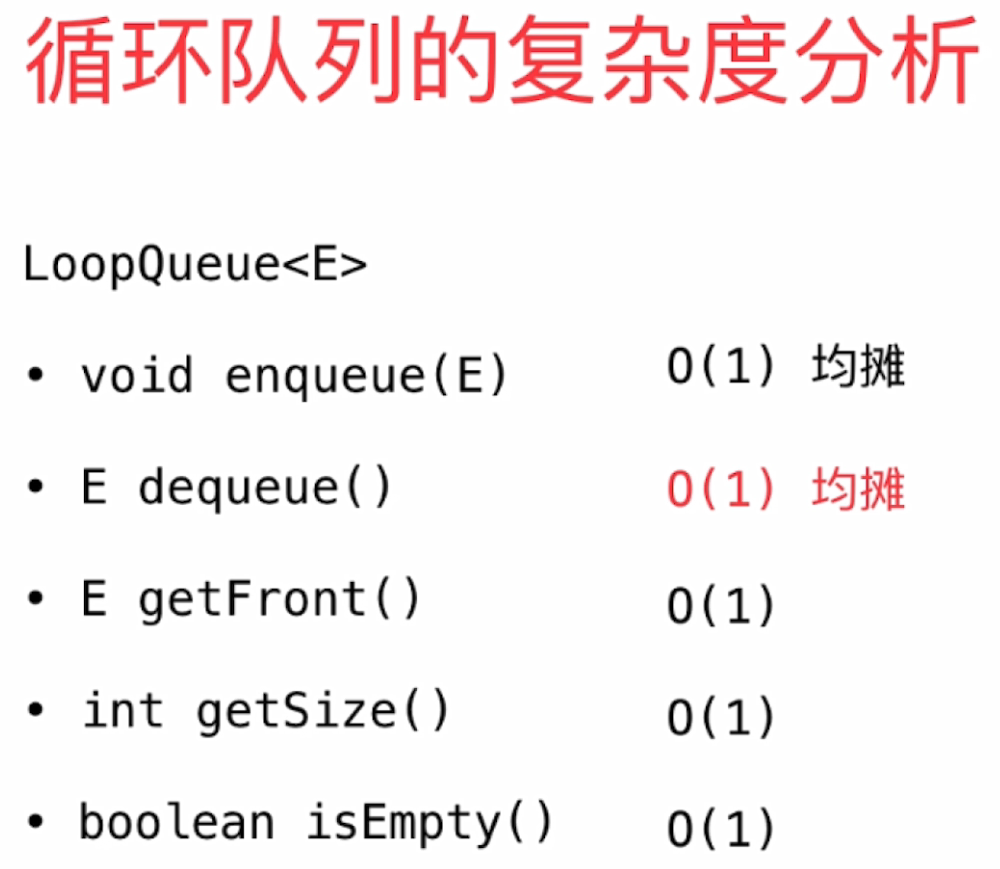
3.循环队列

实现代码
package dataStructure.loopqueue;

import dataStructure.queue.Queue;

import java.util.Objects;

public class LoopQueue<E> implements Queue<E> {
    private E[] data;
    private int front;
    private int tail;
    private int size;

    public LoopQueue(int capacity) {
        this.data = (E[]) new Object[capacity + 1];
        this.front = 0;
        this.tail = 0;
        this.size = 0;
    }

    public LoopQueue() {
        this(10);
    }

    public int getCapacity() {
        return this.data.length - 1;
    }

    @Override
    public int getSize() {
        return this.size;
    }

    @Override
    public boolean isEmpty() {
        return this.front == this.tail;
    }

    /**
     * 循环队列入队
     *
     * @param e 传入入队元素
     */
    @Override
    public void enqueue(E e) {
        if ((this.tail + 1) % this.data.length == this.front) {
            this.reSize(this.getCapacity() * 2);
        }
        this.data[this.tail] = e;
        this.tail = (this.tail + 1) % this.data.length;
        this.size++;
    }

    /**
     * 循环队列出队
     *
     * @return 返回出队元素
     */
    @Override
    public E dequeue() {
        if (isEmpty()) {
            throw new IllegalArgumentException("空");
        }
        E ret = this.data[this.front];
        this.data[this.front] = null;
        this.front = (this.front + 1) % this.data.length;
        this.size--;
        if (this.size == this.getCapacity() / 4 && this.getCapacity() / 2 != 0) {
            this.reSize(this.getCapacity() / 2);
        }

        return ret;
    }

    @Override
    public E getFront() {
        if (isEmpty()) {
            throw new IllegalArgumentException("空");
        }

        return this.data[this.front];
    }

    /**
     * 队列容量增大缩小
     *
     * @param newCapacity
     */
    private void reSize(int newCapacity) {
        E[] newData = (E[]) new Object[newCapacity];
        for (int i = 0; i < this.size; i++) {
            newData[i] = data[(i + front) % this.data.length];
        }
        this.data = newData;
        this.front = 0;
        this.tail = this.size;

    }

    /**
     * @return 以固定格式返回队列容量,有效元素个数,元素值
     */
    public String toString() {
        StringBuilder res = new StringBuilder();
        res.append(String.format("Queue size=%d,capacity=%d\n", this.size, this.getCapacity()));
        res.append("front [");
        for (int i = this.front; i != this.tail; i = (i + 1) % this.data.length) {
            res.append(this.data[i]);
            if ((i + 1) % this.data.length != this.tail) {
                res.append(", ");
            }
        }
        res.append("] tail");
        return res.toString();
    }
}
测试代码
package dataStructure.loopqueue;

public class Main {
    public static void main(String[] args) {
        LoopQueue<Integer> loopqueue = new LoopQueue<>();
        for (int i = 0; i < 10; i++) {
            loopqueue.enqueue(i);
            if(i % 3 == 0){
                loopqueue.dequeue();
            }
            System.out.println(loopqueue.toString());
        }
    }
}
打印结果
Queue size=0,capacity=10
front [] tail
Queue size=1,capacity=10
front [1] tail
Queue size=2,capacity=10
front [1, 2] tail
Queue size=2,capacity=5
front [2, 3] tail
Queue size=3,capacity=5
front [2, 3, 4] tail
Queue size=4,capacity=5
front [2, 3, 4, 5] tail
Queue size=4,capacity=5
front [3, 4, 5, 6] tail
Queue size=5,capacity=5
front [3, 4, 5, 6, 7] tail
Queue size=6,capacity=10
front [3, 4, 5, 6, 7, 8] tail
Queue size=6,capacity=10
front [4, 5, 6, 7, 8, 9] tail
测试循环队列入队出队用时
package dataStructure.loopqueue;

import dataStructure.queue.Queue;

import java.util.Random;

public class Main {
    private static double testQueue(Queue<Integer> q, int opCount) {
        long startTime = System.nanoTime();
        Random random = new Random();
        for (int i = 0; i < opCount; i++) {
            q.enqueue(random.nextInt(Integer.MAX_VALUE));
        }
        for (int j = 0; j < opCount; j++) {
            q.dequeue();
        }
        long endTime = System.nanoTime();
        return (endTime-startTime)/1E9;
    }

    public static void main(String[] args) {
        int opCount = 100000;
        LoopQueue<Integer> lq = new LoopQueue<>();
        double t2 = testQueue(lq,opCount);
        System.out.println(t2);

    }
}

 浙公网安备 33010602011771号