There are a few different ways of producing the two images that are
necessary for stereo viewing. In rough order of price/performance (from
worst to best):
1) Anaglyph (Red/Blue) Glasses, in conjunction with a normal CRT or LCD screen.
This uses paper glasses that filter different colors into your right and left eye. Instead of displaying a color image, your graphics card super-imposes two images - one in red and one in blue - and each one can be seen through a different eye to produce the final stereo image.
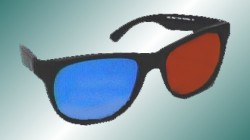
This is extremely cheap (a couple of bucks), but produces poor quality images in grey-scale only.
2) Shutter Glasses in conjunction with fast CRT screen or projector.
Shutter Glasses use small LCD lenses that act like computerised sunglasses. The computer can send a signal to either the right eye or left eye lens telling it to switch on or off. By quickly flicking between two different images on the screen and switching between the right and left eye on the shutter glasses at the same time, the left and right images can be displayed giving a good 3D stereo image.

This is the standard hardware that most enthusiasts use, and is moderately priced ($25-$100). Can produce good images on any screen with a refresh rate above 120Hz, such a CRT screen. However using shutter glasses with LCD flat panel screens doesnt work well because they typically have lower refresh rates (80Hz) and ghosting and other artifacts can occur on CRTs.
DepthQ produce a digital projector with a refresh rate of 120Hz that should also be fast enough to work well.
3) Dual display with a mirror
This option uses two displays and a mirror that reflects one display into each eye. There is a special option in the Nvidia drivers (77.77 or higher) for using dual displays that automatically mirrors one of the monitors for you.

Cost is the same as buying another monitor ($300) plus a mirror (not much). The advantages of this setup are that you dont get any ghosting, and that the resolution can be as high as your monitor can go. The disadvantage is that you have to keep your head in position against the mirror, which can be tiring.
4) Head Mounted Displays (HMDs)
HMDs are small wearable displays that typically have two small LCD flat screens inside (each one around 1 inch square or less) that display two separate pictures directly into the wearers left and right eyes.
 These
are expensive ($600+), and while they dont suffer from ghosting or
flicker like shutter glasses, the maximum resolution is currently
800x600 which is rather low compared to CRT screens.
These
are expensive ($600+), and while they dont suffer from ghosting or
flicker like shutter glasses, the maximum resolution is currently
800x600 which is rather low compared to CRT screens.
5) 3D LCD Displays
There are a small number of highly expensive LCD flat screens coming onto the market that use some nifty optical tricks to display 3D pictures directly from a flat screen without needing any glasses.
When I say expensive, I mean $1500+ which puts it out of the reach of most casual gamers.
All of this is from Nvidia Stereovision Forums.
1) Anaglyph (Red/Blue) Glasses, in conjunction with a normal CRT or LCD screen.
This uses paper glasses that filter different colors into your right and left eye. Instead of displaying a color image, your graphics card super-imposes two images - one in red and one in blue - and each one can be seen through a different eye to produce the final stereo image.
This is extremely cheap (a couple of bucks), but produces poor quality images in grey-scale only.
2) Shutter Glasses in conjunction with fast CRT screen or projector.
Shutter Glasses use small LCD lenses that act like computerised sunglasses. The computer can send a signal to either the right eye or left eye lens telling it to switch on or off. By quickly flicking between two different images on the screen and switching between the right and left eye on the shutter glasses at the same time, the left and right images can be displayed giving a good 3D stereo image.
This is the standard hardware that most enthusiasts use, and is moderately priced ($25-$100). Can produce good images on any screen with a refresh rate above 120Hz, such a CRT screen. However using shutter glasses with LCD flat panel screens doesnt work well because they typically have lower refresh rates (80Hz) and ghosting and other artifacts can occur on CRTs.
DepthQ produce a digital projector with a refresh rate of 120Hz that should also be fast enough to work well.
3) Dual display with a mirror
This option uses two displays and a mirror that reflects one display into each eye. There is a special option in the Nvidia drivers (77.77 or higher) for using dual displays that automatically mirrors one of the monitors for you.
Cost is the same as buying another monitor ($300) plus a mirror (not much). The advantages of this setup are that you dont get any ghosting, and that the resolution can be as high as your monitor can go. The disadvantage is that you have to keep your head in position against the mirror, which can be tiring.
4) Head Mounted Displays (HMDs)
HMDs are small wearable displays that typically have two small LCD flat screens inside (each one around 1 inch square or less) that display two separate pictures directly into the wearers left and right eyes.
5) 3D LCD Displays
There are a small number of highly expensive LCD flat screens coming onto the market that use some nifty optical tricks to display 3D pictures directly from a flat screen without needing any glasses.
When I say expensive, I mean $1500+ which puts it out of the reach of most casual gamers.
All of this is from Nvidia Stereovision Forums.
--ArenAK--