

set集合以及jdk1.8集合特性简单说明
set集合中的元素没有先后顺序且不允许重复,但不是随机的
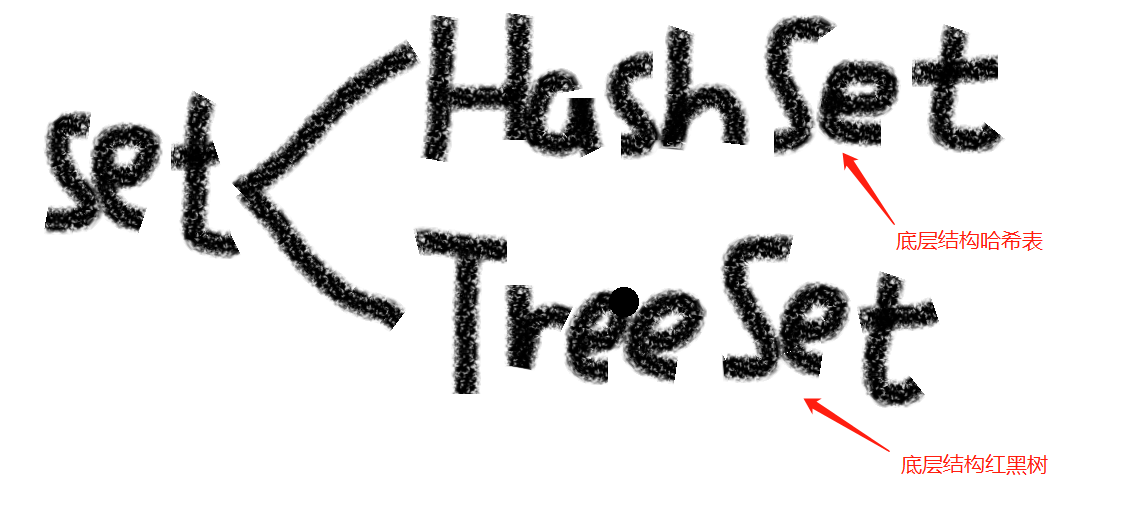
set集合包含:HashSet类,TreeSet类,LinkedHashSet类
LinkedHashSet是双向链表
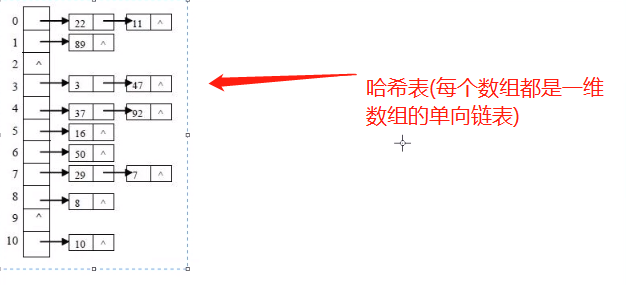
叫做链表数组
public class HashSetTest {

    public static void main(String[] args) {
        Set<String> aSet = new HashSet<>();
        aSet.add("one1");
        aSet.add("one2");
        aSet.add("one3");
        aSet.add("one4");
        aSet.add("one1");
        System.out.println(aSet);

    }

}
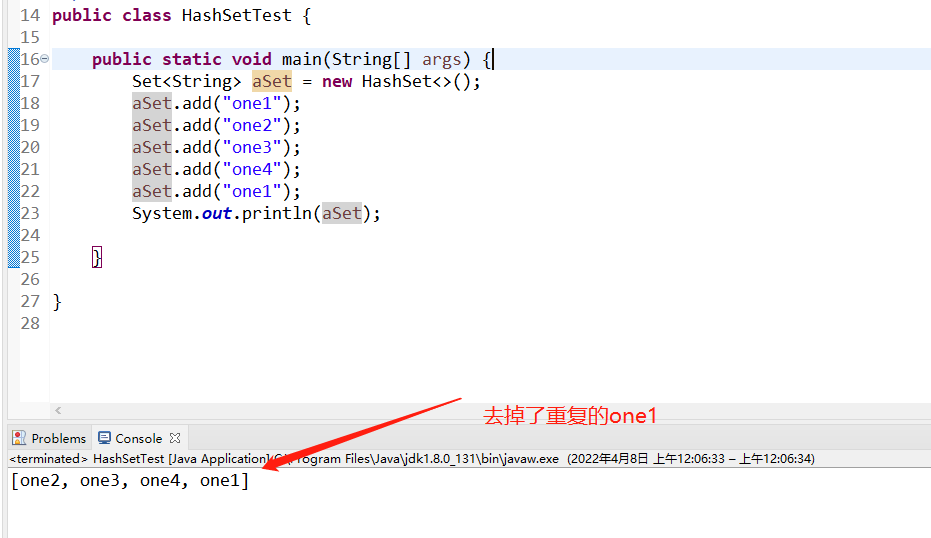
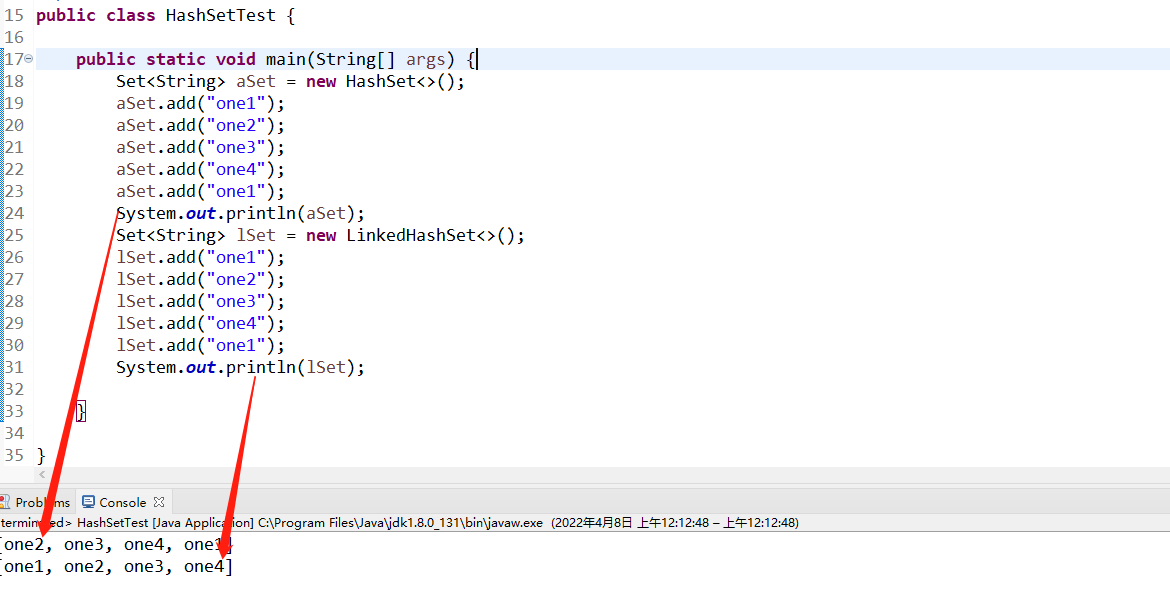
打印的顺序是乱的,但是没有显示重复的数据
Set<String> lSet = new LinkedHashSet<>();
        lSet.add("one1");
        lSet.add("one2");
        lSet.add("one3");
        lSet.add("one4");
        lSet.add("one1");
        System.out.println(lSet);

使用linkedHashSet会依次打印放入元素的顺序
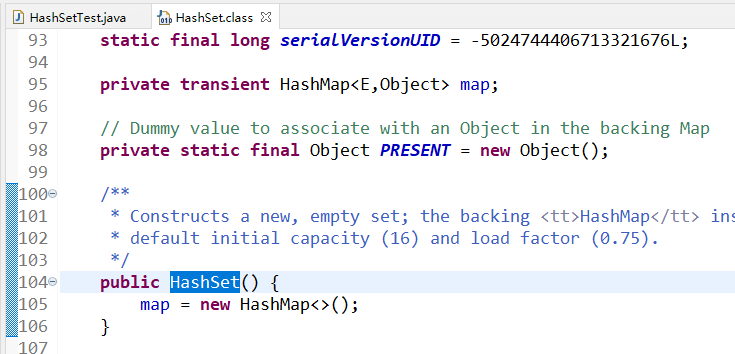
存放数据的原理
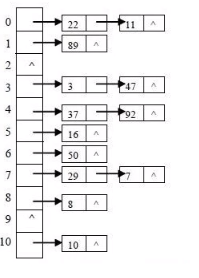
当需要新增一个数据,首先调用hashCod(),获取添加数据的哈希码值,接着调用哈希算法获取哈希值,接着去哈希表中找到索引位置

当生成的索引为0时,但是0位置已经有数据了,使用新元素和22比较哈希值是否相等,不等,插入已有元素的后面

相等的话,使用新元素调用equals()方法与22比较是否相等,相等则插入失败

不相等,插入已有元素的后面

当生成的索引是2时,直接将新元素插入索引为2的位置
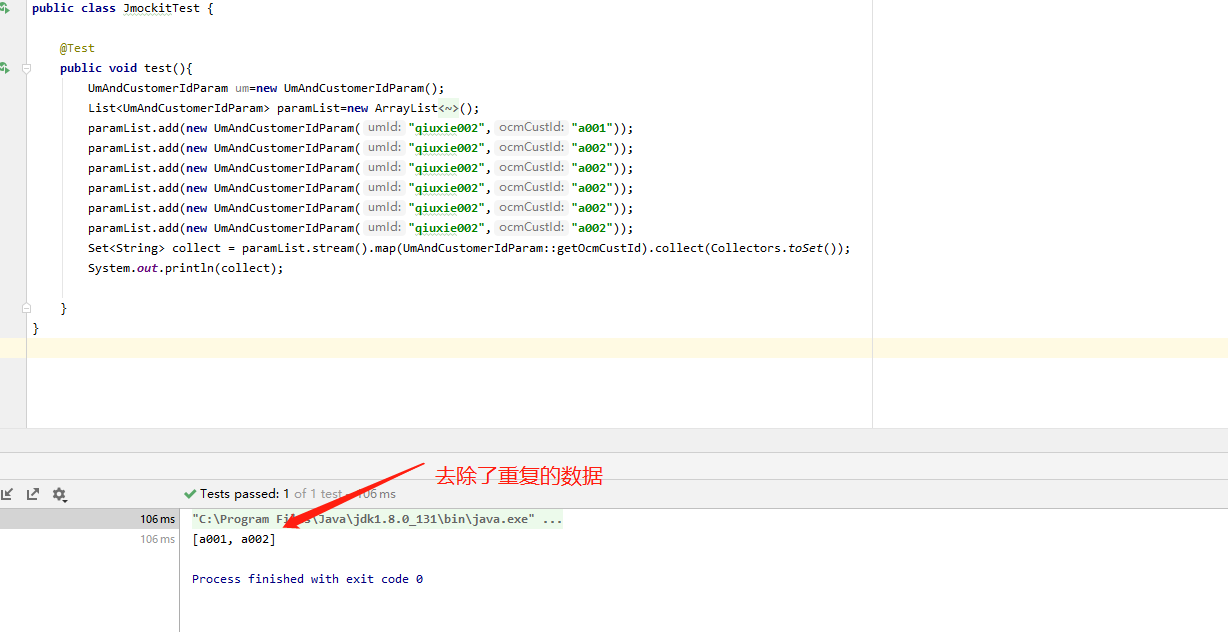
如何剔除对象中的重复数据
public class JmockitTest {

    @Test
    public void test(){
        UmAndCustomerIdParam um=new UmAndCustomerIdParam();
        List<UmAndCustomerIdParam> paramList=new ArrayList<UmAndCustomerIdParam>();
        paramList.add(new UmAndCustomerIdParam("qiuxie002","a001"));
        paramList.add(new UmAndCustomerIdParam("qiuxie002","a002"));
        paramList.add(new UmAndCustomerIdParam("qiuxie002","a002"));
        paramList.add(new UmAndCustomerIdParam("qiuxie002","a002"));
        paramList.add(new UmAndCustomerIdParam("qiuxie002","a002"));
        paramList.add(new UmAndCustomerIdParam("qiuxie002","a002"));
        Set<String> collect = paramList.stream().map(UmAndCustomerIdParam::getOcmCustId).collect(Collectors.toSet());
        System.out.println(collect);

    }
}
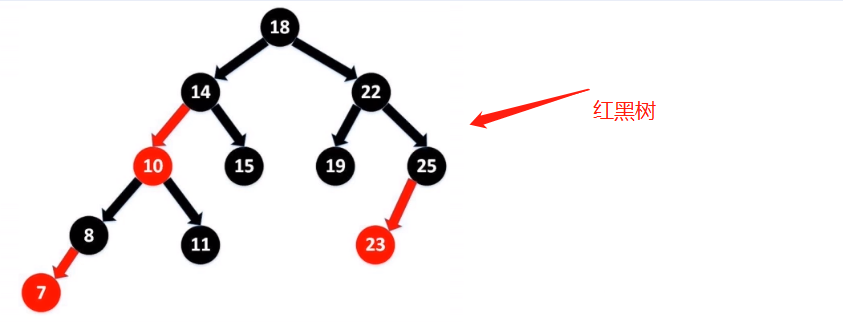
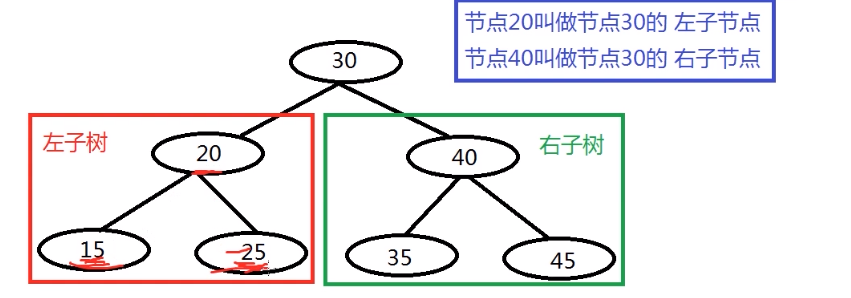
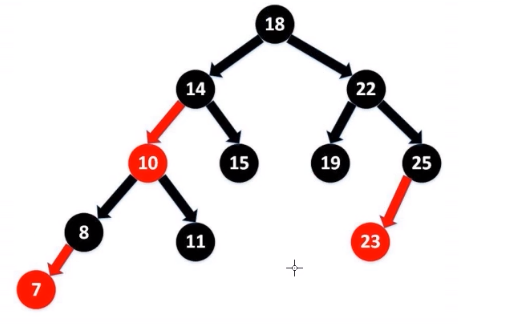
TreeSet集合底层是有序二叉树,又叫红黑树
有序二叉树的特征
1.左子树中的任意节点元素都小于根节点元素值
2.右子树中任意节点元素都大于根节点元素值
3.左子树和右子树内部都遵循上述规则
基本类型比较
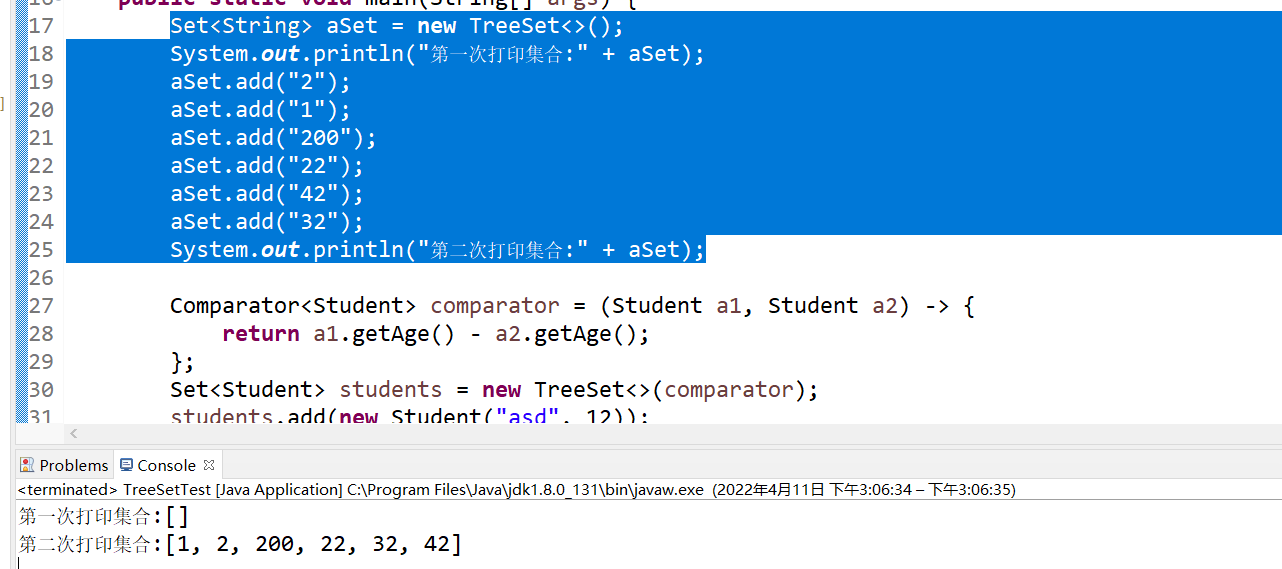
Set<String> aSet = new TreeSet<>();
        System.out.println("第一次打印集合:" + aSet);
        aSet.add("2");
        aSet.add("1");
        aSet.add("200");
        aSet.add("22");
        aSet.add("42");
        aSet.add("32");
        System.out.println("第二次打印集合:" + aSet);
对象比较
当进行对象,直接去比较会出现下面的错误

下面给出三种形式解决问题
第一种是自然排序,实体类实现Comparable
/**
 *
 */
package com.java.set;

/**
 * @author yourheart
 * @update 2022年4月11日 上午9:37:59
 * @description:
 */
public class Student implements Comparable<Student> {

    /**
     * 学生姓名
     */
    private String name;

    /**
     * 学生年龄
     */
    private Integer age;

    /**
     * @param name
     * @param age
     */
    public Student(String name, Integer age) {
        super();
        this.name = name;
        this.age = age;
    }

    /**
     * @return the name
     */
    public String getName() {
        return name;
    }

    /**
     * @param name the name to set
     */
    public void setName(String name) {
        this.name = name;
    }

    /**
     * @return the age
     */
    public Integer getAge() {
        return age;
    }

    /**
     * @param age the age to set
     */
    public void setAge(Integer age) {
        this.age = age;
    }

    @Override
    public String toString() {
        return "Student [name=" + name + ", age=" + age + "]";
    }

    @Override
    public int compareTo(Student o) {

        return this.age - o.age;
    }

}


/**
 *
 */
package com.java.set;

import java.util.Set;
import java.util.TreeSet;

/**
 * @author yourheart
 * @update 2022年4月11日 上午9:18:22
 * @description:
 */
public class TreeSetTest {
    public static void main(String[] args) {
        Set<Student> students = new TreeSet<>();
        students.add(new Student("asd", 12));
        students.add(new Student("asd", 15));
        students.add(new Student("asd", 52));
        students.add(new Student("asd", 82));
        students.add(new Student("asd", 32));
        students.add(new Student("asd", 22));
        System.out.println("第三次打印集合:" + students);

    }

}
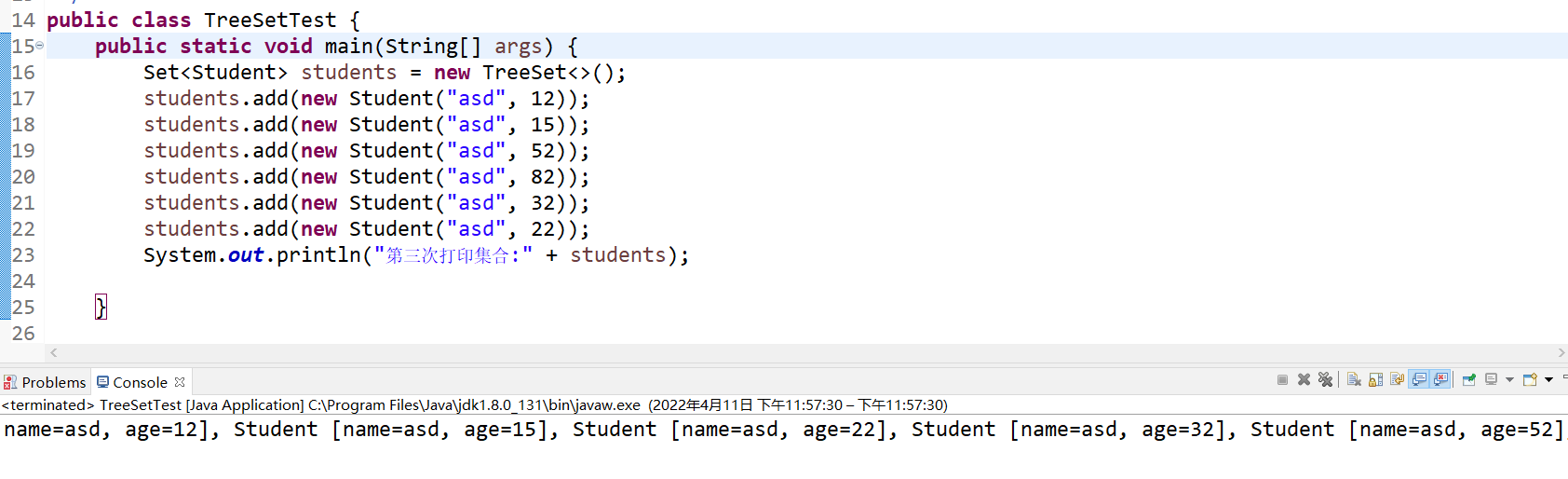
可以看到图中的数据已经排序了
姓名相同,按照年龄比较
@Override
    public int compareTo(Student o) {
        if (this.name.compareTo(o.name) == 0) {
            return this.age - o.age;
        }

        return this.name.compareTo(o.name);
    }
Set<Student> students = new TreeSet<>();
        students.add(new Student("asd", 12));
        students.add(new Student("asd1", 15));
        students.add(new Student("asd3", 52));
        students.add(new Student("asd", 82));
        students.add(new Student("asd4", 32));
        students.add(new Student("asd", 22));
        System.out.println("第三次打印集合:" + students);

第二种使用比较器规则比较进行排序,构建TreeSet集合时传入java.util.Comparator接口
使用内部类的方式创建比较器
// 准备比较器对象作为参数传递给构造方法
        Comparator<Student> comparator = new Comparator<Student>() {

            @Override
            public int compare(Student o1, Student o2) {

                return o1.getAge() - o2.getAge();
            }

        };
        Set<Student> students = new TreeSet<>(comparator);
        students.add(new Student("asd", 12));
        students.add(new Student("asd1", 15));
        students.add(new Student("asd3", 52));
        students.add(new Student("asd", 82));
        students.add(new Student("asd4", 32));
        students.add(new Student("asd", 22));
        students.forEach(a -> {
            System.out.println(a);
        });
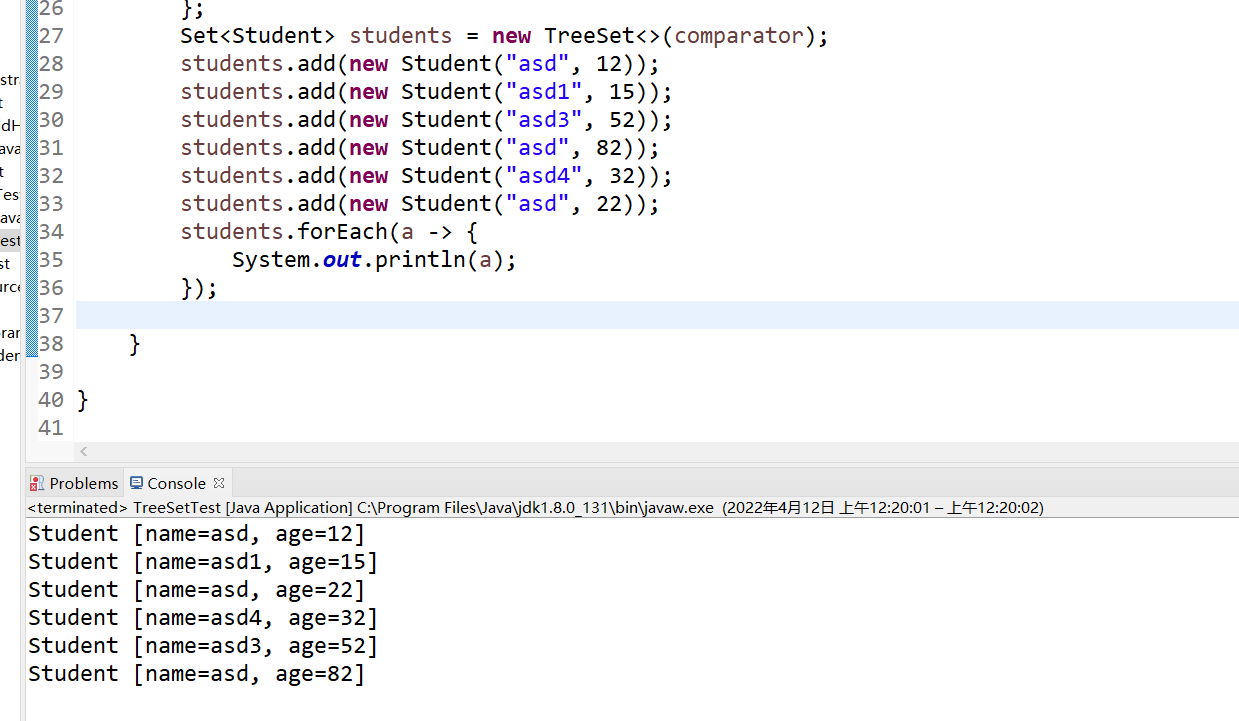
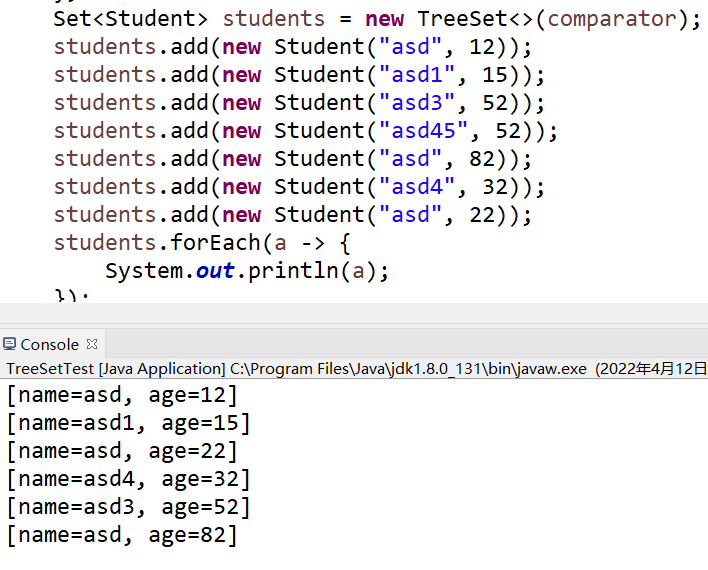
创建的比较器的优先级别大于自然排序,比较器自定义程度更高
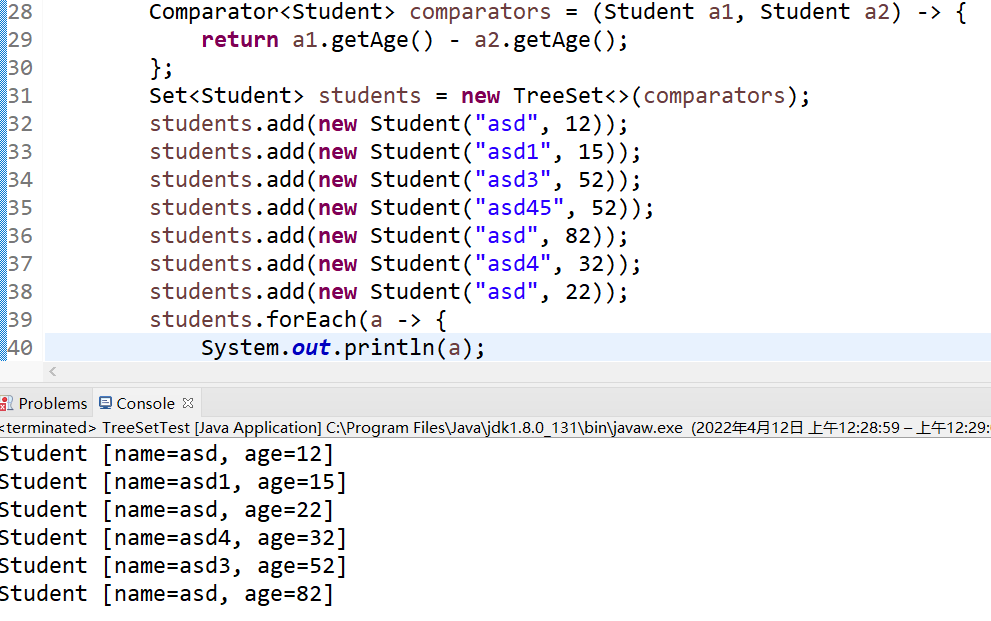
jdk1.8开始支持lambda表达式,采用jdk1.8的特性创建构造器
使用比较器排序,引用了jdk1.8特性
Comparator<Student> comparators = (Student a1, Student a2) -> {
            return a1.getAge() - a2.getAge();
        };
        Set<Student> students = new TreeSet<>(comparators);
        students.add(new Student("asd", 12));
        students.add(new Student("asd1", 15));
        students.add(new Student("asd3", 52));
        students.add(new Student("asd45", 52));
        students.add(new Student("asd", 82));
        students.add(new Student("asd4", 32));
        students.add(new Student("asd", 22));
        students.forEach(a -> {
            System.out.println(a);
        });

 浙公网安备 33010602011771号